Homepage | Jubilee 2025 | The rules for granting indulgences during the 2025 Jubilee
The rules for granting indulgences during the 2025 Jubilee
25 August 2025
Reading Time: 7minutes
The Apostolic Penitentiary has published the Norms for obtaining indulgences during the 2025 Jubilee. Pilgrimages, penance, works of charity, to fully live the Jubilee spirit
If we think of the 2025 Jubilee, one of the first aspects that comes to mind is that of indulgences. If it is true that it is always possible to obtain ordinary indulgences, to the point that there is the Manual of Indulgences, which contains the rules and concessions to be made, as well as the prayers to be recited to obtain the indulgence, on the occasion of the Jubilee the Jubilee indulgence, or plenary indulgence, is granted.
But let’s take a small step back and remember what the Jubilee is and what is meant by a plenary indulgence? The Jubilee, or Holy Year, is a special event of the Catholic Church that is celebrated every 25 years, characterised by prayer, penance and indulgence. It is a time of spiritual renewal and reconciliation, during which the faithful can obtain a plenary indulgence through confession, communion, and works of mercy. Plenary indulgence is a special grace granted by the Catholic Church during the Holy Year: the faithful can receive the complete remission of the temporal punishment due to sins already confessed and forgiven.
When is the plenary indulgence given? It is obtained through acts of devotion, such as pilgrimages to designated sacred places, prayers, as well as confession, participation in the Eucharist and the practice of works of mercy. During the Jubilee, this indulgence is granted in a special way to promote conversion and spiritual renewal, because it highlights God’s mercy and the possibility of forgiveness and reconciliation for all the faithful.
The 2025 Jubilee Proclamation Bull, with the evocative title Spes non confundit (Hope does not disappoint), was published on 9 May 2024. In addition to the guidelines and spiritual intentions of Pope Francis given the Holy Year, it also anticipates the Norms for the granting of indulgences during the ordinary Jubilee of the year 2025. These norms were published in more depth a few days later by the major penitentiary Cardinal Angelo De Donatis and by the regent of the Apostolic Penitentiary, Bishop Krzysztof Nykiel.
The rules on indulgences indicate pilgrimages as the preferred way to obtain forgiveness, but not only.
The Apostolic Penitentiary is the oldest dicastery of the Roman Curia, primarily responsible for granting and managing indulgences and resolving issues of ecclesiastical criminal law related to grave sins. It is an essential institution for the sacramental and penitential life of the Church. In practice, it is the supreme tribunal of the Catholic Church.
Among other things, it establishes the norms and conditions for obtaining indulgences, particularly relevant during the Holy Years and other special occasions, but it also deals with complex cases of penance, including severe and controversial sins, offering assistance to the faithful to obtain the remission of spiritual penalties, and coordinates the granting of special faculties for confessors, such as the ability to absolve sins reserved to the Pope.
Given the Holy Year 2025, the Apostolic Penitentiary has published the Norms for the Indulgence to encourage the faithful to seek this grace through specific penitential practices.
The truly repentantfaithful, animated by the spirit of charity, who will confess and participate in Holy Communion, can obtain the indulgence by praying according to the Pope’s intentions. In addition, the indulgence can be applied in suffrage of the souls in Purgatory.
The Norms indicate that the indulgence can be obtained by making a pilgrimage, or through penance, which includes abstaining for at least one day from futile distractions and unnecessary consumption, with works of charity, supporting religious or social works, and dedicating time to volunteering. These acts of penance are considered essential to living the spirit of the Jubilee.
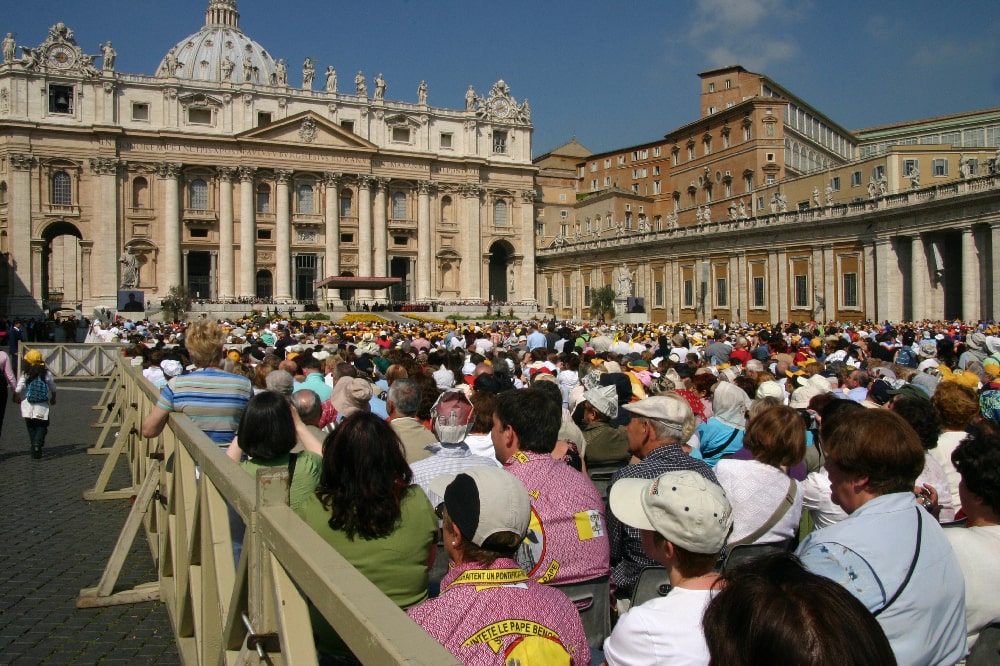
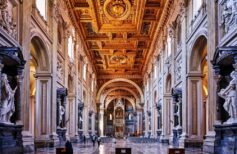
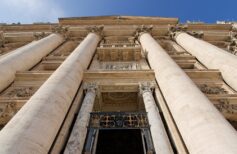
The Rules for obtaining indulgences during the 2025 Jubilee indicate Rome as a pilgrimage destination, which has long been one of the preferred pilgrimage destinations for Christians. In particular, those who will go to Rome cannot help but visit the Jubilee Churches, that is, those churches equipped with a Holy Door, which, when crossed, allows you to obtain a plenary indulgence from all sins and the temporal penalties associated with them. The four Papal Basilicas of Rome, known as the Major Basilicas, are among the main pilgrimage destinations for the Catholic faithful, especially during special events such as the Holy Years. These are: St. Peter’s Basilica in the Vatican, the Basilica of St. John Lateran (Cathedral of Rome), the Basilica of St. Paul Outside the Walls, and the Basilica of Santa Maria Maggiore. In the past, to obtain a plenary indulgence, four basic requirements were necessary: being present in Rome, going to confession, visiting the main basilicas of the city, and praying for one’s own spiritual health and that of all Christians. The Tour of the Seven Churches is also a pilgrimage tradition that dates back to the fourth century, and which acquires a particular meaning during the Jubilee.
Other places of pilgrimage that guarantee to obtain the plenary indulgence are the Holy Land, with its basilica of the Holy Sepulchre, that of the Nativity in Bethlehem and of the Annunciation in Nazareth, the two minor Papal Basilicas of Assisi, Loreto, where the house of Our Lady is kept, Pompeii, with itsShrine dedicated to Our Lady. By going to these places and attending Mass, or reciting the Rosary, or even taking part in the Way of the Cross, it is possible to aspire to the indulgences of the Jubilee.
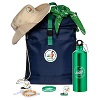
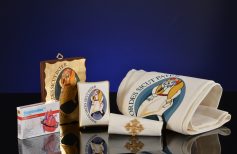
Wherever you decide to go on pilgrimage, to “any prestigious collegiate church or sanctuary designated by the diocesan or eparchial bishops”, as established by the Episcopal Conferences, remember to carry everything you need inyour backpack!
Pilgrim backpack complete kit Jubilee 2025 Pilgrims of Hope.The Pilgrim’s Kit, designed to enrich and facilitate…
Works of mercy and penance
And for those who cannot move? Those who cannot move for serious reasons, such as cloistered nuns, the sick, or prisoners, can obtain the indulgence by reciting prayers and offering their suffering in suffrage for the souls in Purgatory, which is another way of granting the indulgence. In fact, indulgence is closely linked to the concept of mercy. To obtain the indulgence, in addition to pilgrimages and prayers, it is therefore possible to perform works of mercy and do penance. These acts, both spiritual and corporal, allow us to concretely express our love for our neighbour and our desire for conversion. Bodily works of mercy include actions such as feeding the hungry, dressing the poor, and visiting the sick, while spiritual works include comforting the afflicted, teaching those in error, and praying for the living and the dead. Together with confession, participation in the Eucharist and prayer according to the Pope’s intentions, these works make it possible to obtain an indulgence and represent an opportunity for purification and spiritual growth.
Penitence on Friday
Again, according to the Norms, it will be possible to obtain the indulgence through penance on Fridays. The faithful are invited to rediscover the spiritual value of this day. Penance can be practised by refraining from distractions, both real and virtual, such as excessive use of media and social networks, or by renouncing unnecessary consumption. In addition, one can observe fasting according to the indications of the Church, and give the savings in money to the poor or to works of a religious and social nature. These acts of sacrifice and generosity, performed in a spirit of penance, help the faithful to obtain the Jubilee Indulgence.
Abstinence from real and virtual distractions
Abstinence from real and virtual distractions, not only on Fridays but also on any other day, can be an additional tool for pursuing Jubilee indulgences. Reduce or avoid the use of social networks, television, and other forms of digital entertainment that can divert attention away from spiritual reflection and personal improvement. Also, avoid unnecessary purchases and excessive expenses to focus more on spiritual and charitable needs. These acts of renunciation must be accompanied by sincere reflection and concrete acts of charity, such as donations to people experiencing poverty or support for social and religious projects, to obtain the Jubilee Indulgence.
Voluntary service
To obtain the indulgence through volunteer activities, the faithful must engage in actions of service and help towards others, concretely manifesting Christian love and charity, offering time and support to people in need, such as the elderly alone, the sick, immigrants or families in difficulty, participating in initiatives and programs that help promote the common good, such as shelters for the homeless, soup kitchens for the poor, or assistance centres for children and young people, collaborating with local voluntary associations, parishes or other organisations that work for the good of the community. This type of service must be carried out with a generous heart and an authentic spirit of charity, in line with the principles of the Holy Year. The indulgence is obtained not only for the time dedicated, but also for the intention of alleviating suffering and promoting good.
Read more:
Giving alms: is it charity?
Almsgiving to the poor is a manifestation of mercy strictly connected to the duties of a good Christian…
The expulsion of the merchants from the Temple of Jerusalem represents an act of rebellion by Jesus against a now...
25 February 2026
What’s the Future of Religion?
What’s the Future of Religion?
A Beginner’s Guide to Christianity
A Beginner’s Guide to Christianity
Mind-Blowing Statistics About Christianity You Need to Know
Mind-Blowing Statistics About Christianity You Need to Know
7517
Enter the Holyart world: $20 discount voucher valid on over 60,000 items
Come and discover Holyart, the largest e-commerce of religious articles in Europe and immediately receive a $20 voucher to use with your first purchase.
Check your mailbox: you will receive your discount within 5 minutes