Homepage | Religion | Christmas Mass: All You Need to Know About the Rite
Christmas Mass: All You Need to Know About the Rite
26 November 2025
Reading Time: 7minutes
The Christmas Mass is an ancient tradition, rooted both in the Holy Scriptures and in ancient pagan festivals. Here’s what it symbolises and how it is celebrated.
One of the best-known traditions associated with Christmas is the Christmas Mass. This special liturgical celebration is traditionally held on the night between 24 December, Christmas Eve, and 25 December. Since it is usually celebrated at midnight or shortly thereafter, this ceremony is also known as the Midnight Mass, the Night Mass, or the Mass of the Angel.
Christmas, together with Easter, is the most important festival for Christians, as it celebrates the Incarnation of the Word of God — the moment when God became man through Jesus Christ. This is a fundamental point of Christian theology. The birth of Jesus, His coming to Earth, marks the fulfilment of the Promise, the beginning of humanity’s Redemption, and the first step towards Salvation. In this sense, the incarnation of Jesus represents the ultimate point of contact between the divine and the human, the New Covenant that will find its full consummation in the Last Supper, Christ’s death on the Cross, and His resurrection. Christmas, therefore, is not just the celebration of the birth of a special child, but the beginning of an extraordinary event that will change the course of history and offer all humanity the opportunity for a deeper relationship with God.
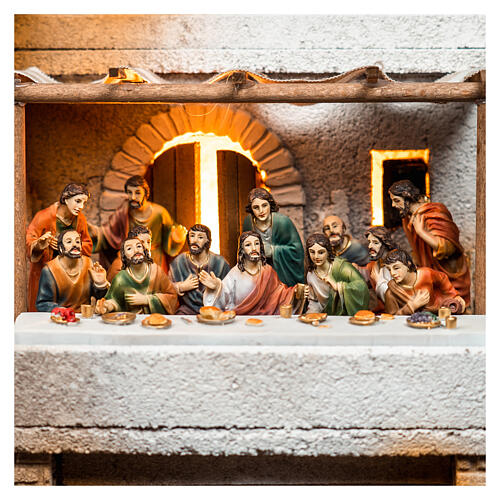
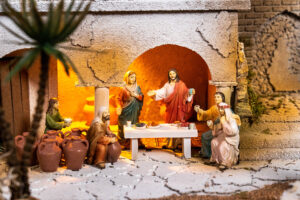
Many types of Nativity scenes, original works of craftsmanship not only from Italy…
Why is Christmas Celebrated on 25 December?
Since the exact date of Jesus’ birth is still debated among scholars, 25 December was chosen as the date to celebrate Christmas for a combination of historical, theological, and symbolic reasons. In Roman times, 25 December marked the pagan festival of the winter solstice, the darkest period of the year, when the sun rises late and sets early. This festival, known as Natalis Solis Invicti — “Birth of the Unconquered Sun” — was dedicated to the birth of the Sun God Mithras. It is not hard to imagine that, with the advent of Christianity, the figure of Jesus, the Light of the World, was aligned with the New Sun, giving new meaning to the pagan ritual and transforming the ancient tradition into the celebration of the Nativity.
Also in Roman times, between 17 and 23 December, the Saturnalia were celebrated — pagan festivals in honour of Saturn, the god of fields and harvest. During this period, fieldwork was halted, allowing peasants to rest and take part in public feasts and visit family and friends. Gifts were also exchanged, and even slaves enjoyed greater freedoms, sometimes being allowed to sit at the masters’ table in a celebration of generosity and sharing.
A festival of light and goodness, therefore — elements that are still evident today in the tradition of Christmas.
Midnight Mass
The Midnight Mass, a celebration of light in the heart of the night, connects to this special spiritual significance of Christmas for Christians worldwide. This transition from darkness to light is often represented physically in many churches, where lights are only switched on at midnight, just as the Christ Child is placed in the manger, and the solemn procession celebrating His birth takes place.
Baby Jesus statue 39,5 cm in resin. Christ Child statue made in resin …
The structure of the Christmas Night Mass follows the Christian Mass rite and includes several parts typical of a liturgical celebration. The Christmas liturgy generally comprises:
Entrance Rites: The Mass begins with the entrance rites, including the procession of the priest, ministers, and faithful into the church. Often, a solemn procession takes place. During this moment, appropriate Christmas hymns are sung, with the assembly joyfully celebrating the coming of Jesus.
Penitential Act: This part of the Mass offers a moment for reflection and repentance for sins. The faithful confess and ask God for forgiveness.
Liturgy of the Word: During this phase, passages from the Holy Scriptures and the Christmas Gospel are read, particularly those recounting Jesus’ birth in Bethlehem. Readings often come from Luke, telling the traditional story of Jesus’ birth and the announcement to the shepherds by the angels. These biblical passages are followed by a homily or sermon from the priest, offering reflections and teachings on the birth of Christ and its significance.
Creed: During the Midnight Mass, the faithful recite or sing the Nicene-Constantinopolitan Creed, expressing the fundamental doctrines of Christianity.
Universal Prayer: The congregation prays for the needs of the world, the Church, and those in need. This intercessory prayer covers a range of intentions.
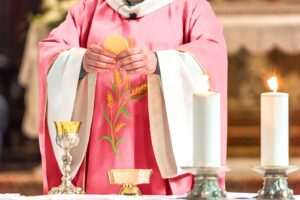
Eucharistic Liturgy: This is the central part of the Mass, during which the bread and wine are consecrated, becoming the Body and Blood of Christ according to Catholic faith. The faithful participate in the Eucharist, receiving Communion. However, during the Christmas Mass, the Eucharist is not always included.
Concluding Rites: The Midnight Mass concludes with the final rites, including the final blessing and the singing of the hymn Gloria in excelsis Deo, proclaiming the glory of God and the announcement of Jesus’
Final Christmas Hymn: The Mass often ends with a festive Christmas hymn, expressing joy and celebration for the birth of Jesus.
Prepared, bottled and sealed under the control of Vicar Foraneo with the bishops of Mazzara del Vallo authorization…
Why is Christmas Mass Celebrated at Midnight?
There are references in the Holy Scriptures that justify the choice of midnight for celebrating the Christmas Mass. In the Gospel of Luke, it is written: “In the same region there were shepherds living in the fields, keeping watch over their flock at night” (Luke 2:8).
Although it does not specify midnight, it refers to a moment in the middle of the night.
In the Book of Wisdom, it is written: “While a profound silence covered all things and night was at the midpoint of its course, your almighty word from heaven, from your royal throne, relentless warrior, rushed upon that land of desolation” (Wisdom 18:14-16).
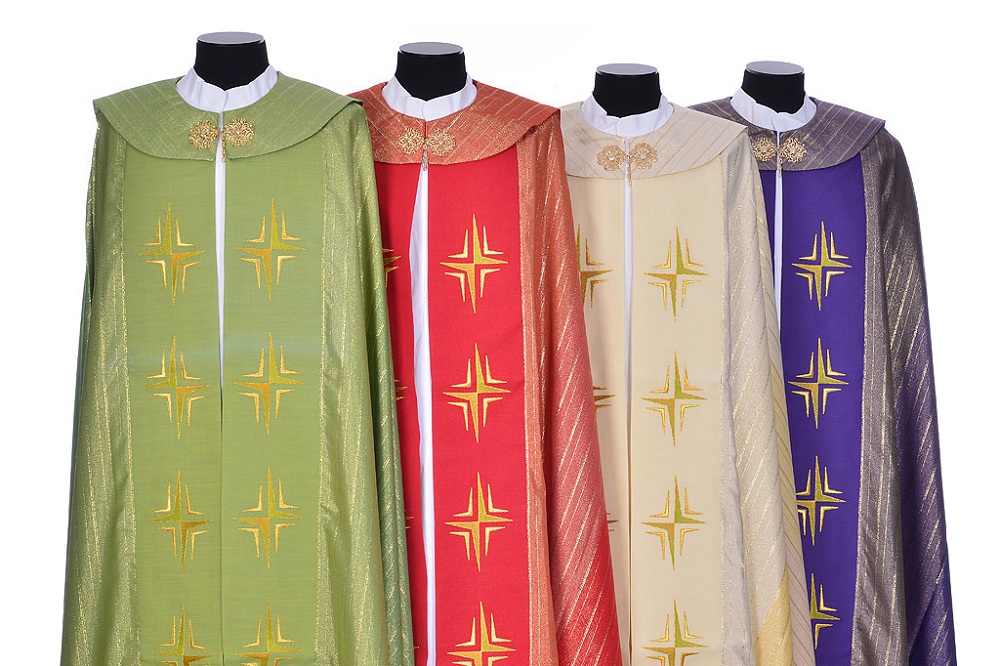
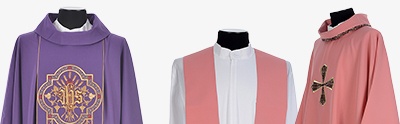
Liturgical vestment handmade in Italy, decoration and embroideries are machine made. Chasuble available in the following liturgical colors…
The choice of midnight is symbolic, representing the transition from night to day, from darkness to light, embodied in the coming of Jesus.
The Four Celebrations of Christmas Mass
The Christmas Mass is not a single celebration but consists of four important liturgies, beginning with Vespers on 24 December and ending with the Mass in Die on 25 December. The four main celebrations are:
Evening Mass on Christmas Eve: Held on the evening of 24 December, marking the start of the Christmas celebrations. The faithful gather to anticipate Jesus’ birth and reflect on the spiritual significance of the event.
Mass Ad Noctem (of the Night): The Midnight Mass is perhaps the most iconic of the Christmas celebrations and takes place shortly after midnight, symbolising the coming of Jesus as the light of the world on the longest night of the year.
Mass at Dawn: Celebrated at daybreak on 25 December, representing the rise of the light of justice and the hope Jesus brings to the world.
Mass in Die (during the Day): The main Mass of Christmas Day, representing the official celebration of Jesus Christ’s birth.
When Did Midnight Mass Begin?
The practice of the Christmas Vigil, known as Midnight Mass, began in the East and was first observed at the end of the 4th century in Jerusalem. It was later introduced to the West in 430 AD by Pope Sixtus III at the Basilica of Santa Maria Maggiore, and by the 12th century it had spread widely.
At that time, priests were authorised to celebrate three Masses on Christmas Day at appropriate times:
Night Mass at midnight, celebrating the birth of light amid darkness.
Dawn Mass, celebrating Jesus as the New Sun, hope, and redemption of the world.
Day Mass, commemorating the birth of Jesus and humanity’s salvation.
When Was Jesus Born?
The exact date of Jesus Christ’s birth is not specified in the Bible and remains a topic of debate among scholars and historians. Christian tradition has set 25 December as the date for Christmas, though this choice is not based on direct historical evidence.
The choice of 25 December may have been influenced by a desire to align Christmas with winter pagan festivals, such as the winter solstice, to encourage the conversion of pagan populations to Christianity. The term Natalis was used in the ancient Roman calendar for many festivals, including Natalis Invicti, which celebrated the winter solstice.
The formal establishment of Christmas as a liturgical feast on 25 December is documented in Rome from 336 AD, according to the Chronograph compiled in 353 AD by the Roman calligrapher Furius Dionysius Filocalus. While this date was chosen to commemorate Jesus’ birth, its exact historical origin remains debated.
The Gospel accounts of Matthew and Luke agree on certain central events: Jesus’ birth in Bethlehem (as foretold in Micah 5:1) and the conception by a virgin (as announced in Isaiah 7:14) through the Holy Spirit. However, no specific dates are mentioned.
The traditional dating to 1 BC may have been influenced by an error made in the 6th century by the monk Dionysius Exiguus. Most scholars today place Jesus’ birth between 7 and 6 BC, based on historical data and calculations derived from Gospel accounts and contemporary historical sources.
In summary, the choice of 25 December for Christmas and the Gospel narratives of Jesus’ birth are complex and fascinating topics that have generated much discussion and research over the centuries. The centrality of this feast for Christians, however, goes beyond historical questions, reflecting the spiritual significance of Jesus’ birth as the Redeemer of the world.
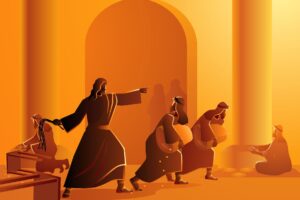
The expulsion of the merchants from the Temple of Jerusalem represents an act of rebellion by Jesus against a now...
25 February 2026
What’s the Future of Religion?
What’s the Future of Religion?
A Beginner’s Guide to Christianity
A Beginner’s Guide to Christianity
Mind-Blowing Statistics About Christianity You Need to Know
Mind-Blowing Statistics About Christianity You Need to Know
8289
Enter the Holyart world: $20 discount voucher valid on over 60,000 items
Come and discover Holyart, the largest e-commerce of religious articles in Europe and immediately receive a $20 voucher to use with your first purchase.
Check your mailbox: you will receive your discount within 5 minutes



 Buy Now:Prepared, bottled and sealed under the control of Vicar Foraneo with the bishops of Mazzara del Vallo authorization…