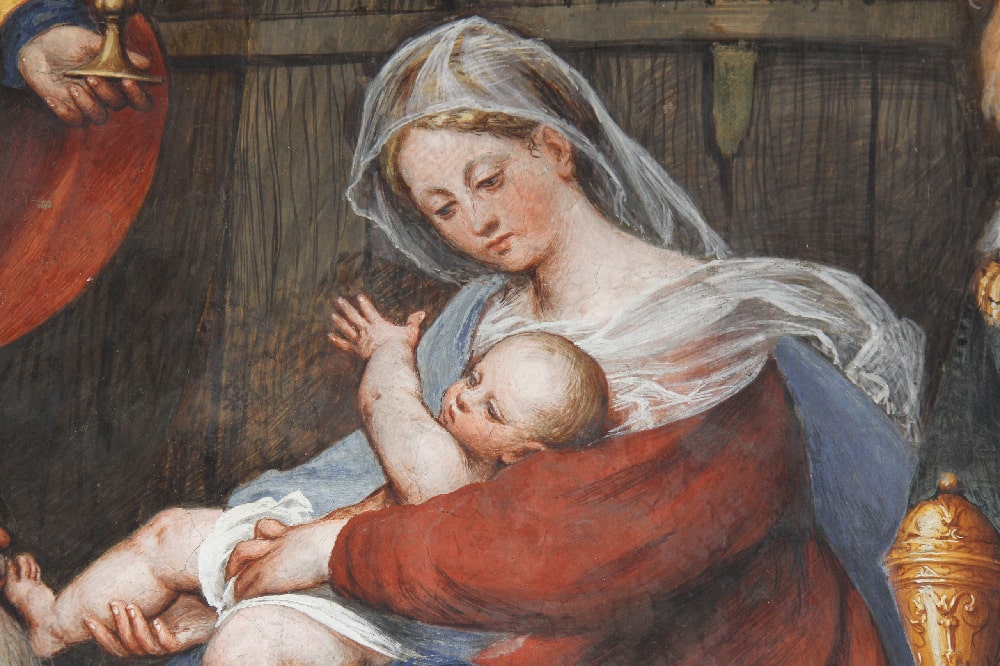
The Christian iconography of the Madonna del Latte has ancient origins. According to scholars, it was already widespread in Egypt in the sixth century AD, as a Christian adaptation of older depictions of the goddess Isis nursing her son, the god Horus. As has often happened, pagan images have blended with Christian ones, giving rise to something new. In this case, a representation of motherhood, but also a more profound symbolism, which over the centuries has been elaborated and adapted to different meanings.
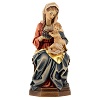
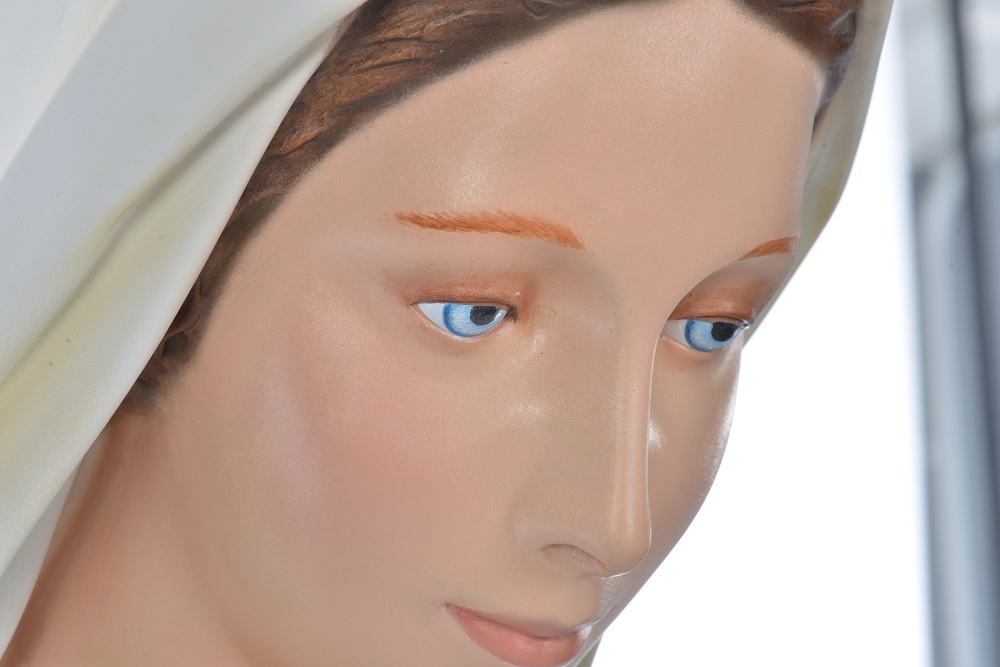
his statue in maple wood is hand made by the Valgardena artisans, following the local artistic tradition.
The Madonna del Latte, who offers her breast to the Infant Jesus, or who tenderly breastfeeds him, expresses, on the one hand, the tenderness and intimacy of a mother who takes care of her child, but given the particular nature of this mother and this Child, the role of Mary as the Mother of God is also superimposed on it.
Subsequently, the depiction of the Madonna offering her own milk with her breasts uncovered was also used in other contexts, in which saints or prelates benefited from this gesture. In this case, the meaning of the image is to be found in the desire to underline the benevolence of the Virgin towards the character in question.
Again, the milk offered by Mary becomes a blessing and a relief for the souls in Purgatory.
In the Middle Ages, the image of the Madonna lactans was also used for the symbolic meaning of the transmission of wisdom from the Church to the people.
In any case, the iconography of the Virgin Mary offering milk takes on a symbolic and spiritual meaning, communicating messages of devotion, divine motherhood and intercession.
The cult of Madonna del Latte spread throughout Europe, especially in rural centres, where the figure of the Virgin had a substantial spiritual and emotional impact on people and where the element of milk assumed a symbolic-taumaturgical value. In Western Europe, ampoules containing Sacred Milk began to appear in churches, capable of great miracles, first of all to return the milk to childbirth. The veneration of the Virgin continued to grow, and the cult of the Madonna del Latte continued to strengthen, between iconographic representation and popular veneration.
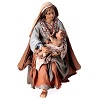
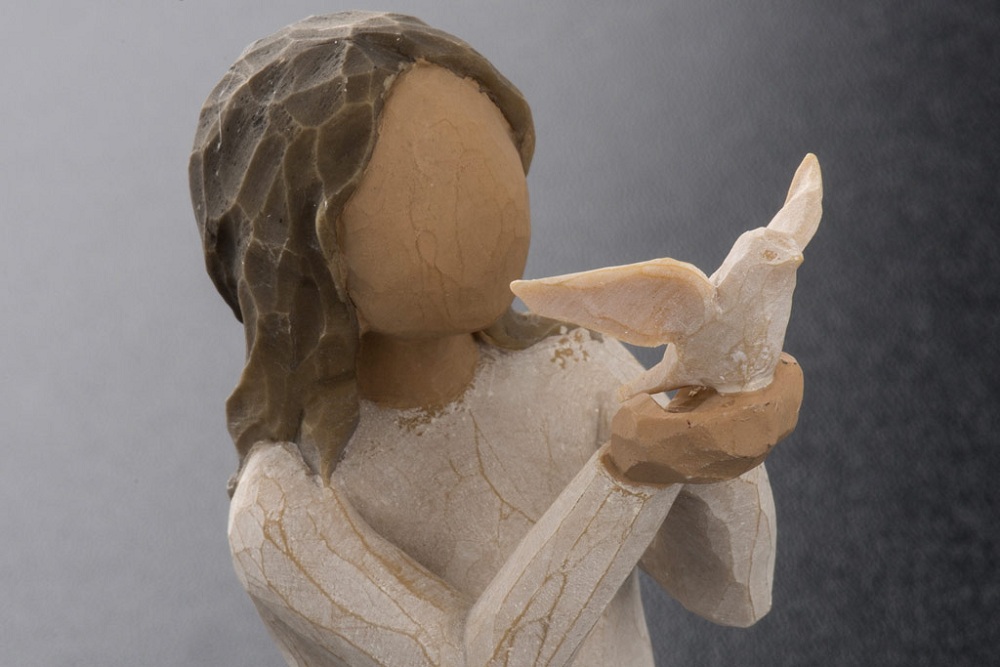
Nativity scene figurine made by Italian artist Angela Tripi.
Motherhood in art
As already mentioned, the first representations of Our Lady of Milk appeared in Christianised Egypt, within the Coptic church. These were variants of the iconography of the Madonna and Child. Byzantine art absorbed these representations, defining the Madonna Galaktotrophousa (Nursing Madonna), one of the Marian titles used in the cataloguing of icons. When the Galaktotrophousa passed from the East to the West, however, despite its highly revered status, it did not align with the stylistic and aesthetic preferences of European artists. As representations of Our Lady of Milk spread and became popular, from 1300 the iconographer was transformed in increasingly incisive ways, moving from the stylised forms typical of icons to more realistic images, losing the frontal vision in favour of more dynamic and varied poses, both for the Virgin and for the Child.
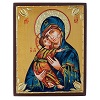
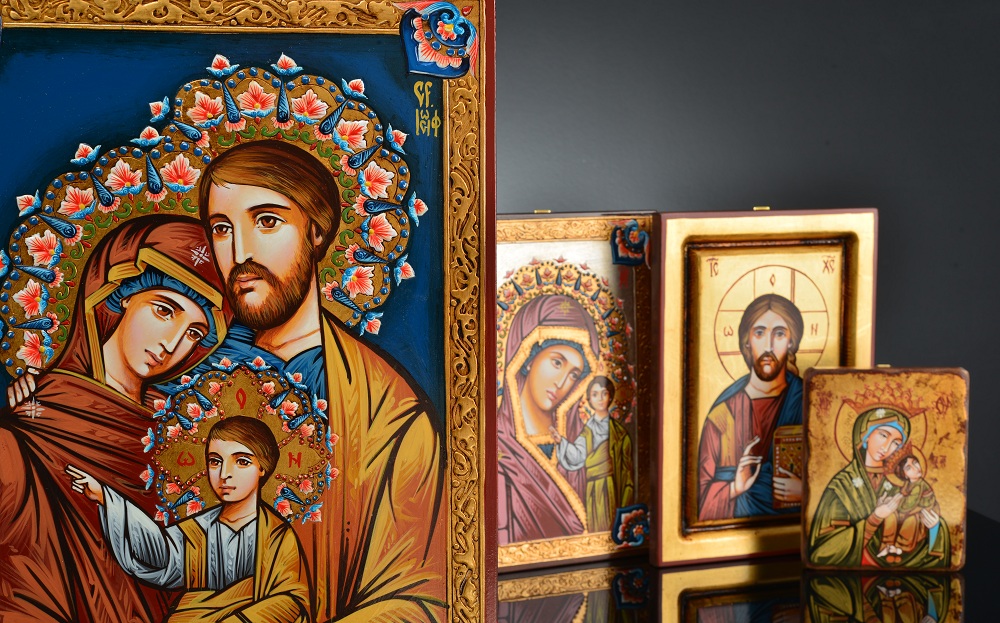
In this category you will find hand-painted icons, antique and modern icons, screen printed, cross-shaped icons and icons with silver or gold inserts.
This change must also be sought in social causes. In the twelfth century, the Sacrament of Marriage was established, defining the role of the woman as a bride and mother, subordinate to her husband, yet committed to the education of children and the management of the home. In a sense, this rehabilitated the figure of the woman, until then associated with Eve and Original Sin, and the Marian cult obtained a great implementation, precisely thanks to the symbolism of the Mother and Child expressed in such a powerful, direct and capable way to move the interiority and emotionality of anyone who contemplated it. For this reason, Mary needed to lose her frivolity and inaccessible hieratic nature, to become more human, more true, closer to all the women and mothers who could recognise themselves in her and take her as a model. In fact, it was precisely among women that devotion to Madonna del Latte became more widespread, especially among mothers and women in labour, who turned to the Virgin for milk to feed their children and for the strength to protect them.
With the beginning of the Council of Trent in 1543, the Church had to review its position regarding iconographic representations, limiting those that could even marginally betray a sensual nature or distract the faithful from prayer. Many depictions of Madonna del Latte were retouched to address this problem and even renamed. Still, popular veneration did not cease, and the intimate maternal dimension of these images of Our Lady with the Child Jesus did not disappear.
Mary was not the only one to be represented in this way. In ancient Western art, there were milk-carrying saints, galactophores, that is, milk carriers, to whom young mothers and pregnant women turned. Saint Agata, Brigida, and Romana are just a few examples.
Great artists have tried to immortalise the tenderness of Mary, the mother who breastfeeds the Child, a gesture that amalgamates earthly love and spirituality.
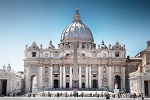
Very famous is the Byzantine icon of the Virgo lactans from Montevergine, which is exhibited in St. Peter’s Basilica during the end-of-year and January 1st celebrations.
The facade of the Basilica of Santa Maria in Trastevere is adorned with a 13th-century mosaic depicting the Madonna enthroned while nursing the Child.
Around 1320, Ambrogio Lorenzetti revolutionised the iconography of the Madonna del latte by abandoning the austere lines and the hieratic Madonnas of the icons and representing the Virgin Mary gently looking at her son, and the Child, who sucks milk naturally.
Leonardo Da Vinci returned to the same subject in his Madonna Litta, depicting the Madonna and Child in the same position as in Ambrogio Lorenzetti’s work.
In Greccio, a 1409 fresco attributed to the Master of Narni combines the themes of the Madonna del Latte and the Nativity, placing the scene on the Holy Night and inserting the figure of Saint Joseph.
During the New Year’s Mass 2024, Pope Francis reminded the faithful of the need to welcome the gift of women, to respect, protect and value every woman, as “those who injure a single woman profane God, born of a woman”. With these words, the Holy Father wished to recall the primacy of Mary, mother of Jesus, man and God. In an age of war and violence, it is to her that we must look, as an icon of peace, and with her to all women: “We need to look to mothers and women to find peace, to get out of the spirals of violence and hatred, and return to having human looks and hearts that see”.
Moreover, the Pontiff had already stressed on several occasions not only the importance of women and mothers, but also the naturalness of breastfeeding, which is holy and legitimate, re-establishing the sacred bond of motherhood and the figure of Madonne del latte. There is nothing simpler and more powerful than a mother who holds and breastfeeds her baby, in Pope Francis’ vision of the sacredness and beauty of daily life, in which the divine mystery is linked to the tangible and human reality of motherhood.
This is the prayer to be addressed to Madonna del latte:
Watch, O Queen of love and sorrow, Bless, O Mary, all mothers, Strengthen, O Mary, all mothers, Sanctify, O Mary, all mothers.
Watch over grieving mothers. Bless their joys and sorrows. Strengthen them in their irreplaceable mission. Sanctify them by giving them the Fruit of your womb.
Please, Lord:
For all the mothers who spend their lives, day after day, in the service of their children, and calmly face the “terrible daily life”, so that they find in you, the support and the strength to continue even in moments of fatigue and mistrust
Please, Lord.
For all the mothers who weep for mistakes and the falls of their children, and suffer to feel them far away, so that in faith they rediscover the real reason for their complete dedication, even in the hour of abandonment,
Please, Lord.
For all parents who, distracted by multiple commitments, risk forgetting that words do not educate them, but by example and consistency, so that they find the courage to verify life In light of Mary’s example,
On 28 October the Church celebrates the joint liturgical memorial of Saint Simon the Zealot and Saint Jude Thaddeus. Here...
14 September 2026
What’s the Future of Religion?
What’s the Future of Religion?
A Beginner’s Guide to Christianity
A Beginner’s Guide to Christianity
Mind-Blowing Statistics About Christianity You Need to Know
Mind-Blowing Statistics About Christianity You Need to Know
9237
Enter the Holyart world: $20 discount voucher valid on over 60,000 items
Come and discover Holyart, the largest e-commerce of religious articles in Europe and immediately receive a $20 voucher to use with your first purchase.
Check your mailbox: you will receive your discount within 5 minutes