Homepage | Religion | The Episode of the Expulsion of the Merchants from the Temple of Jerusalem
The Episode of the Expulsion of the Merchants from the Temple of Jerusalem
25 February 2026
Reading Time: 6minutes
The expulsion of the merchants from the Temple of Jerusalem represents an act of rebellion by Jesus against a now outdated and corrupted religious tradition, in favour of the new purity of spirit and the hope that He came to bring.
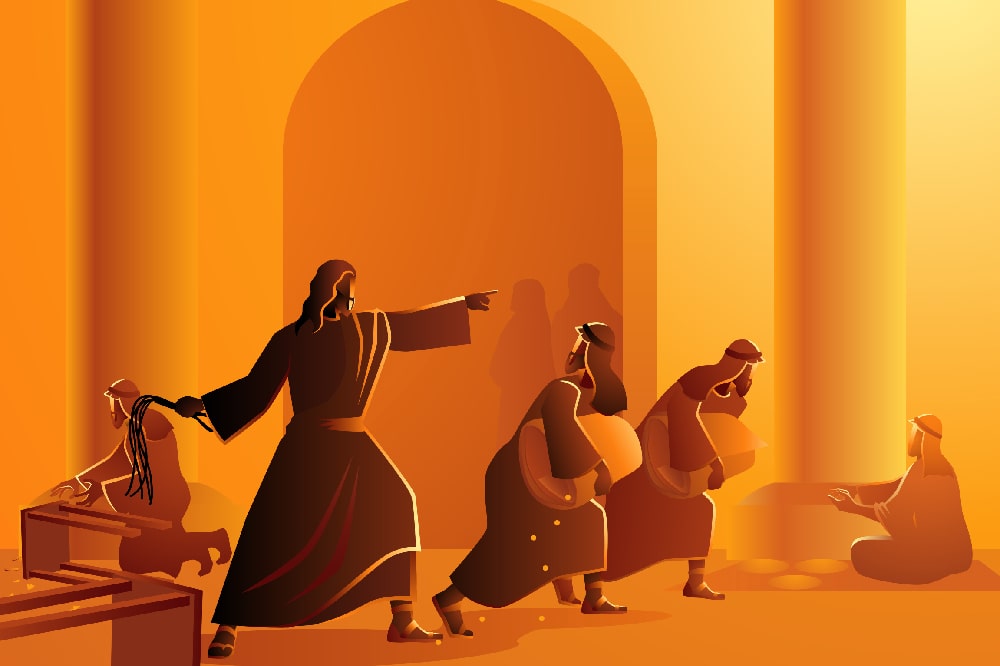
Among the many episodes of Jesus’ life that we have heard since childhood, the expulsion of the merchants from the Temple of Jerusalem is perhaps one of the most controversial and difficult to understand, at least when we are children. This is because we are used to thinking of Jesus as an exceptionally good and gentle man, never prone to anger and always ready to dispense love, to turn the other cheek, as He Himself taught us. Yet, in this particular episode, recounted with some differences in all the canonical Gospels (Mark 11:7-19; Matthew 21:8-19; Luke 19:45-48; John 2:12-25), Jesus has a furious, even violent, reaction towards the merchants who conduct their business in the Temple. In fact, in the Gospel of John, we read that Jesus made a whip to use against those who opposed His warning: “He made a whip of cords, and drove them all out of the temple, with the sheep and the oxen; and poured out the coins of the money changers and overturned their tables” (John 2:15).
But why is Jesus so angry with the merchants of the Temple? To truly understand this episode, we need to go back in time and realise what the Temple of Jerusalem was like in Jesus’ day and on what occasions people went to visit it.
The Temple of Jerusalem in Jesus’ Time
The Temple of Jerusalem was an enormous building, almost 500 metres long, frequented by a multitude of faithful and priests who performed rituals and sacrifices every day, particularly during festival days. It was also presided over by selected guards and Roman auxiliary troops who made sure no disturbances occurred. This makes, according to various historians, the violent action of Jesus against the merchants of the Temple rather implausible, as anyone who caused disorder would have been immediately arrested or killed.
From the Scriptures, we know that it was traditional for Jews to go to the Temple of Jerusalem three times a year, for the three major Jewish religious festivals: the Feast of Unleavened Bread (Pesach), the Feast of Weeks (Shavuot), and the Feast of Booths (Sukkot). In particular, Pesach, the Passover, was the most important, tied to the Exodus of the Jewish people from Egypt, and it was precisely during the Jewish Passover that Jesus went to the Temple, according to the Gospels.
Read more:
How is Easter calculated?
Each year changes date but remains the most important holiday: in this article, you will find out how…
Since those who went before God could never do so empty-handed (Deuteronomy 16:16), and since the Torah required that both the victims and those offering them be pure, it was not only allowed for merchants of sacrificial animals to do business near the Temple, but even inside it, in its courtyards, and these activities were managed by the High Priests themselves.
This tradition, universally known and accepted, greatly upset Jesus. His act is a call for the return to ancient religious purity, far from trade, from money management, and from all those economic activities that, despite being related to sacrifices, in His view, desecrated a sacred place par excellence. “Take these things away; do not make my Father’s house a place of trade” (John 2:16).
To the Jews who asked Him for a sign, Jesus then replied: “Destroy this temple, and in three days I will raise it up” (John 2:19). It is John who reveals to us that He was speaking of His own body, and how, having been killed by those very men who now spoke to Him, He would rise from the dead after three days, embracing eternal Life and the Glory of Heaven.
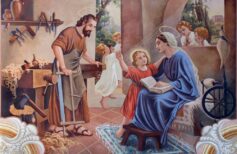
Jesus had already been to the Temple of Jerusalem as a child, precisely for the Passover. The episode of His visit to the Temple is recounted in the Gospel of Luke (Luke 2:41-50). Jesus, at the age of twelve, went to the Temple with Mary and Joseph for Passover, but when the parents left to return to Nazareth, they discovered He was missing. After three days of searching, they found Him at the Temple, speaking with the priests and teachers. “And He said to them, ‘Why were you looking for me? Did you not know that I must be in my Father’s house?‘” (Luke 2:49).
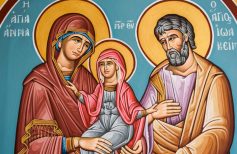
Also in the Gospel of Luke (Luke 2:22-40), we read of the presentation of the infant Jesus at the Temple, forty days after His birth. According to Jewish custom, every firstborn male child had to be consecrated to the Lord and redeemed through a symbolic offering. When Joseph and Mary brought the infant Jesus to the Temple of Jerusalem, they first encountered the elderly Simeon, who recognised in Jesus the Messiah, then the prophetess Anna, who also “spoke of the child to all who were looking forward to the redemption of Jerusalem” (Luke 2:38).
The Purification of the Temple in the Gospels: The Differences
The differences in the Gospel account of this episode in the life of Jesus begin with the date on which it is said to have taken place. For the evangelist John, Jesus was at the beginning of His ministry, and He would have gone to Jerusalem for the first time, only to return there three years later to die.
According to the Synoptic Gospels, however, there was a single journey of Jesus to Jerusalem, the one in which He encountered His destiny, the Passion, and death. Luke and Matthew place the expulsion of the merchants from the Temple on the day of Jesus’ arrival in Jerusalem (PalmSunday), while Mark places it the day after. In any case, we are still in the period of Lent.
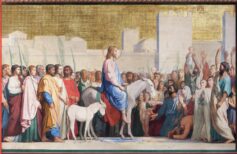
Scene of Jesus on a donkey entering Jerusalem with a shepherd.
In particular, Mark associates the episode of the Temple with that of the Cursing of the Fig Tree in Bethany, which took place the day before. After being welcomed by the cheering crowd in Jerusalem, Jesus went to sleep in Bethany. On the way, He saw a fig tree full of leaves but without any fruit He could pick. Jesus prophesied that the tree would never bear fruit, and the plant dried up instantly. Perhaps Mark wanted to link this episode to the expulsion of the merchants to further convey the atmosphere of hostility and misunderstanding with which Jesus was received in Jerusalem.
Luke, on the other hand, interprets the episode as a confirmation of the royalty and solemnity of Jesus’ entry into Jerusalem.
The choice of the Evangelist John to place the episode three years before the death of Jesus takes on significance if we consider Christ’s revolutionary role in Jewish culture, His detachment from everything that has been in favour of what will be, thanks to Him. Jesus does not merely expel the merchants, He announces the destruction of the Temple, in the name of a God who is to be worshipped through actions and prayer, not through commerce.
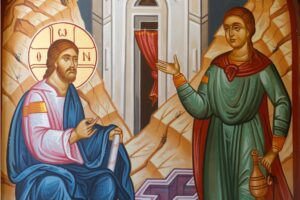
With the meeting with the Samaritan woman at the well, Jesus reveals his identity as Messiah and speaks revolutionary words,...
25 March 2026
What’s the Future of Religion?
What’s the Future of Religion?
A Beginner’s Guide to Christianity
A Beginner’s Guide to Christianity
Mind-Blowing Statistics About Christianity You Need to Know
Mind-Blowing Statistics About Christianity You Need to Know
8749
Enter the Holyart world: $20 discount voucher valid on over 60,000 items
Come and discover Holyart, the largest e-commerce of religious articles in Europe and immediately receive a $20 voucher to use with your first purchase.
Check your mailbox: you will receive your discount within 5 minutes