


Ancient Russian Acheiropoieta icon, early 19th century, 14x12 in
Ancient Russian Acheiropoieta icon, early 19th century, 14x12 in.
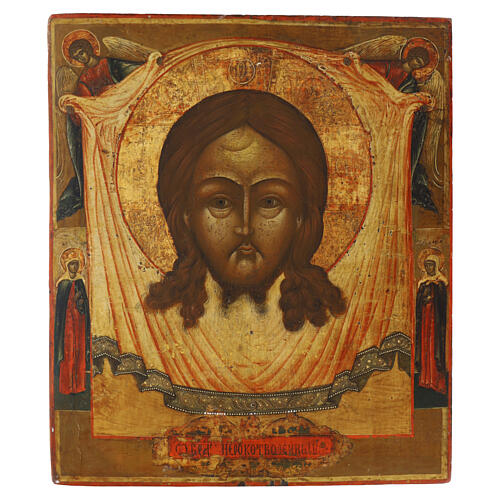
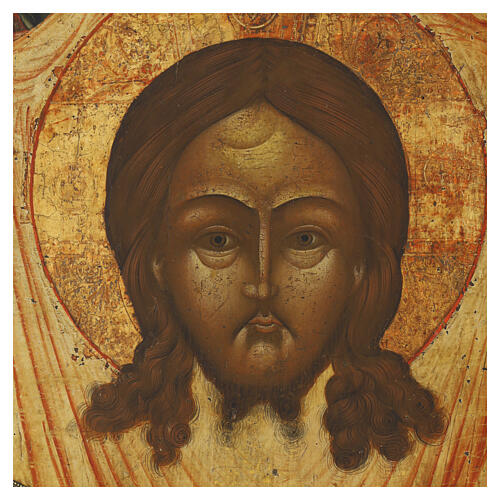
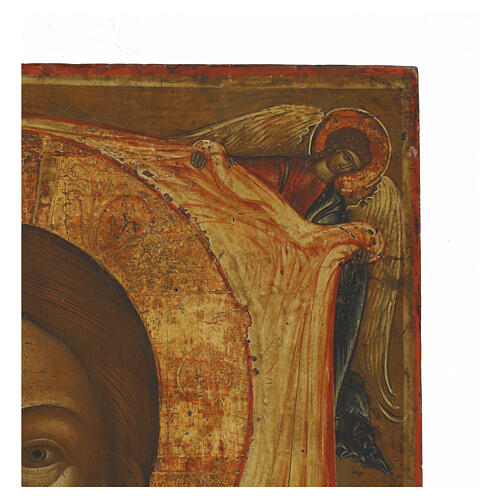
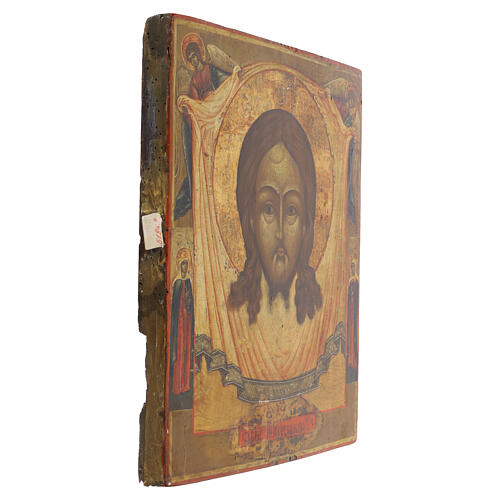
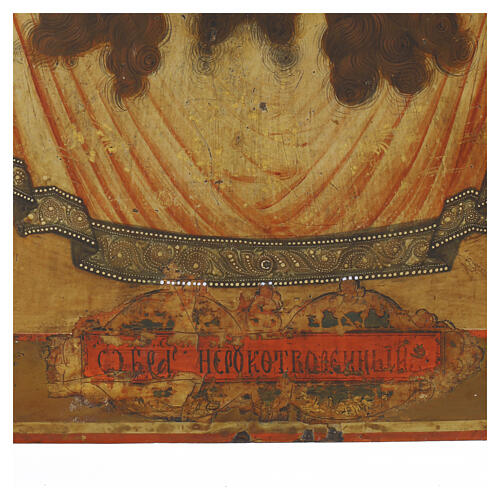
Ancient Russian icon depicting the Face of Christ Acheiropoieta, known as the “Saviour not painted by human hand”, a central image in the Eastern Christian tradition.
According to tradition, the sacred effigy appeared miraculously on a linen cloth called the Mandylion, sent to King Abgar of Edessa: Christ, having washed his face, dried it on the cloth and his features were miraculously imprinted, thus originating the first acheiropo...
Info and features
Ancient Russian Acheiropoieta icon, early 19th century, 14x12 in.
Ancient Russian icon depicting the Face of Christ Acheiropoieta, known as the “Saviour not painted by human hand”, a central image in the Eastern Christian tradition.
According to tradition, the sacred effigy appeared miraculously on a linen cloth called the Mandylion, sent to King Abgar of Edessa: Christ, having washed his face, dried it on the cloth and his features were miraculously imprinted, thus originating the first acheiropoieta image.
In 944, the icon was taken from Edessa to Constantinople, where it remained until the sack of 1204; later, by tradition, it reached Rome and was venerated as Veronica, the “true icon”.
In Orthodox practice, the Acheiropoieta is commemorated on August 16, while the first Sunday of Lent celebrates the Triumph of Orthodoxy, when icons are solemnly displayed.
Considered a sign of divine presence and true incarnation, this image was also used as a protective emblem on standards and banners.
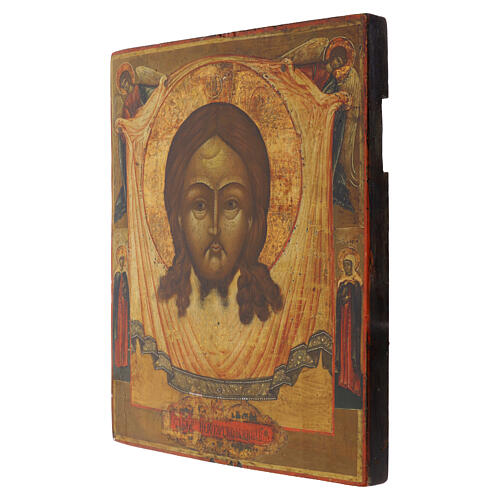
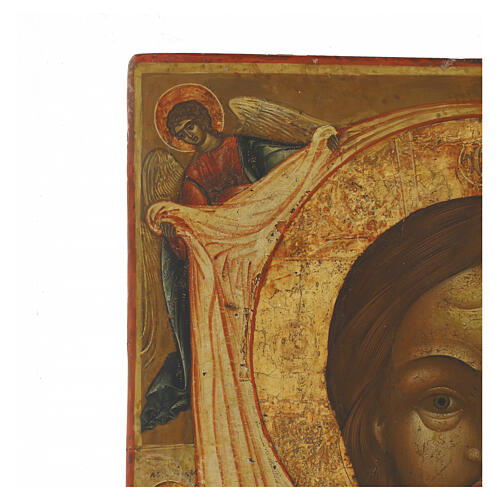
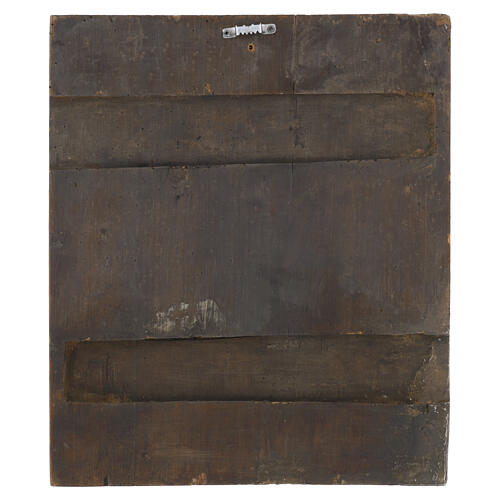
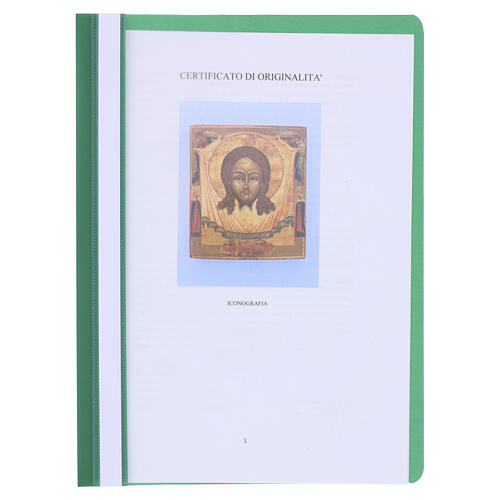
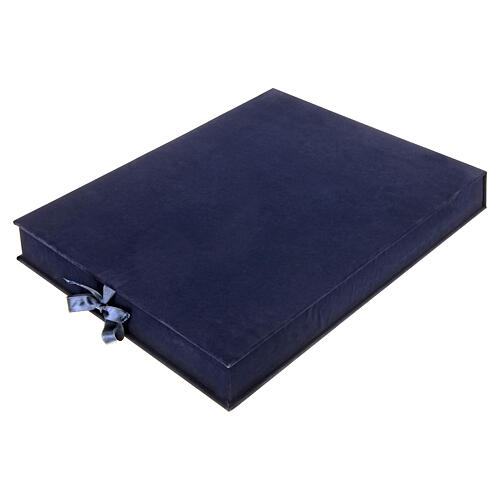
The icon is painted on an antique wooden panel prepared with levkas and executed in egg tempera following the Russian iconographic tradition. Supplied with an expert appraisal and an elegant blue velvet case.
Provenance: Volga Region, Russia.
Technique: egg tempera.
Materials: wood prepared with levkas.
Dimensions: 14.2x12 in.
Period: early 19th century.