


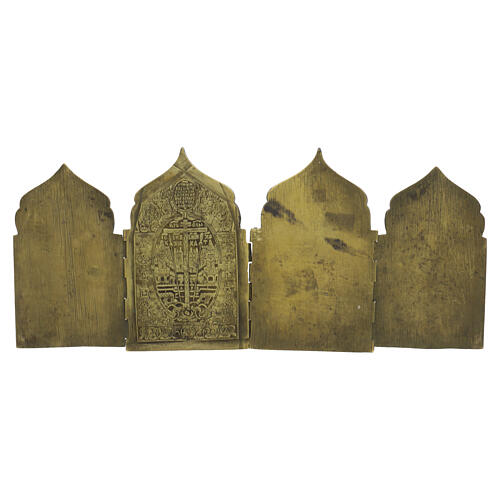
Antique Russian travel icon, enamelled bronze polyptych, 19th century, 15.6x6.7 in opened
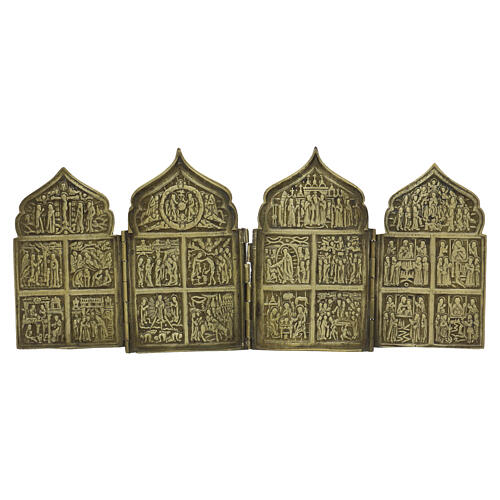
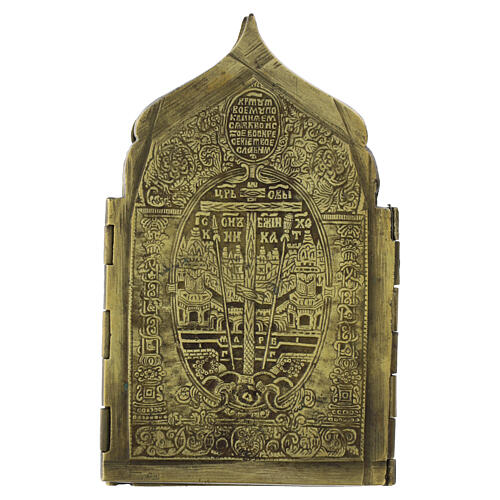
Antique Russian travel icon, enamelled bronze polyptych, 19th century, 15.6x6.7 in opened.
An extraordinary example of a Russian travel icon, this four‑leaf enamelled bronze polyptych contains a rich cycle of sacred scenes designed to accompany the faithful in daily prayer away from church.
Travel icons, widely used by pilgrims and soldiers, were portable devotional objects, often foldable, made from durable materials such as bronze. Their practicality and the presence of multiple sacred scenes al...
Info and features
Antique Russian travel icon, enamelled bronze polyptych, 19th century, 15.6x6.7 in opened.
An extraordinary example of a Russian travel icon, this four‑leaf enamelled bronze polyptych contains a rich cycle of sacred scenes designed to accompany the faithful in daily prayer away from church.
Travel icons, widely used by pilgrims and soldiers, were portable devotional objects, often foldable, made from durable materials such as bronze. Their practicality and the presence of multiple sacred scenes allowed believers to carry a small "domestic altar," fostering meditation and spiritual protection during journeys.
The polyptych is organised into four panels:
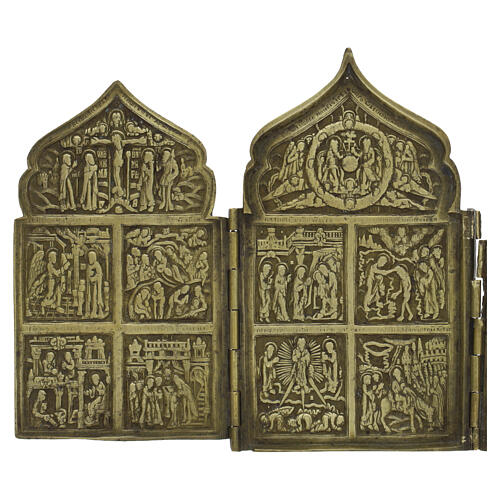
First panel: Crucifixion, Annunciation, Nativity of Jesus, Presentation of Mary in the Temple, Nativity of the Virgin.
Second panel: Trinity of the New Testament, Presentation of Jesus at the Temple, Baptism of Christ, Transfiguration on Mount Tabor, Entry into Jerusalem.
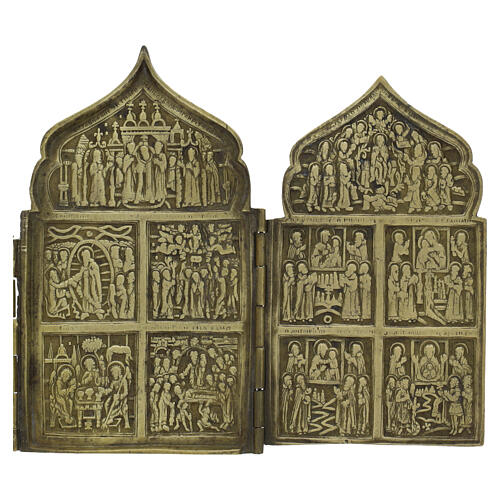
Third panel: Exaltation of the Cross, Descent into Hell, Ascension of Christ, Pentecost, Dormition of Mary.
Fourth panel: Ode of the Mother of God with the Prophets and four processional depictions of renowned Marian images: Mother of God of Vladimir, Mother of God of Tikhvin, Our Lady of the Sign, and Our Lady Hodegetria.
The richness of the depictions and the coloured enamels give the work considerable artistic and devotional value, making it a significant testimony to the Russian Orthodox tradition.
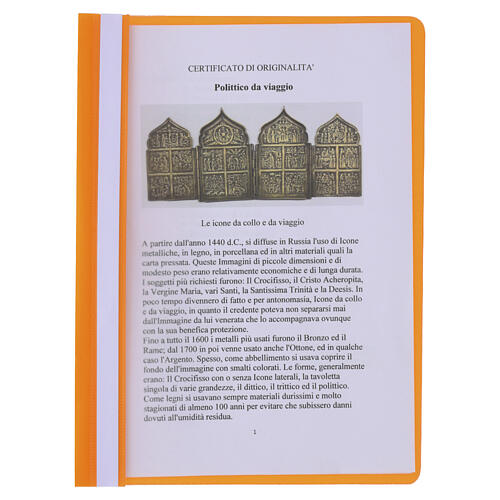
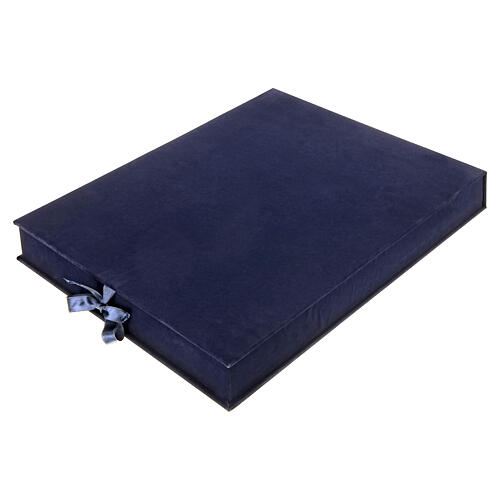
Accompanied by an elegant blue velvet case and an expert appraisal.
Origin: Moscow, Russia.
Materials: bronze, enamels.
Measurements: opened 15.6x6.7 in; closed 4.1x6.7 in.
Period: early 19th century.