Jubilee Proclamation Bull 2025: here’s what it’s about!
13 August 2025
Reading Time: 10minutes
On 9 May 2024, Pope Francis read the Jubilee Proclamation Bull 2025 entitled Spes non confundit. Here is what it contains and what topics it focuses on
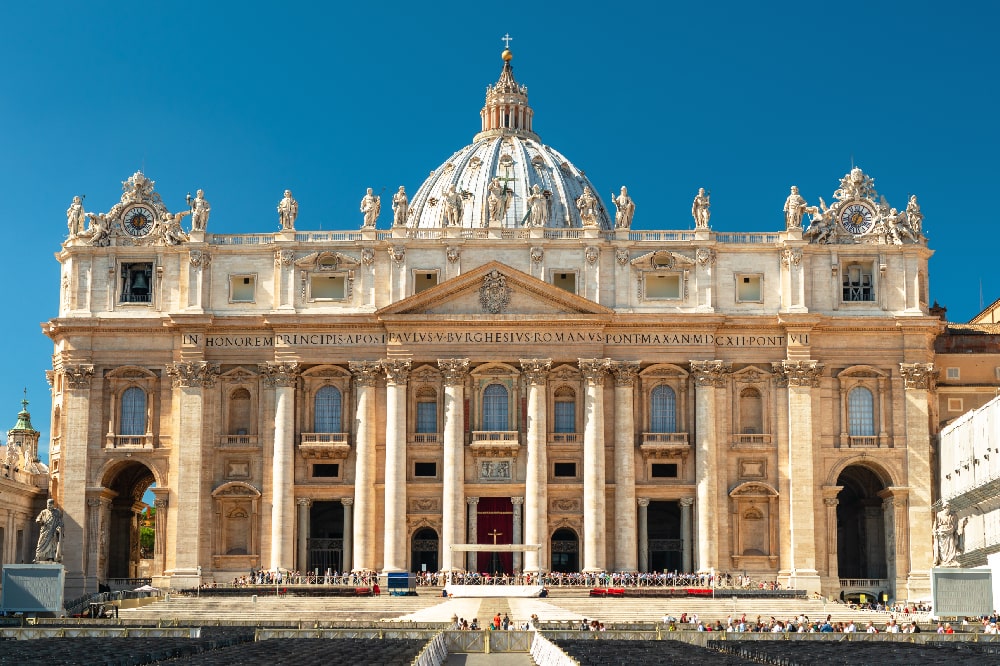
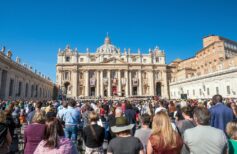
The Jubilee 2025 is drawing closer, and we are preparing for it. Have you already seen the Jubilee Calendar, with all the unmissable events that will take place in Rome and around the world? Have you organised a pilgrimage, perhaps the famous Tour of the Seven Churches? Or are you simply preparing with the special Jubilee Prayer? Today, we learn more about the Jubilee Proclamation Bull, the document with which Pope Francis officially opened the 2025 Jubilee. The Jubilee was announced by the Holy Father with the reading of the Pontifical Bull entitled Spes non confundit, on 9 May 2024, during a solemn delivery ceremony in the atrium of St. Peter’s Basilica in the Vatican. The title of the Bull means “Hope does not disappoint,” and the document sets out the guidelines and spiritual intentions for the Holy Year 2025, calling the faithful around the world to live a period of renewal and reconciliation.
Read more:
The Jubilee 2025 Events Calendar
The calendar of events for the Jubilee 2025 has been published, twelve months of events and occasions to deepen faith…
But what is the Jubilee Proclamation Bull?
More generally, the PapalBull is an official document of the Pope, issued in written form by the Roman Curia and characterised by the seal of the Pontiff. Precisely from the metallic seal, the bulla, derives the name of the entire document.
The Proclamation Bull is the official document issued by the Pope to announce and sanction the beginning of a Jubilee. The Bull contains detailed information on the methods, objectives and conditions for fully experiencing the Jubilee period and for obtaining indulgencesduring the Jubilee. The first official Jubilee was proclaimed by Pope Boniface VIII in 1300 with the Proclamation Bull Antiquorum habet. Since then, each ordinary Jubilee, which is celebrated every 25 years, and the extraordinary ones are announced with a Bull. This document not only communicates the start and end date of the Jubilee, but also invites the faithful to penance, prayer and charity. The Papal Bull is identified by its opening words.
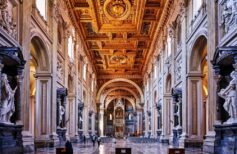
The Ordinary Jubilee of 2025 will begin on 24December 2024 with the opening of the Holy Door of St. Peter’s Basilica. The other Holy Doors, located in San Giovanni in Laterano, Santa Maria Maggiore, and San Paolo Fuori le Mura, will be opened in the following weeks and closed by December 28, 2025. On 29 December 2024, in all cathedrals and co-cathedrals, the diocesan Bishops will celebrate the solemn opening of the Jubilee Year. The pilgrimage from a church to the cathedral will represent the path of hope for believers and allow them to enjoy the Jubilee Indulgence.
The Ordinary Jubilee will end with the closing of the Holy Door of St. Peter’s Basilica on 6 January 2026, the Epiphany of the Lord. The Church, with this Jubilee, hopes to spread the light of Christian hope and witness the love of God throughout the world. The new Jubilee will offer the living experience of God’s love, the sure hope of salvation in Christ. This Holy Year marks the path towards 2033, when the two thousand years of Christ’s Redemption will be celebrated.
“Hope then does not disappoint, for the love of God has been poured into our hearts through the Holy Spirit who has been given to us.” (Romans 5)
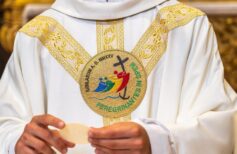
With these words, the Apostle Paulgives courage to the Christian community of Rome, and hope becomes the central message of the upcoming Jubilee, as stated in the slogan written under the official logo: Pilgrims of Hope. Pope Francis wanted to address all the pilgrims who will participate in the 2025 Jubilee, not just those who will arrive in Rome, but also all those who will celebrate the Holy Year in their local Churches and especially in their hearts. This is because everyone hopes, hope is a universal feeling that resides in the heart of every person as a desire and expectation of the good, despite the uncertainty of the future. Many face the future with scepticism and pessimism, as if nothing could offer them happiness. Thus, the Jubilee Proclamation Bull already contains the fundamental message of this Holy Year, which is about to come —a message of hope, an invitation to find in faith the confidence and optimism necessary to face the future.
The image of the anchor used in the 2025 Jubilee Logo represents the stability and security of Christian hope. The next Jubilee will be a Holy Year characterised by hope in God, expressed with trust in the Church and society. The believing witness must be a leaven of hope in the world, waiting for the return of the Lord Jesus Christ.
The dead and risen Jesus is the core of Christian faith and hope. Saint Paul describes this concept in a few words: Christ died for our sins, was buried, rose again, and appeared to the disciples. This event offers the certainty of life’s transformation through Christ. Christian martyrsof all ages bear witness to hope through their sacrifice. They represent the ecumenical unity of blood, and their example inspires believers to keep hope alive. God’s judgment, based on love and mercy, should not instil fear, but hope. This judgment aims at the salvation and purification necessary for the definitive encounter with God. Prayer for the dead and the Jubilee Indulgence are expressions of this hope of mercy. Mary, Mother of God, is the highest example of hope. Even in moments of suffering, such as at the foot of the cross, she maintained trust in God. Marian shrines around the world remain places of welcome and a source of hope for pilgrims.
Justified by faith and at peace with God
“Therefore, since we have been justified by faith, we have peace with God through our Lord Jesus Christ. Through whom we have gained access (by faith) to this grace in which we stand, and we boast in hope of the glory of God. […] Hope does not disappoint, because the love of God has been poured into our hearts through the Holy Spirit who has been given to us” (Romans 5:1-2.5).
Thus, Saint Paul continues his Letter to the Christians of Rome, to whom he addresses for the first time, after having carried out his work of evangelisation in the East. The Letter to the Romans represents a valid universal message of hope, Paul’s hope to bring the Gospel to Rome and the hope of every Christian based on the love of God that has been poured into our hearts by the Holy Spirit, and that for this reason never disappoints, but remains a sure guide for all the faithful in their journey of faith. All of us, as followers of Christ, are justified and at peace with God, and this state of grace allows us to be steadfast in hope. Christian hope is rooted in faith in eternal life. In the risen Christ, human history does not end in a blind spot, but is oriented towards the encounter with the Lord. The dead and risen Jesus is the core of Christian faith and hope. Saint Paul describes this concept in a few words: Christ died for our sins, was buried, rose again, and appeared to the disciples. This event offers the certainty of life transformation through Christ.
The importance of the Holy Spirit
“For if, when we were enemies, we were reconciled to God through the death of his Son, much more now that we are reconciled, shall we be saved through his life” (Romans 5:10). The life of every Christian is linked to Christ from Baptism, which enshrines the principle of his life of faith. It is the action of the Holy Spirit that renews and makes unwavering the hope in salvation that Jesus represents. The Holy Spirit keeps this inexhaustible flame burning, giving us strength and courage at every moment of our lives, keeping alive in us the Christian awareness and hope that nothing and no one can ever separate us from divine love, not even the worst tribulations. Thanks to this hope that does not fade in the face of difficulties and is constantly nourished by faith and charity, the Christian continues to make the three theological virtues – Faith, Hope and Charity, in fact – the engine of his existence. The apostle Paul invites us to be “glad in hope, constant in tribulation, persevering in prayer” to witness faith and love credibly.
“We also boast in tribulations, knowing that tribulation produces patience, patience a proven virtue, and virtue a proven hope” (Romans 5:3-4)
Saint Paul recognises that life reserves both joys and sorrows, that love is put to the test in difficulties, and that suffering demolishes hope. However, he reminds the Christians of Rome that precisely in the face of tribulations, the Christian can resort to a powerful weapon: patience. Patience is a rare virtue, especially in the modern world, where everything seems to move too quickly. Where more and more often haste and frenetic rhythms cause impatience, nervousness and dissatisfaction, but precisely by cultivating it, and rediscovering the deep connection with nature, with its rhythms and the alternation of the seasons, we can find peace. Pope Francis in the Bull of Proclamation also mentions Saint Francis, who in his Canticle of Creaturesinvoked a brotherhood among all creatures of creation.
Saint Paul emphasises the importance of patience to highlight perseverance and trust in God’s promises. God himself is patient with us, as “the God of perseverance and consolation” (Romans 15:5). Patience, a gift of the Holy Spirit, keeps hope alive and consolidates it as a virtue and lifestyle.
Pope Francis invites us to learn to ask often for the grace of patience, which is born of hope and sustains it. Rediscovering patience is beneficial for both ourselves and others, enabling us to live with greater serenity and trust in God’s promises.
The Jubilee as a Christian journey: the importance of pilgrimage
Saint Paul emphasises the importance of hope and patience in the Christian journey. Life is a journey that requires intense moments to nourish hope, an indispensable companion on the path to encountering Jesus. In this perspective, pilgrimage is also reaffirmed as central to the Jubilee events, a symbol of the search for life’s meaning. The path favours the rediscovery of silence, fatigue and essentiality. Pilgrims of hope will travel ancient and modern paths to experience the Jubilee, visiting faith-based itineraries in Rome and beyond, crossing borders and discovering different cultures. In particular, the Jubilee churches in Rome will open during the Jubilee as an oasis of spirituality, where pilgrims can find rest for their souls and approach the Sacrament of Reconciliation, the starting point for a real journey of conversion. The preparation of priests and the faithful for Confession will be given particular attention.
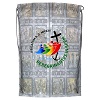
Pilgrim’s Backpack – Complete Kit for Jubilee 2025 “Pilgrims of Hope” – Eco-friendly and Waterproof
Signs of Hope
But finding hope within yourself isn’t enough. The Church is called to interpret the signs of the times in the light of the Gospel, recognising the good present in the world and transforming these signs into signs of hope. The Jubilee is an opportunity for everyone to be tangible signs of hope, responding with love and concreteness to the needs of the most vulnerable and building a better future for all. But what are these signs? There are many different things, because the world in which we live is not easy and subjects us to terrible trials every day. Peace must be the first sign of hope. Humanity, ignoring past dramas, continues to suffer from violence. The Jubilee invites concrete projects for peace and a courageous and creative diplomatic commitment.
Hope also requires an enthusiastic vision of the future, and the future needs new lives to exist. Promoting responsible motherhood and fatherhood is essential. The Christian community must support a social alliance for hope, encouraging the birth of new children even against the social factors that determine their decline.
Articles designed to celebrate the upcoming Jubilee 2025 in Rome.
Again, the Jubilee invites initiatives that restore hope to prisoners, proposing forms of amnesty and reintegration paths. The Church calls for dignity and respect for human rights, including the abolition of the death penalty.
The sick, both at home and in the hospital, must find relief in the closeness of people and the works of mercy, which awaken hope and gratitude. Inclusive and supportive care is needed for those suffering from disabilities or illnesses. Young people, often disappointed by the uncertainties of the future, must be supported. The Jubilee is an opportunity to renew our commitment to them, helping them to overcome melancholy and the risks of self-destructive behaviour. Migrants, in search of a better life, must be welcomed with dignity and responsibility. The Christian community must defend their rights, guaranteeing security, work and education.
The elderly, often alone and abandoned, must be recognised as treasures of experience and wisdom. The Christian community and civil society must work together to form an alliance across generations.
A concrete commitment is needed to tackle widespread poverty. The poor should not be seen as collateral damage, but as victims to be supported and helped.
The Pope’s Appeals for Hope
In addition to recognising the signs of hope, the Church must also act actively and practically to offer concrete solutions to the discomfort and need that those signs reveal. The Jubilee is an invitation to rediscover hope through social justice, Christian unity and generosity towards those most in need. The Church is called to be a tangible sign of hope, working for a more just and united world.
The Jubilee emphasises that the Earth’s resources must be shared equitably. The rich must be generous and help those in need. In particular, it is scandalous that many people still suffer from hunger today. It proposes the establishment of a Global Fund to eliminate hunger and develop poor countries, using funds earmarked for military spending.
Rich nations should forgive the debts of poor countries, recognising the historical injustice and ecological debt between North and South. This is seen as a necessary step to repair injustices and promote peace.
The upcoming Jubilee coincides with the 1700th anniversary of the Council of Nicaea, a pivotal event in the Church’s unity and the definition of the Christian faith. This anniversary offers an opportunity to strengthen unity among Christians and respond to the call to evangelisation. The Jubilee of 2025 presents an opportunity for Christians of East and West to unify the date of Easter celebration, overcoming historical divisions and responding to the desire for unity expressed by Jesus.
From the Baptism in the Jordan to the triumphal entry into Jerusalem. The three years of Jesus' public life that...
11 March 2026
What’s the Future of Religion?
What’s the Future of Religion?
A Beginner’s Guide to Christianity
A Beginner’s Guide to Christianity
Mind-Blowing Statistics About Christianity You Need to Know
Mind-Blowing Statistics About Christianity You Need to Know
7465
Enter the Holyart world: $20 discount voucher valid on over 60,000 items
Come and discover Holyart, the largest e-commerce of religious articles in Europe and immediately receive a $20 voucher to use with your first purchase.
Check your mailbox: you will receive your discount within 5 minutes