Homepage | Religion | The History of the Dogmas of the Catholic Church
The History of the Dogmas of the Catholic Church
13 October 2025
Reading Time: 7minutes
Dogmas are absolute and essential truths to which every Christian must adhere by virtue of their faith. Here is how they have been defined over the centuries.
In the Catholic Christian context, a dogma is a truth revealed by God. Such truth may have been drawn from the Gospels by the Apostles, or recorded in Sacred Tradition, namely that body of knowledge and facts connected to faith, transmitted first orally and later in written form. The Church has embraced these truths and proposed them to the faithful. They are therefore not inventions, nor arbitrary decisions taken by members of the clergy over the long history of the Church, but truths already present in the Holy Scriptures and in the tradition handed down since the time of Jesus. It is precisely on the authority of Christ that the Church relies when it defines a dogma, proposing to the faithful that they believe without reservation or doubt in a truth which is part of divine revelation, and as such objectively true.
“Gospels: from the classic ‘Gospel and Acts of the Apostles’ to illustrated Gospels and editions for the Sacraments…
The Catholic Christian believer is bound to accept what is set forth by the dogma as such, acknowledging their own inability to prove its veracity, because of human limitations, and placing complete trust in their faith. This form of trusting adherence and obedience is one of the indispensable characteristics of Christianity.
But when are Christian dogmas recognised as such? Over the course of the history of the Church and of humanity, it has repeatedly been necessary to solemnly reaffirm certain truths present in the Scriptures and integral to divine Revelation, sometimes to help the Church face specific historical moments, other times as support against heresies which, from time to time, denied the truth of certain recognised articles of faith.
Dogma: the Etymology of the Word
The word dogmaderives from the Greek dógma or dokein, meaning decree, doctrine, from the verb δοκέω (dokéō). In fact, dokêin originally meant “to seem”. Thus, the first Greek meaning of dogma was far from that of a universal truth: it rather indicated an opinion, a possibility, something which seems true to someone, but not necessarily to another. Over time, the term moved away from its original etymology, and dogma came to mean the definitive opinion. In particular, Catholicism adopted this term to indicate revealed truths, the indisputable principles at the foundation of the faith and of the life of the believing community. Dogma as a truth that cannot be questioned, beginning with the articles of faith: the ImmaculateConception of Mary,the Holy Trinity, the primacy of Christ as head of the Church. All the dogmas of the Catholic Church are gathered in the Catechism, and the Magisterium of the Church is the Guardian of dogma and of its interpretation.
Statue of Mary Immaculate gold details resin 30 cm. Statue depicting the Immaculate Madonna…
The Dogmas of the Catholic Church in History
Dogmas have not always existed, in the sense that they were recognised and proclaimed over the course of the history of the Church and of humanity, and often modified according to historical needs.
The stage for the definition of religious dogmas has been, over time, the great ecumenicalcouncils: solemn gatherings during which all Christian bishops were called to debate various religious issues and resolve matters of faith. In the beginning, within the Roman Empire, the councils were convened by the first Christian emperors to define and plan religious unification.
As time went on, and with the deepening of divisions between the different branches of the Christian Church, some councils were recognised by different professions of faith, others not. In particular, the Catholic Church recognises 21, many more than the Orthodox, Anglican, or Lutheran Churches. Among the ecumenical councils recognised by almost all churches are the early councils, such as the First Council of Nicaea (AD 325), the First Council of Constantinople (AD 381), the Council of Ephesus (AD 431), and the Council of Chalcedon (AD 451).
In general, the ecumenical councils have had the task of defining orthodoxy and the main lines of the various confessions of faith. Furthermore, unlike the others, the Catholic Church also recognises as dogmas certain definitions expressed by Popes with an ex cathedra pronouncement, that is, when the Pope speaks as universal doctor or shepherd of the Church, and not debated in any council, in the name of the principle of papal infallibility, which other confessions do not recognise. Let us think, for example, of the dogma of the Assumption of the Virgin Mary body and soul into heaven, proclaimed on 1 November 1950 by Pope Pius XII with the apostolic constitution Munificentissimus Deus.
What Are the Principal Catholic Dogmas?
So, what are the dogmas of the Catholic Church?
The Catholic Church recognises 21 principal dogmas which the believer is obliged to accept. They are condensed in the Apostles’ Creed, or ApostolicSymbol, that is, the “summary” of the apostles’ faith. The Symbol is the foundation of the Catholic Christian profession of faith. It underwent significant changes at the Councils of Nicaea and Constantinople, when it was revised to counter the threat of heresies that questioned the dogmas. It acknowledges dogmas as fundamental truths of the faith, and part of the so-called “deposit of faith”, the core of principles and affirmations of faith which have always been the foundation of the apostolic Church, based on Holy Scriptures and Tradition. To the 21 dogmas of the Creed others have been added, as elaborations of the same, reaching a total of 44.
Here are the 21 dogmas summarised in the words of the Creed:
I believe in one God (Unity and Trinity of God in Three Divine Persons);
The almighty Father (First Person of the Trinity);
Creator of heaven and earth, of all things visible and invisible (all Creation is attributed to God);
I believe in one Lord, Jesus Christ, the only-begotten Son of God (Jesus, the Second Person of the Trinity, recognised as such at the Council of Nicaea, AD 325);
born of the Father before all ages: God from God, Light from Light, true God from true God (Jesus as the Second Person proceeds from God, with whom he maintains a relationship as Son with the Father);
begotten, not made, of one substance with the Father; through him all things were made (hypostatic union between the human and divine natures in the person of Jesus);
For us men and for our salvation he came down from heaven (the mission of Christ was to save us all);
By the power of the Holy Spirit he was incarnate in the womb of the Virgin Mary and became man (Mary is Mother of God, conceived without sin and virgin before and after childbirth. The dogma of the Virgin Birth of Jesus was proclaimed during the Second Council of Constantinople, AD 553);
He was crucified for us under Pontius Pilate (Jesus sacrificed himself for mankind with a free act of love);
He died and was buried. On the third day he rose again, according to the Scriptures (the mystery of the Death, the Descent into Hell, and the Resurrection of Christ);
He ascended into heaven and is seated at the right hand of the Father (the assumption of Jesus into heaven body and soul);
And he will come again in glory to judge the living and the dead (dogma of the Parousia, the return of Christ to earth at the end of time to judge mankind of yesterday, today, and tomorrow);
and his kingdom will have no end (the new world created by Jesus will be eternal);
I believe in the Holy Spirit, the Lord, the giver of life (Third Person of the Trinity, entrusted with the work of sanctification);
who proceeds from the Father and the Son (sent by the Father and the Son as from one single principle, the Holy Spirit proceeds from them by means of one single spiration);
With the Father and the Son he is worshipped and glorified (trinitarian perichoresis: the mutual indwelling among the Three Persons of the Trinity);
and has spoken through the prophets (through the Holy Spirit God inspired the prophets of the Old Testament to write the Scriptures);
I believe in one, holy, catholic, and apostolic Church (the Church founded by Jesus is recognised, with hierarchical powers, entrusted to Saint Peter and his successors);
I profess one Baptism for the forgiveness of sins (the Sacrament instituted by Christ is an indispensable condition for salvation);
I await the resurrection of the dead (faith in the resurrection is faith in God);
and the life of the world to come (faith in the existence of eternal life in the world to come).
Dogmas later established include, for example, the dogma of Transubstantiation, that is, the Real Presence of Christ in the Eucharist, confirmed at the Council of Trent (1545–1563); the dogma of theImmaculate Conception of Mary (proclaimed by Pope Pius IX with the apostolic constitution Ineffabilis Deus of 1854); the dogma of Papal Infallibility (First Vatican Council, 1870); and the already mentioned Assumption of Mary (dogmatic constitution Munificentissimus Deus of Pope Pius XII, 1950).
Among the dogmas we can identify the so-called Marian Dogmas, linked to the mission of the Virgin Mary and to all that God accomplished in the world through her. There are four:
Holy Mary, Mother of God (in AD 431 the Council of Ephesus recognised that Mary, as Mother of Christ, is the Mother of God. It is celebrated on 1 January);
Annunciation of the Lord (recalls the visit of the Angel to the Blessed Virgin Mary and is celebrated on 25 March);
Assumption of the Virgin Mary (recognised in 1950, proclaims that Mary was assumed into heaven body and soul. It is celebrated on 15 August);
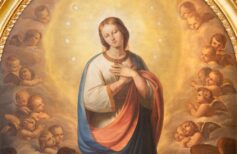
Immaculate Conception (proclaimed by Pope Pius IX in 1854 through the bull Ineffabilis Deus, stating that the Virgin “was preserved free from all stain of original sin from the first moment of her conception”. It is celebrated on 8 December).
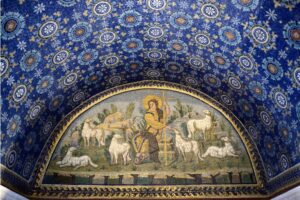
On the fourth Sunday of Easter, the liturgy celebrates Jesus the Good Shepherd. Where does this image of Christ originate?...
9 March 2026
What’s the Future of Religion?
What’s the Future of Religion?
A Beginner’s Guide to Christianity
A Beginner’s Guide to Christianity
Mind-Blowing Statistics About Christianity You Need to Know
Mind-Blowing Statistics About Christianity You Need to Know
7950
Enter the Holyart world: $20 discount voucher valid on over 60,000 items
Come and discover Holyart, the largest e-commerce of religious articles in Europe and immediately receive a $20 voucher to use with your first purchase.
Check your mailbox: you will receive your discount within 5 minutes



 Read more: