We all know the life of Jesus Christ as told in the Gospels. A human parable inevitably intertwined with the historical events of the time in which He lived, and equally influenced by the immense and revolutionary scope of His spiritual message. In particular, the public life of Jesus, the years in which He carried out His ministry, taught, performed miracles and prepared His disciples for His final sacrifice, are essential to understand the very meaning of the religion of which He was and is the symbol, promoter and hope. Regarding the so-called lost years of Jesus, His childhood, and in general those before He entered into public life, the narratives present in the canonical Gospels of the New Testament have left many narrative and questioning gaps. To fill these gaps, the so-called apocryphal Gospels have emerged over the centuries, texts that seek to illuminate little-known aspects of Jesus’s life. Many scholars, in their commitment to better understand the message and history of Jesus, have drawn on a variety of sources, particularly medieval ones, thereby creating a rich field of research and debate.
Returning instead to the public life of Jesus, from His Baptism to the Last Supper, it is a period full of teachings, miracles and moments that have profoundly influenced Western history and culture. His words and deeds in life laid the foundation for Christianity. Let’s look at the highlights of Jesus’ public life.
The first episode of Jesus’ public life
The narrative of Jesus’ public life begins with His Baptism by John the Baptist. According to the Gospel, Jesus went to the Jordan River to be baptised by John, who, on the river’s banks, was preparing for the coming of the promised Messiah by purifying the people. Although John initially hesitated to baptise Jesus, recognising His spiritual superiority, Jesus insisted that the baptism take place. This act of humility by Jesus shows His identification with humanity and His dedication to the divine mission that awaited Him. According to the gospel account, while immersed in the water, the Holy Spirit descended upon him like a dove. A voice from heaven declared, “This is my beloved Son, in whom I am well pleased” (Matthew 3:17). A moment of transformation and identification, therefore, on the occasion of which, for the first time, Jesus is recognised as the Son of God. The meeting between Jesus and John the Baptist is a moment of mutual recognition and symbolises the divine approval of Jesus’ ministry.
The Baptism of Jesus is not only a symbolically important event but also marks the formal beginning of His public life and ministry, emphasising the continuity between the Jewish tradition and the new message of love, redemption, and hope that Christ brings to all humanity.
The statues reproduce the scene of the life of Jesus in which he is baptized by John the Baptist.
Jesus in the Desert
After Baptism and before beginning his mission in Galilee, Jesus withdrew for 40 days into the desert, where he faced the temptations of the devil. It is in many ways a kind of initiation, an intimate and profound search for His divine mission. This period, narrated in the Gospels of the New Testament, offers an illuminating glimpse into the human and sacred nature of Jesus. Temptations represent a fundamental challenge that each individual can face: the choice between following the divine path and resisting the temptations of the material world.
In the individual synoptic gospels – Matthew, Mark and Luke – the temptations of Jesus in the desert are told in detail, while the Gospel according to John offers a different approach, giving relevance to other aspects of Jesus’ ministry so as not to mention the episode in the desert. John states that the day after the Baptism, Jesus went to Cana in Galilee, where the miracle of the transformation of water into wine took place, the first of the miracles of His public ministry.
As for the three temptations reported in the Gospels of Matthew, Mark and Luke, they represent the inner conflicts and choices that Jesus had to face as a human and divine being.
The Temptation of the Bread, with which the Devil tries to convince him to turn stones into bread to appease hunger, tests His human vulnerability and weakness. But Jesus responded by quoting Deuteronomy (Deuteronomy 8:3) and affirming that man does not live by bread alone, but also by the Word of God.
The Temptation to Put Himself to the Test of God sees the Devil propose to Jesus to throw himself down from the roof of the temple to demonstrate His divinity and force God to intervene. Jesus also rejects this temptation, stressing that the Lord should not be put to the test.
With the Temptation of World Power, the Devil finally takes Jesus to the top of a mountain and shows him all the kingdoms of the world, promising to give him power and glory if he would worship him. In response, Jesus rejects the offer, stating that only God should be worshipped.
The time in the wilderness is critical as preparation for His earthly mission of teaching, healing, and sacrifice. It helped him strengthen his faith, define his relationship with Heavenly Father, and develop his resolve to meet the challenges ahead.
The ministry of Jesus in Galilee
Jesus’ public ministry is a crucial period that developed after His Baptism in the Jordan by John the Baptist and His confrontation with the Devil in the desert. It represents the most articulated and extraordinary phase in His earthly life, from the beginning of His preaching, until the tragic death on the Cross. However, it covers only three years.
Jesus emerged from the wilderness as a preacher and healer, ready to share His message of love and salvation, animated by an even more profound awareness of His role and mission. He spends His First ministry in Galilee preaching, delivering critical discourses proclaiming His mission, such as the Sermon on the Mount, recruiting the first disciples (Matthew 4:18-20), who will later become the Twelve Apostles, performing miracles, healings, and exorcisms that contribute to His fame. He moved through cities and villages, especially after the arrest of John the Baptist by order of Herod (Mt 14:1-12). He was no longer well-liked in Nazareth, his hometown.
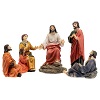
Statuette representing a specific moment in the life of Jesus when he climbed a mountain and sat down to teach a group of people.
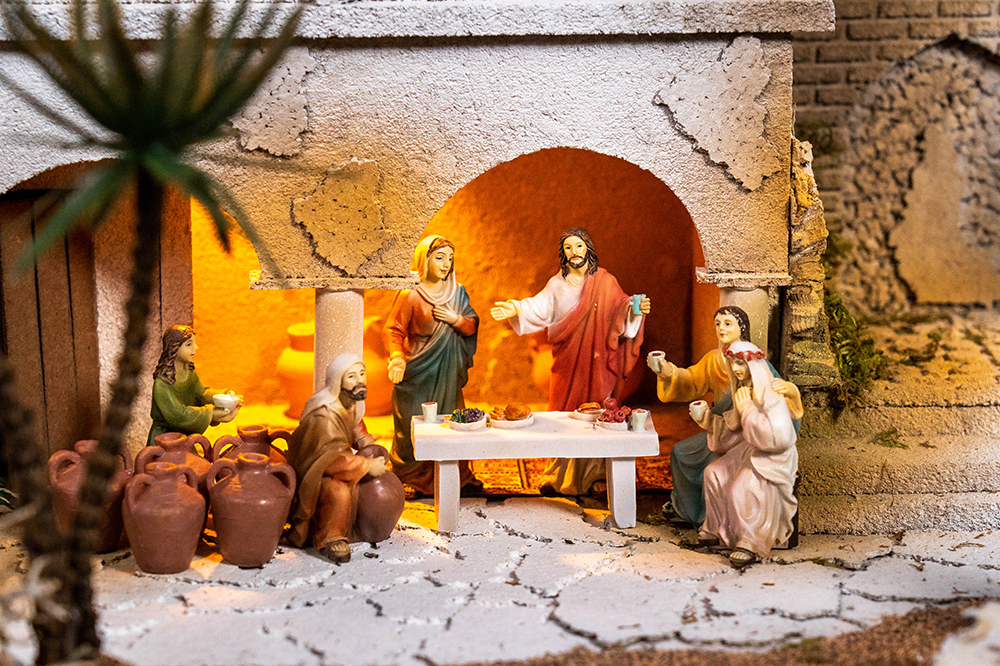
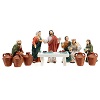
The Wedding at Cana (Jn 2:1-11) is considered the first miracle of Jesus. Another fundamental miracle in Jesus’ Ministry was the first miraculous catch of fish, which led to the recruitment of Peter, James, and John.
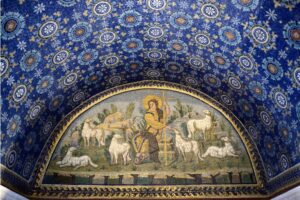
At the end of Jesus’ ministry in Galilee are the Miracle of the Multiplication of the Loaves and Fishes (Matthew 14:13-21) and the Walk on Water (Matthew 14:22-36), but also the Parable of the Lost Sheep (Mt 18:12-14) and the Resurrection of Lazarus (Jn 11: 1-46). All these miracles confirm Jesus’s identity as the Messiah and the Son of God.
Jesus continues His journey to Jerusalem, where He will meet His terrible and glorious destiny. In Him, the awareness of the coming end grows, so much so that often in His speeches, He prophesies His own death to prepare the disciples.
They take place in this last phase of Jesus’ public life, before the arrest and the Passion, the Confessio Petri (Confession of Faith of Peter) and the Transfiguration, both of which are important above all because they define the awareness on the part of Peter and the other Apostles of the true identity of the Master.
With the triumphal entry into Jerusalem begins the final Ministry of Jesus’ public life in Jerusalem, which coincides with the Passion Week. In fact, Jesus’ public ministry culminates in a dramatic and profound event: His death on the Cross. This sacrificial act is the focal point of His earthly mission, in which He offers His life for the redemption of humankind and the forgiveness of sins. The Cross becomes the very symbol of His unconditional love and commitment to humanity.
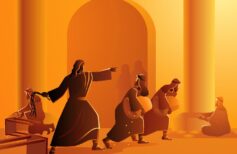
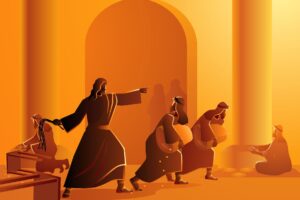
As part of this final phase of Jesus’ public life, we remember episodes such as the Expulsion of the merchants from the Temple (Mark 11:15-19), the Olivet Discourse, and the miniature Apocalypse, an eschatological sermon that Jesus delivers on the Mount of Olives concerning the ultimate destiny of humanity.
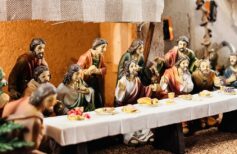
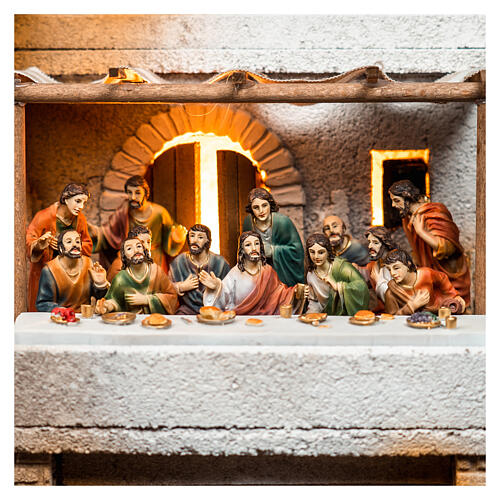
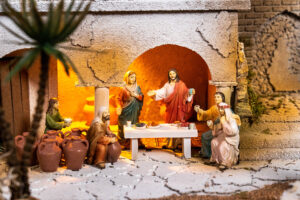
The public life of Jesus ends with the Last Supper and the Farewell Address to the disciples. What will happen next will change the fate of the world and of humanity forever.
The expulsion of the merchants from the Temple of Jerusalem represents an act of rebellion by Jesus against a now...
25 February 2026
What’s the Future of Religion?
What’s the Future of Religion?
A Beginner’s Guide to Christianity
A Beginner’s Guide to Christianity
Mind-Blowing Statistics About Christianity You Need to Know
Mind-Blowing Statistics About Christianity You Need to Know
8846
Enter the Holyart world: $20 discount voucher valid on over 60,000 items
Come and discover Holyart, the largest e-commerce of religious articles in Europe and immediately receive a $20 voucher to use with your first purchase.
Check your mailbox: you will receive your discount within 5 minutes