Saint Philip Neri served God and man with devotion, joy, and extraordinary warmth. The Apostle of Rome and the Saint of Joy, he created the concept of the oratory as we know it today.
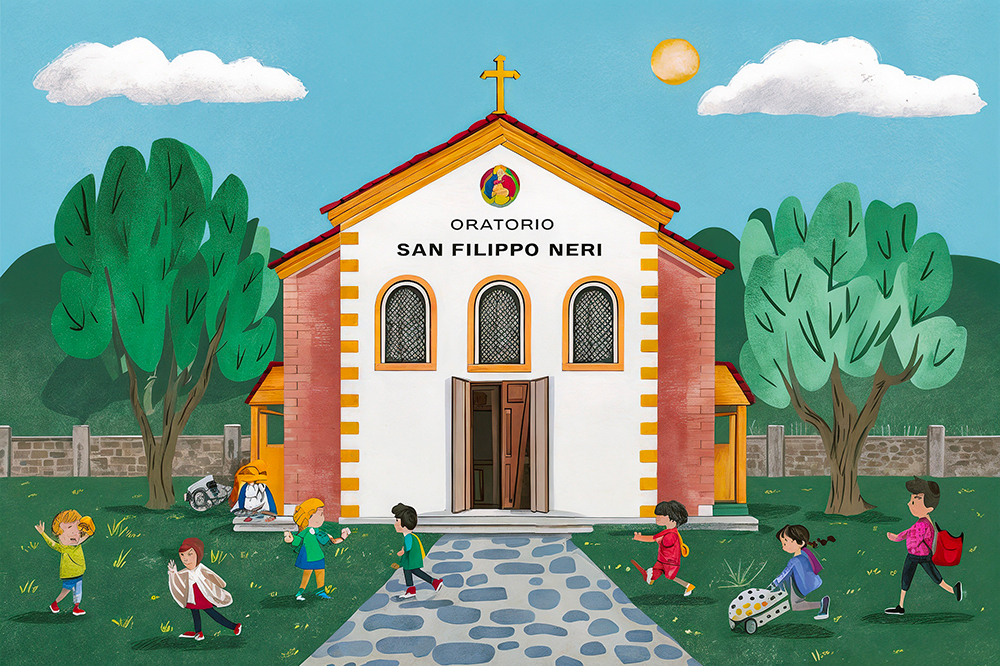
In the beating heart of Renaissance Rome, a unique and surprising figure stood out among the crowded palaces and squares. This was Saint Philip Neri, a man with a burning desire to share the joy of the Gospel with everyone he met. “Mad for the Lord,” he called himself. His method of evangelisation was not based on complex theological arguments or the condemnation of the masses, but on a personal and joyful encounter with Jesus Christ, the source of meaning and beauty in every individual’s life. It is to Saint Philip Neri that we owe the origin of the oratory.
For those who have received a religious education and attended church or Sunday school, the term “oratory” is familiar and commonly used. Today, the oratory is the place designated for the Christian education of children and young people, usually supervised by youths only slightly older than themselves, who act as educators and mentors. At the oratory, people talk about Jesus and religion, but they also play together, undertake community activities, and learn to know one another and grow as a community. But where did the idea of the oratory come from? Originally, oratories were merely small shrines where one could gather in prayer. Indeed, the word “oratory” derives from the Latin orare, to pray.
The modern conception of oratories came to life with Father Philip Neri around 1550, when he gathered poor children around him—boys and girls alike—bringing them closer to liturgical celebrations while also providing entertainment through songs and games to keep them away from the dangers of the street.
Following his death in 1595, Saint Philip Neri was canonised in 1622 during the pontificate of Pope Gregory XV. Since then, he has been venerated as a sort of unofficial co-patron of Rome, a city he loved and served with passion throughout his life. His relics are found in numerous churches, and his remains have been interred and venerated in the chapel of the church of Santa Maria in Vallicella since 1602. His liturgical feast, according to tradition, is celebrated on 26 May each year.
But who was Saint Philip Neri, and why was his work so important—not only for his contemporaries but for those who came after him?
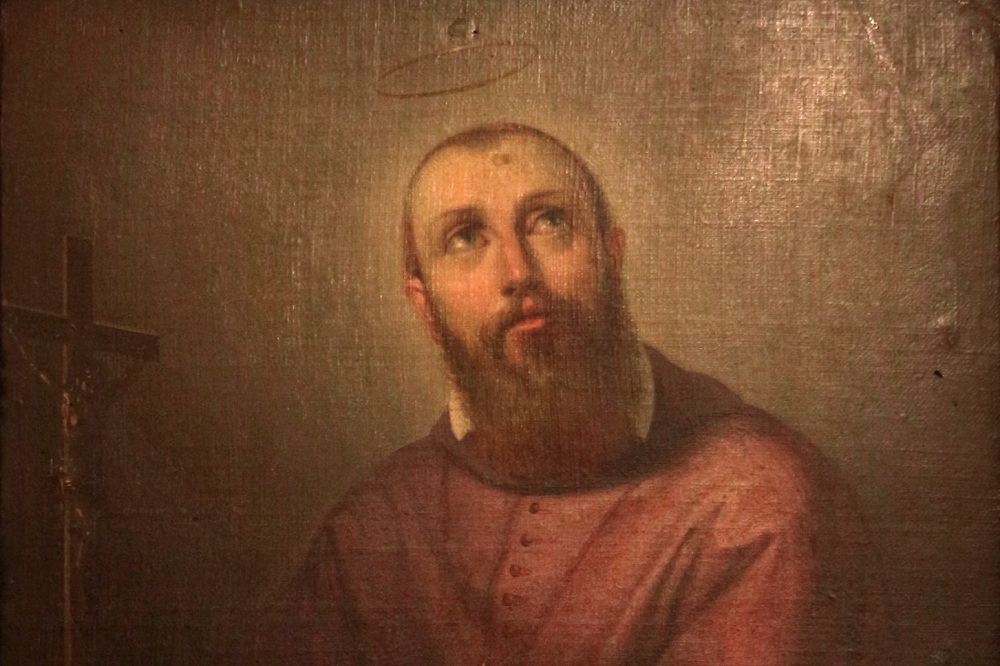
St. Philip Neri holy card with lace decoration, measuring approximately 11×7 cm.
The Second Apostle of Rome
Philip Neri spent his life spreading the love and joy of the Gospel in the streets and squares of the Eternal City, earning the title of Apostle of Rome. However, this luminous servant of God had not always been a man of the Church. Born on 21 July 1515 in Florence into a well-to-do family of notaries, Philip displayed a kind, joyful, and altruistic nature from an early age, along with a natural inclination for ecclesiastical environments, which led him to frequently attend the Dominican convent of San Marco.
Invited by an uncle to Montecassino, he took up commercial activities at the age of eighteen, but his heart and soul continued to yearn for contemplation and prayer. This drove him to abandon his work and the company of his peers to lose himself in nature—the true manifestation of God’s power and love.
Driven by this spiritual desire, he left everything behind and set out for Rome, where he would spend the majority of his life—over sixty years. Initially, he supported himself as a tutor, earning just enough to eat and attend courses in theology and philosophy at the Sapienza University. He spent the rest of his time in churches and, above all, in the catacombs, particularly those of San Sebastiano. It was there, on a night in 1544, that Saint Philip Neri’s life changed forever: a sphere of fire entered his chest, causing his heart to almost explode. Philip recounted that from that moment on, his chest never stopped burning with love for God and his brothers; it was this very fire, this warmth, that pushed him to begin his work of preaching along the streets of Rome.
It was through this work of “itinerant evangelisation”—which saw Philip speaking with all the inhabitants of Rome, even the most humble, bringing them comfort and charity—that the “Tour of the Seven Churches” was born. This is a fascinating devotional itinerary still practised today by those visiting Rome for the Jubilee, winding through approximately 20 kilometres and touching the seven most famous basilicas in Rome: St Peter’s, St Paul Outside the Walls, St Sebastian’s, St John Lateran, Holy Cross in Jerusalem, St Lawrence Outside the Walls, and finally St Mary Major.
Together with his confessor, Persiano Rosa, Philip founded the Confraternity of the Most Holy Trinity of Pilgrims and Convalescents in 1548. This was an association of laypeople dedicated to serving the poor, the sick, and the needy, as well as promoting spirituality and devotion to the Holy Trinity. The establishment of this confraternity reflected Saint Philip’s deep concern for the spiritual and material well-being of the people he encountered. Through the Confraternity of the Most Holy Trinity, Philip and his companions offered the faithful an opportunity to engage actively in Christian service and charity, following the example of Jesus Christ. The confraternity organised various charitable activities, such as visiting the sick, distributing food and clothing to the poor, and assisting with the burials of the less fortunate. Furthermore, it promoted prayer and devotion. During the Jubilee of 1550, the Congregation offered a fundamental contribution to welcoming, protecting, and helping pilgrims from all over Europe.
Philip’s good heart and joyful nature immediately gained him a vast following, especially among children and the very young. It was precisely for them that he conceived the oratory: a meeting place where one could pray, but also sing and have fun together, and where he and his followers offered assistance to the poor and the sick.
The Congregation of the Oratory
The first seat of Saint Philip Neri’s oratory was the granary of the Confraternity of Charity, in the attic of the church of San Girolamo della Carità, where Philip had settled after finally taking his vows. In the oratory, Philip read the Bible, guided men of all social backgrounds in meditation and the understanding of the Holy Scriptures, and taught the youth—many of whom became priests thanks to him. However, sacred music, catechesis, and recreational activities were also practised in the oratory, just as in modern oratories which host cultural and social activities involving the entire local community. Today, as then, oratories organise many initiatives aimed at promoting spiritual growth and social well-being.
The most important aspect of the oratory’s mission was to promote a living and authentic spirituality. Saint Philip Neri believed that true faith must manifest itself through love and service to others. The oratory was, therefore, a place where people could find support and inspiration to live a more heartfelt and fulfilling Christian life.
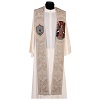
Ivory stole St Philip Neri with gold thread decorations.
The Saint of Joy
One of the most distinctive features of Saint Philip Neri’s ministry was his infectious joy. He firmly believed that joy was a powerful tool for evangelisation, as it reflected the presence of Christ in people’s lives. Through his radiant smile, his cheerful spirit, and his warm welcome, Saint Philip Neri drew others towards the heart of the Gospel. For Saint Philip Neri, evangelisation was not just a matter of doctrine, but of a living encounter with Jesus Christ. He believed that only through a personal relationship with Christ could each individual discover the true meaning and beauty of life. Therefore, his method focused on creating opportunities for others to encounter Christ in a tangible and meaningful way.
Philip embraced every corner of Rome with his enthusiasm and warmth, exploring churches, conversing with pilgrims, and carrying his contagious joy wherever he went. His presence was like a ray of sunshine amidst the dusty and dark streets of the city. Hence the titles “Saint of Joy” and “Apostle of Rome,” which were attributed to him after his death when his cult began. It is no coincidence that two films have been dedicated to him, both of which highlight this joyful dimension:
State buoni se potete (Be Good If You Can, 1983), directed by Luigi Magni, starring Johnny Dorelli, Mario Adorf, Philippe Leroy, Renzo Montagnani, and Angelo Branduardi, who also composed the splendid soundtrack;
Preferisco il Paradiso(I Prefer Heaven, 2010), a TV miniseries directed by Giacomo Campiotti, starring Gigi Proietti.
Other behaviours adopted by Saint Philip Neri for a full and authentic Christian life included tenderness towards one’s neighbour, manifested through kind gestures and compassion, and a preference for spiritual mortifications over physical penance in the struggle against vanity and selfishness.
In addition to the story of Saint Philip Neri, some of his sayings still convey the deeply human and sunny dimension of his faith and an existence lived in the spirit of charity and service to others. Here are some quotes from Saint Philip Neri:
“It is no time to sleep, for Paradise is not made for sluggards.”
“Be good, if you can.”
“Don’t kill [the flies]; open the window and, with your cloak, drive them out.”
“Scruples and melancholy, stay out of my house.”
“He who wants anything other than Christ knows not what he wants. He who asks for anything other than Christ knows not what he asks. He who does not work for Christ knows not what he does.”
Prayer to Saint Philip Neri
O my dear and beloved Saint Philip,
You who knew the tribulations of life
and how weak human nature is;
You who know how poor and fragile the human heart is,
stay close to me in my struggles and moments of temptation.
You who had great sympathy
and tender compassion for children and the young,
help me also to be a friend to all,
likable, serene, simple, and joyful.
Obtain for me through your powerful intercession
the strength necessary to fight
the good fight of faith,
to be a witness of my God to everyone.
Give me the will to overcome myself in love,
the joy of doing my daily duty well,
the peace of those who entrust themselves to God in prayer,
The catechism is much more than simply preparing to receive the Sacraments of the Catholic Church; it represents a journey...
7 October 2026
What’s the Future of Religion?
What’s the Future of Religion?
A Beginner’s Guide to Christianity
A Beginner’s Guide to Christianity
Mind-Blowing Statistics About Christianity You Need to Know
Mind-Blowing Statistics About Christianity You Need to Know
9187
Enter the Holyart world: $20 discount voucher valid on over 60,000 items
Come and discover Holyart, the largest e-commerce of religious articles in Europe and immediately receive a $20 voucher to use with your first purchase.
Check your mailbox: you will receive your discount within 5 minutes