Homepage | Religion | Cremation and the Catholic Religion: Is It Permitted?
Cremation and the Catholic Religion: Is It Permitted?
29 October 2025
Reading Time: 5minutes
The relationship between cremation and the Catholic religion has long been a subject of misunderstanding and confusion. Here’s what is and isn’t allowed when deciding to cremate the body of a deceased loved one
Today, we discuss cremation and the Catholic religion. As the day of the Commemoration of the Faithful Departed approaches, it becomes a priority for Christians to reflect on many aspects of Faith and Catholic spirituality. The relationship between cremation and the Church is one of those aspects that is not entirely clear to many. During this time dedicated to reflection and meditation, as well as prayer for the souls of those who are no longer with us, not in the form we were used to knowing, it is natural to focus on deep realities, practices, and symbols that belong to our daily life, to the point that we often stop questioning their origins and why they are so important to us.
Meaning of the Cross Before Christianity
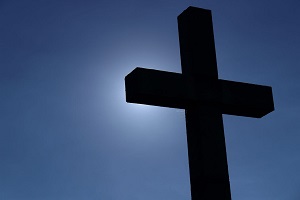
One of the most evident examples is the Cross, the quintessential Christian symbol, but much older than the origin of Christianity, which was certainly not the first religion to use it. As early as the Stone Age, it was used, though with a completely different meaning, and many pre-Christian religions endowed it with solemn significance centuries before it was associated with the death of Jesus. Indeed, the ease with which it can be reproduced suggests why it is one of the oldest symbols of humanity.
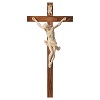
Natural wax finish of the statue: the finished sculpture is coated with a layer of transparent wax. Sculpture in maple wood…
In Viking mythology, Odin was symbolised by a cross enclosed in a circle, now known as the Celtic cross, while for the Egyptians, a cross with a circle on top, the ankh, was a symbol of life and fertility. But the pre-Christian cross was also used as a religious symbol and ornament in Syria, Greece, India, Africa, and Mexico. While today the Cross is considered by Catholic Christians as the symbol of God’s Love, remembering the death of Jesus, who sacrificed Himself for all of us, in ancient times it was not appreciated by Christians themselves, as it was seen as a symbol of disgrace, associated only with the idea of torture. Gradually, it began to be used with the meaning we attribute to it today.
Regarding cremation, the practice of reducing the bodies of the deceased to ashes, what is the Church’s stance? Well, cremation is permitted by the Catholic Church. This needs to be clarified, as there have been periods of open condemnation in the past. In reality, it was never the practice of cremation itself that was condemned. Although in the West burial has always been preferred, in many periods of human history there was no other choice but to burn the dead, especially in cases of critical sanitary conditions, such as epidemics or wars. This possibility in no way questioned the right of souls to achieve immortality.
Read more:
How a Catholic funeral is conducted
Death for a Catholic represents an encounter with Jesus in eternal life. Here is how a Catholic funeral is conducted…
However, it is true that in many cases cremation was a practice associated with paganism and those who denied life after death and Resurrection. During the Age of Enlightenment, rampant atheism made cremation one of its strongholds, a way to mock believers and religion, and for this reason, the Church had to condemn the practice of cremation for a time due to what it had come to symbolise for the enemies of Christianity. It was rehabilitated by the Holy See only in 1963, with the document Piam et Constantem, and since then it has been considered a form of care for the deceased as respectful as burial. When, at the end of time, all believers are resurrected, it will not matter if they have remained dust or rather ashes, as long as they have fallen asleep in the light and love of God.
How to Keep the Ashes of the Deceased
And after cremation, what can be done with the ashes? While we have seen that the Church permits cremation, a completely different attitude is taken towards the cremation and scattering of ashes. The Congregation for the Doctrine of the Faith accepts cremation but prohibits the scattering of the ashes of the deceased in air, water, or earth, and also the keeping of funeral ashes at home. The instruction Ad resurgendum cum Christo, approved by Pope Francis in 2016 and updating the previous Piam et Constantem, confirms that “cremation is not forbidden, unless it is chosen for reasons contrary to Christian doctrine,” provided that “the ashes of the deceased are kept in a sacred place, that is, in a cemetery, church, or an area specifically designated for this purpose by the competent ecclesiastical authority.” Moreover, burial is always considered the preferred practice, unless “hygienic, economic, or social reasons lead to choosing cremation.”
If civil laws permit keeping the ashes of deceased loved ones at home after cremation, or placing them in commemorative objects (jewellery, sculptures), or scattering them according to sanitary regulations set by the municipality, for the Church, any preservation of the ashes that deviates from the imposed rules may result in the legitimate refusal of the funeral rites.
In our store, you will find funeral items of all kinds, including funeral urns and cremation urns handcrafted by Italian artisans, plaques and applications for cemetery headstones, flower vases, and a wide range of votive candles, luminaires, wax or electric lamps to illuminate the resting place of your loved ones.
Urns to keep the ashes of deceased loved ones.
These funeral urns are handmade by Italian craftsmen in precious…
Burial or Cremation: What Does the Bible Say?
So we have seen the position of the Catholic Church on cremation. But what does the Bible say about it? As far as the Bible is concerned, the Old Testament does not condemn cremation, nor does it provide instructions either for or against this practice. The Jews buried their dead in tombs and caves, but the Bible never indicates burial as the only permissible way to deal with a corpse.
Situated within two penitential and anticipatory periods of the liturgical year, Gaudete Sunday and Laetare Sunday celebrate the joy of...
4 March 2026
What’s the Future of Religion?
What’s the Future of Religion?
A Beginner’s Guide to Christianity
A Beginner’s Guide to Christianity
Mind-Blowing Statistics About Christianity You Need to Know
Mind-Blowing Statistics About Christianity You Need to Know
8078
Enter the Holyart world: $20 discount voucher valid on over 60,000 items
Come and discover Holyart, the largest e-commerce of religious articles in Europe and immediately receive a $20 voucher to use with your first purchase.
Check your mailbox: you will receive your discount within 5 minutes