When the papal throne becomes vacant, the Catholic Church prepares to experience one of its most solemn and mysterious moments. It is as though time itself slows, suspended in the anticipation of an event rooted in two thousand years of history. The election of a new Pope is not merely a ritual—it is a spiritual pilgrimage that spans centuries, peoples and cultures, remaining faithful to its essence even as times change. But how exactly is a Pope elected?
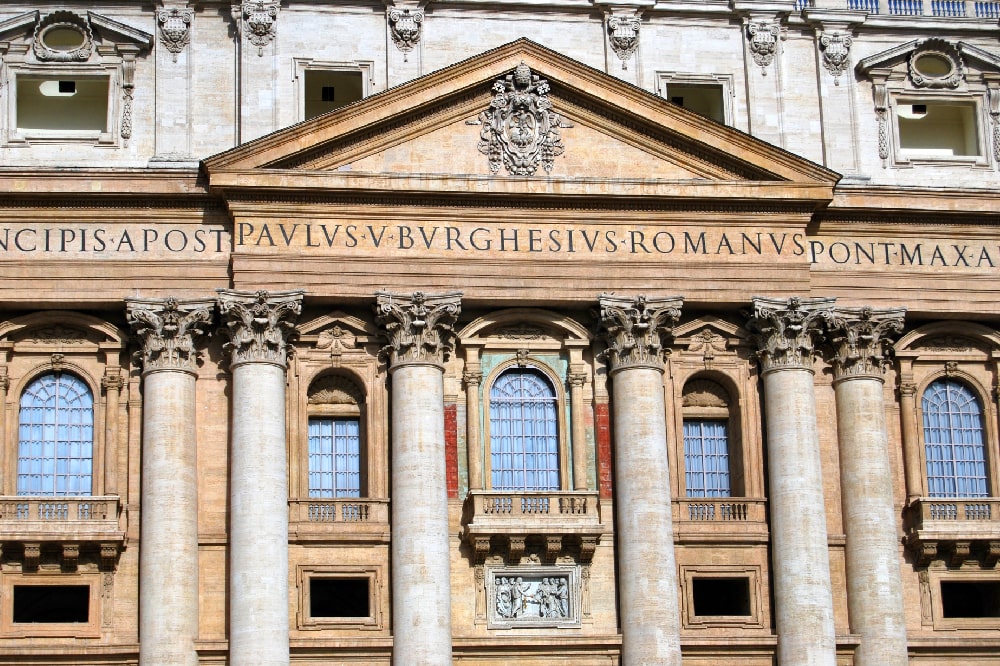
Rarely as in these days, following the recent passing of Pope Francis—the Pontiff from “the ends of the earth”, who won the hearts of the faithful with the disarming simplicity of his gestures and the gentle power of his words—the Conclave becomes charged with emotion. St Peter’s Square dons a mantle of silence and prayer, while the cardinals gather to discern, through prayer and reflection, who will lead the Church in an era of global challenges and renewed hope.
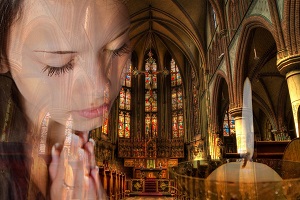
The election of the Pope has never been a mere administrative act: it is a journey into the very heart of faith, a path that evokes images of candlelit cathedrals, hands joined in prayer and hearts trembling with expectation. But how, in detail, does this ancient yet living rite unfold? On 7 May, the Conclave will officially begin to elect the successor to Francis.
In the heart of Christendom, when the successor of Peter vacates his earthly throne, a time of suspension begins, dominated by a ritual both rare and solemn: the Conclave. An ancient event, shrouded in mystery and solemnity, it is renewed every time the cardinals gather in prayer and reflection to choose the new Pope.
The word “Conclave” derives from the Latin cum clave, meaning “with a key”, indicating the locked enclosure in which the cardinals are confined until the new pontiff is chosen. This custom dates back to 1270 in Viterbo, when, after over a year of fruitless debate, the people decided to lock the cardinals in to hasten the election. Since then, the cardinals have met in isolation—today in the Domus Sanctae Marthae—to elect the new Pope within the solemn setting of the Sistine Chapel, beneath Michelangelo’s frescoes.
At the centre of the electoral process sits the College of Cardinals, the assembly of the so-called “Princes of the Church”. But this has not always been the case. In the early centuries, the Bishop of Rome was chosen by the local clergy and, at times, even by the people, in a communal dimension that reflected the Church’s youth. Only in 1059, with the decree In nomine Domini issued by Pope Nicholas II, was the election of the Pontiff reserved exclusively to the cardinals.
Today, the Pope is elected by members of the College of Cardinals who, as of the start of the Sede Vacante, have not yet reached the age of eighty. This rule, introduced by Paul VI in 1970 and later confirmed by John Paul II, was intended to ensure clarity of mind, vigour and vision. Yet cardinals over eighty are not entirely excluded: they may take part in the preparatory congregations, offering their wisdom and experience.
The maximum number of cardinal electors is set at 120, though this threshold has often been slightly exceeded. More significant, however, is the evolving profile of the College of Cardinals over recent decades: from a predominantly Italian and European body, it has become a true mirror of universal Catholicism. Africa, Asia and Latin America are now well represented—a tangible sign of a Church extending to the frontiers of the world.
And yet, if one were to ask who can be elected, the answer may surprise. It is not necessary to be a cardinal. Nor a bishop. Nor, in theory, even a priest. One must simply be a man, baptised in the Catholic faith and unmarried. If not already a bishop, the elected candidate must receive episcopal ordination before assuming the papacy. But history, with its gravitational force, has chosen otherwise: since 1378, all Popes have been chosen from among the cardinals. The last non-cardinal was Urban V in 1362; the last non-bishop was Leo X, in 1513, who was ordained only after his election. Since then, practice has overtaken theory—but the possibility remains, a window open to the unpredictability of the Spirit.
The Rules of the Conclave
The Conclave never begins abruptly. There is a period of preparation, both spiritual and practical. Following the Pope’s death or resignation, the Church enters a time of mourning and prayer. Funeral rites are celebrated, and the silence of the Novendiales—nine days dedicated to memory, farewell and spiritual discernment—sets in. It is during this period, laden with signs, that cardinals arrive in Rome from every corner of the world. No earlier than the fifteenth day and no later than the twentieth, the Conclave officially begins.
At the heart of St Peter’s Basilica, the Mass Pro eligendo Pontifice is celebrated. It is the last moment the cardinals are among the people before the world closes behind the carved doors of the Sistine Chapel. That afternoon, to the ancient hymn Veni Creator Spiritus, they process from the Pauline Chapel—a procession of scarlet robes, but also of consciences journeying towards a choice not merely of this world.
Once inside the Sistine Chapel, each cardinal takes an oath. The words are solemn, the atmosphere hushed. Then the Master of the Papal Liturgical Celebrations pronounces the command “Extra omnes”—“Everyone out”—and the doors close. From that moment, what occurs within remains sealed in a silence no time can break.
The cardinals reside at the Domus Sanctae Marthae, a place designed for simplicity and reflection, far removed from the grand chambers of former times. All contact with the outside world is cut off. No phones, no computers, no messages may breach the Conclave’s walls. The premises are thoroughly checked, all communication devices banned, and any breach punished with excommunication. Doctors, nurses, confessors, technicians—everyone without exception swears to guard the secret, like sentinels of a mystery greater than themselves.
Voting follows a ritual of ancient origin, unchanged in its essential form. Four ballots per day: two in the morning, two in the afternoon. At each session, every cardinal receives a rectangular ballot. At the top is the Latin formula Eligo in Summum Pontificem—“I elect as Supreme Pontiff”—and below, the name of the chosen candidate is written in disguised handwriting to preserve anonymity.
One by one, in order of precedence, the cardinals rise. Holding the ballot between thumb and forefinger, visible to all—a gesture of transparency and responsibility—they proceed to the altar. There, they pronounce the oath: Testor Christum Dominum…—“I call as my witness Christ the Lord, who will be my judge, that my vote is given to the one whom, before God, I believe should be elected.” They then place the ballot on a plate, which is tilted over the urn so it may fall in—a gesture of obedience and trust.
Once all have voted, the scrutiny begins. Ballots are mixed, counted, and read aloud one by one. The names, spoken in the still air of the Sistine Chapel, echo with gravity. The scrutineers record them, threading each to prevent loss. Finally, the revisers check every count, every mark. It is a mathematics of the spirit, where each vote weighs like a grain of eternity.
The required majority is two-thirds: for a Pope cannot be the outcome of a faction, but the shared expression of a people united in prayer and hope. And if the Spirit remains silent, the process resumes. They wait. They persevere. Until a name emerges, clear, like light through mist. And then—only then—the white smoke is prepared.
Black Smoke or White
At the end of each scrutiny, the ballots are burned in a special stove. The smoke rising from the chimney of the Sistine Chapel signals the outcome: black if no decision has been reached; white if a new Pope has been elected. Outside, in St Peter’s Square, thousands of eyes scan the chimney in anxious anticipation. From there rises the signal that announces the result of each vote: black smoke, symbol of uncertainty, or white smoke, sign that a new successor to Peter has been chosen.
Over the centuries, the method of producing the smoke has been refined. Once, the ballots alone were burnt; today, special chemical mixtures ensure an unmistakable colour. A combination of lactose, potassium chlorate and colophony creates white smoke; anthracene and sulphur ensure black. Since 2005, to eliminate any possible ambiguity, the white smoke is also accompanied by the joyful ringing of St Peter’s Basilica’s bells.
The crowd, gathered under Rome’s sky, holds its breath. Every wisp of smoke is anxiously watched, each hesitation analysed, each shift of wind interpreted as an omen. Then, at last, the white smoke emerges boldly—a roar of joy bursts forth in the square, the bells peal their festive music, and the whole world knows that a new Pope has been elected.
Habemus Papam
Once the necessary majority is reached, the Dean of the College of Cardinals approaches the chosen candidate and asks the ritual question: “Do you accept your canonical election as Supreme Pontiff?” If the candidate accepts, he becomes Pope immediately. He is then asked what name he wishes to take, thereby opening a new chapter in the Church’s history.
The new Pontiff is then led to the Room of Tears, a small space adjacent to the Sistine Chapel, where, filled with emotion, he dons the white cassock prepared in three sizes. In that brief, intense moment, he embraces the responsibility of guiding over a billion faithful across the globe. It is not uncommon for tears to fall in that room—the weight of the Petrine office descends all at once: joy, fear, the immense call to serve.
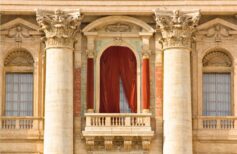
When all is ready, the Cardinal Protodeacon steps onto the Loggia of the Blessings and pronounces the long-awaited words: “Annuntio vobis gaudium magnum: Habemus Papam!” He follows with the name of the new Pontiff and the name he has chosen for his ministry.
The new Pope then appears before the faithful gathered in St Peter’s Square, offers his first greeting—often simple and full of humility—and bestows the Urbi et Orbi blessing, to the city and to the world. With that gesture, he publicly assumes the mission entrusted to him: to be spiritual guide, universal pastor, and living sign of the continuity of the Catholic Church.
Thus, as the echo of bells resounds among domes and piazzas, a new chapter begins in the Church’s story—suspended between the ancient and the new, between fidelity to tradition and the challenges of a world in constant transformation.
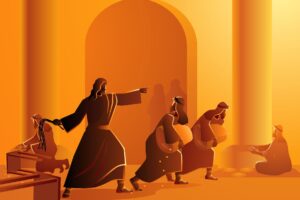
The expulsion of the merchants from the Temple of Jerusalem represents an act of rebellion by Jesus against a now...
25 February 2026
What’s the Future of Religion?
What’s the Future of Religion?
A Beginner’s Guide to Christianity
A Beginner’s Guide to Christianity
Mind-Blowing Statistics About Christianity You Need to Know
Mind-Blowing Statistics About Christianity You Need to Know
7253
Enter the Holyart world: $20 discount voucher valid on over 60,000 items
Come and discover Holyart, the largest e-commerce of religious articles in Europe and immediately receive a $20 voucher to use with your first purchase.
Check your mailbox: you will receive your discount within 5 minutes