There is a question that creeps slightly through the cracks of history, like a ray of sunshine filtered through a Gothic stained glass window: What is the most frequently used name by popes?
It’s not just an encyclopaedia curiosity. It is a key, a magic word capable of opening the secret portals of a long night of vigil.
When we whisper the names of the popes, we evoke a silent army of men who have stood at the threshold between the divine and the earthly, guardians of a mystery as ancient as the human desire for salvation. Each name is a star hanging from the firmament of memory, each succession of popes a constellation of intertwined destinies.
Scrolling through the list of popes does not mean counting, but listening to the beat of a heart that has never stopped: that of the Church, in its long dream of stone and light.
And precisely in this dream, among Latin voices and profiles carved in wax, we discover that the most beloved name, the one that has crossed the centuries as a litany, is John. Twenty-three times. Twenty-three chimes on the bell of history.
Here is the question: “What is the most frequently used name by popes?” One prays, echoes, tells a story that never ends. Because behind every name there is a story, behind every story, the mystery, tender and fierce, of men called to make a bridge between earth and heaven. And even today, if you search among all the popes in history, if you probe the succession like a dowser, you find him: John—the most beloved name, the one that bounces from century to century like a promise never extinguished.
John
Twenty-three popes have chosen this name, and each of them seems to have collected, at the time of the election, an invisible witness passed from hand to hand over two thousand years. John is the name that resonates as a promise of rebirth, mercy and hope. It is the name of the evangelist who, in the silence of the exile, wrote of light and darkness, of the Baptist who shouted in the desert and prepared the way, of the beloved apostle who witnessed the cross and the resurrection.
Choosing John was never just a gesture of humility, but an act of trust: those who carry him on their shoulders echo the questions and expectations of the whole Church. Each John had to measure himself against the weight of tradition and the challenge of change. John XXIII, the good pope, knew how to open the windows of the Vatican, letting in the wind of a new council. John Paul I merged the name with that of his predecessor, weaving a bridge between past and future, while John Paul II brought that double name to the ends of the world.
John is a name that is renewed every time it is pronounced, as a secret source from which the Church draws strength, compassion, and audacity. It is the name of the embrace, the custody, the fidelity to what never dies: the hope that history, despite everything, is still capable of wonder and mercy.
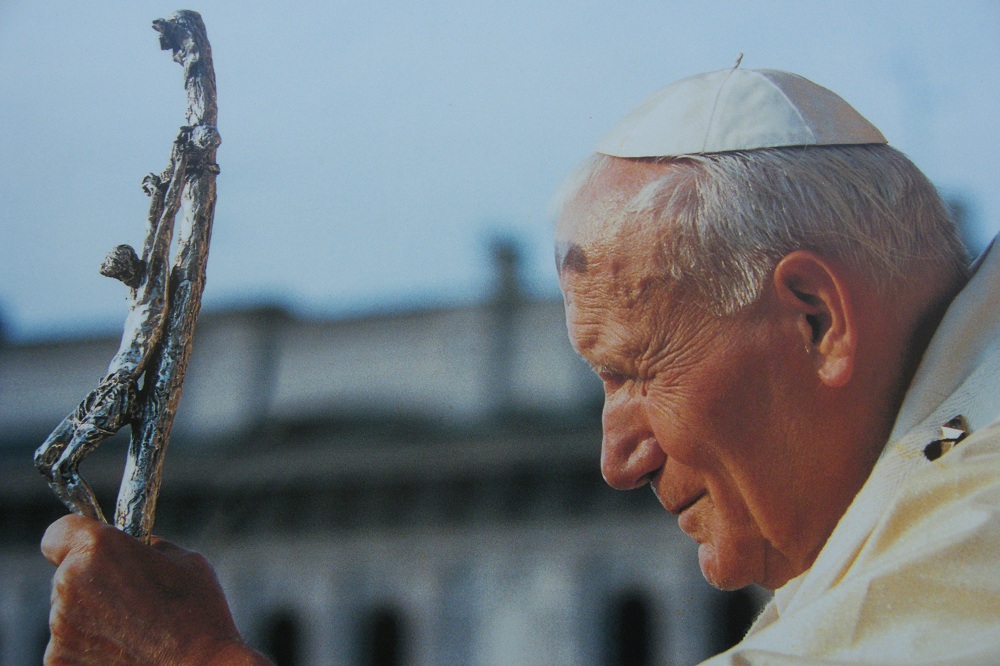
John Paul II. To celebrate the beatification of Pope John Paul II we created a department entirely…
Gregory
A name that rings like a bell at dawn: sixteen popes have worn Gregory’s cloak. It carries with it the echo of St. Gregory the Great, the pope who made the Church a compass in the Dark Ages, the man who invented the music of the sacred, the rule, and diplomacy as an art. To choose Gregory is to select the deep stamp of spiritual authority, the patience of the gardeners of the soul.
Fifteen popes, and the name already seems like a prayer: Benedict, the blessed, the call to the peace of the cloisters and the ardour of reform. Benedict XVI, the mild theologian, relies on the shadow of St. Benedict of Norcia, patron saint of Europe, but the name also evokes ancient abbots, guardians of rule and silence.
Leo
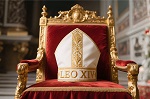
Fourteen times, in the long night of history, a pope chose the name Leo. The last one was just a few months ago. It is the roar of the Church that does not fear the powerful, the force that stops the Huns at the gates of Rome, the courage that resists the centuries of iron. Leo is the name of the leaders and peacemakers, of the diplomats and saints, of those who have been able to defy the dragons of history and remain firm.
Fourteen popes have adopted the name Clement, a sweetness cloaked in authority. It is the name of forgiveness, of clemency that loosens knots, that heals conflicts. Clement carries the memory of those who chose the outstretched hand instead of the sword, the word that soothes instead of dividing.
Innocent
Thirteen popes called Innocent: an almost paradoxical name, chosen perhaps as a talisman in a world of guilt and responsibility. The Innocents were sometimes strong as kings, occasionally weak as lambs. Some have marked history with gestures of grandeur and others with heavy shadows, but all have carried on their foreheads the weight of a name that invokes purity and justice.
Pius
Twelve popes have taken the name Pius. A name that smells of devotion, prayer, and fidelity to the roots. The Pius popes were often reformers, frontiersmen, and ferrymen in the most turbulent centuries. Among them, Pius XII, pontiff of the Second World War, and Pius IX, the pope of dogma and exile.
These names —Gregory, Benedict, Leo, Clement, Innocent, Pius —are not just labels on a list, but archetypes.
They are bridges thrown between the earth and the sky, answers to the fear and desire of men to be, at least for an instant, guardians of the mystery and masters of their history. Every time a new pontiff chooses one of these names, he lights a candle in the night and listens to the past, ready to rewrite the future starting from a sacred word.
The names of the first popes in history
At first, it was the beaten earth, the catacombs, and the torches that trembled in the hands of persecuted men and women.
The first popes had no thrones or power: they had short, naked, essential names, like the faith that sustained them: , the fisherman, the rock, the threshold between two worlds. And then Linus, Cletus, Clement: names that look like drops of water collected in the night, kept as relics in the silence.
There was still the custom of changing names: the popes of history, in those centuries, carried their baptismal name with them as a childhood wound, as a promise. The list of popes of the origins is more like an array of brothers than a parade of monarchs: no one would have dared, in the first thousand years, to call himself Peter II. It was too sacred a name, too high a peak.
The rite of name change is a “modern” invention, the daughter of the vertigo of having become more than just men.
The first to make the silent, but revolutionary, gesture of changing his name was John II, who ascended to the papal throne in 533. He was born with a name laden with pagan echoes: Mercury, a name he associated with ancient temples and forgotten deities. But at the moment of the election, she felt the weight of that name on her shoulders and decided to leave it behind like a dress out of time. It was not worthy, he thought, that the pastor of the Christians bore the name of a pagan god: so, he chose John, a pure name, already echoed in the Gospels as an echo of prophecy and promise.
This gesture, born of faith and opportunity, remained an exception for centuries. Only later, at the end of the first millennium, was the practice consolidated. It was with Gregory V (996-999), who bore a barbaric name, Brunone, that changing one’s name became an almost ritual act, a bridge between the human past and the new divine mission.
John II, therefore, was not the first pope to receive a new name, but he was the first to make this choice for reasons deeply linked to the faith and the symbolic meaning that the name carries. From that moment on, every name chosen by the successor of Peter would become not only an identity but a declaration of intent and spiritual vision.
How many popes have there been
How many popes have there been? It sounds like a school record question, but instead it’s an abyss. Along the list of popes, the official one, that of sleepless nights in Vatican palaces, there are two hundred and sixty-six names. But in reality, there are many more, or perhaps many fewer: there are antipopes, ghosts, doubles, false, forgotten.
The succession of popes is a dance of shadows and lights, punctuated by schisms, wars, miracles and betrayals.
There was a time, during the Middle Ages of shattered mirrors, when the world saw three popes fighting each other, as if the Church were a castle besieged by too many suitors. Other times, the throne remained empty, suspended in the void between two pontificates, like a heart that stops beating for an instant. But the real miracle is continuity: through catastrophes, plagues, burned empires, and rebuilt cities, the popes of history have left a lasting mark. A trail of candles lit in the storm. In this long procession, each name chosen, Leo, Pius, Gregory, Innocent, is a banner planted in the dust of time.
To wonder how many popes there were is, after all, to wonder how many men have dared to carry the weight of heaven on their shoulders. And how many, on the other hand, have only crossed the threshold, leaving their name suspended between memory and oblivion.
Each new name in the list of popes is a word engraved on a marble slab, but also a breath that runs between the naves, a caress on the forehead of history.
Tradition bends, transforms, and renews itself: the popes of history are pilgrims and sentinels, ferrymen of souls in a stormy sea.
The twentieth century, a fast and terrible century, saw the Church go through storms of fire and ice. The names of the popes from 1900 to the present are mirrors of a changing world, yet also roots that cling stubbornly to the rock.
Leo XIII (1878-1903) was the pontiff who opened the century with a royal name and a vision of reconciliation between faith and modernity. Poet, philosopher, and father of the social doctrine of the Church: With the Rerum Novarum, he introduced the voice of the workers into the prayers of the Vatican.
Then, on the night of the world wars, four names that sound like armour, shields against chaos, parade. Pius X (1903-1914), Venetian with a clear gaze and the rough voice of the people, was the pope of simplicity, liturgical reforms and First Communion for children. His disarming faith made him a saint among his people, even in the restless times that heralded war. Benedict XV (1914-1922) was the pope of sorrow and denied peace. During the Great War, he raised his voice against the madness of cannon fire. He was a pontiff of compassion and diplomacy, remembered as the “Blessed One of peace”. Pius XI (1922-1939), Lombard mountain man, man of rigour and vision. He signed the Lateran Pact, reconnecting the thread between the Italian State and the Church. In a Europe on the brink of the abyss, he was a defender of spiritual freedom against nascent totalitarianisms. Pius XII (1939-1958), the pope with Roman elegance and a spirit of steel: elected during the Second World War, he went through storms of fire and ambiguity—silent diplomacy and unceasing prayer: a pontificate marked by fear and hope.
Then comes a gentle revolution by John XXIII (1958-1963), the “good pope”. With his disarming smile, he reopened the windows of the Church with the Second Vatican Council, bringing a breath of new air, of dialogue, of mercy. His name, John, shone again after centuries of absence.
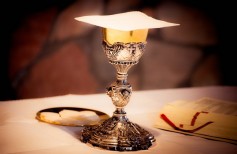
Holy Communion. This department is entirely dedicated to the Holy First Communion; you will find many gifts ideas…
After him, Paul VI (1963-1978) takes the pilgrim’s stick and takes it beyond the confines of the ancient world, to the most remote corners of the planet. A restless, refined and solitary traveller, the first pope to travel by plane, he crossed the world to embrace humanity and take the Church outside the walls. He served as a ferryman in times of protest and change.
John Paul I (1978), thirty-three days of white light: the “pope of smiles”. For the first time, two names merged into one, as an embrace between tradition and novelty. His brief pontificate remains a gentle meteor in the history of the popes of Rome.
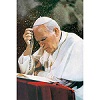
John Paul II (1978-2005) was the giant who came from the East, an athlete of the spirit and history. He knocked down barriers, travelled everywhere, and changed the very perception of the papacy. His name has become a symbol of hope, freedom, and the fight against fear.
Benedict XVI (2005-2013) was a theologian of meekness, guardian of faith and reason. The first pope in centuries to renounce the throne, he left a trace of depth and humility in an increasingly lost world.
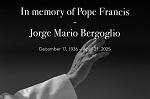
Francis (2013 – 2025) was the gentle revolutionary, the first to bear the name of the poor man of Assisi. He gave voice to the latter and turned the spotlight on universal fraternity, choosing a straightforward, almost prophetic style.
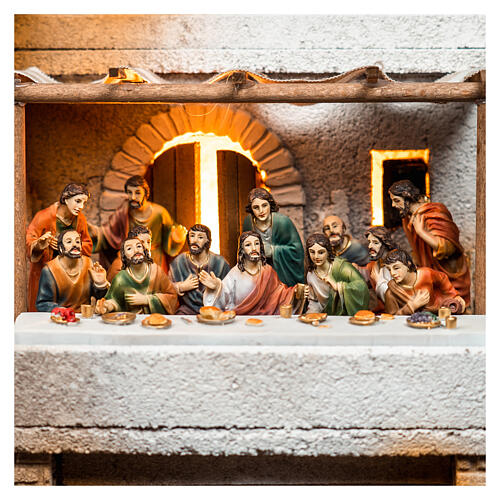
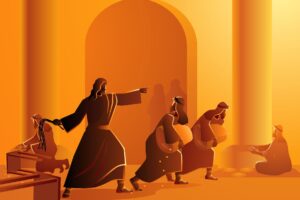
The expulsion of the merchants from the Temple of Jerusalem represents an act of rebellion by Jesus against a now...
25 February 2026
What’s the Future of Religion?
What’s the Future of Religion?
A Beginner’s Guide to Christianity
A Beginner’s Guide to Christianity
Mind-Blowing Statistics About Christianity You Need to Know
Mind-Blowing Statistics About Christianity You Need to Know
7394
Enter the Holyart world: $20 discount voucher valid on over 60,000 items
Come and discover Holyart, the largest e-commerce of religious articles in Europe and immediately receive a $20 voucher to use with your first purchase.
Check your mailbox: you will receive your discount within 5 minutes