Saint Martin, patron saint of cuckolds: legend or history?
9 November 2026
Reading Time: 5minutes
Many folk traditions describe Saint Martin as the patron saint of cuckolds. Let us see where this curious legend comes from
The legend of Saint Martin is a popular tale with ancient roots that celebrates the generosity and charity of the saint of the same name. This legend is widespread in many regions of Europe, but is particularly celebrated in Italy, where the feast of Saint Martin, which falls on 11 November, is a time of great tradition and celebration. But perhaps you do not know that Saint Martin, who was a Roman soldier and later Bishop of Tours, is also considered the patron saint of cuckolds in many regions of Italy, especially in the Centre and South. The association between his figure and that of cuckolds dates back to popular tradition and has several possible explanations.
In ancient times, the feast of Saint Martin celebrated the end of the grape harvest and the arrival of winter. In many Italian regions it is still celebrated, and ancient rural traditions are blended with popular devotion to the Saint. Typical foods such as castagnaccio, or San Martino biscuits, are prepared, and new wine fresh from the harvest is drunk. In some parts of Europe, there is a widespread custom of lighting Saint Martin’s Lanterns, symbols of light and hope, at this time of year when winter begins to make itself felt and the days grow shorter.
But why have a legend and a feast that recall the importance of generosity and charity towards those most in need also become associated with marital infidelity? Why is Saint Martin considered the patron saint of cuckolds?
The legend of Saint Martin
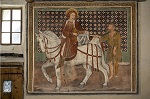
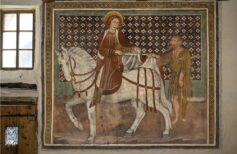
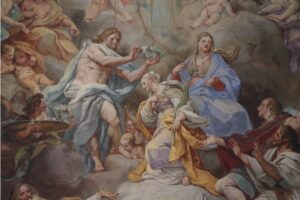
The legend of Saint Martin tells the story of a young Roman soldier named Martin who, one day, while serving in the army, came across a beggar who was suffering greatly from the cold. Having nothing to offer him, Martin decided to share his cloak with him, cutting it in half with his sword. This act of generosity became an extraordinary act of charity, and the following night, in a dream, Martin saw Jesus Christ himself wearing the cloak he had given to the beggar.
This episode deeply affected Martin, who subsequently decided to leave the army and embark on a life of devotion and charity. He became a follower of Christ and was eventually elected Bishop of Tours, in France, becoming known as Saint Martin of Tours. His life was marked by acts of compassion, charity and dedication to others.
First of all, it should be emphasised that this association, which makes Saint Martin the patron saint of cuckolds, has nothing to do with the history of the Saint, who is universally recognised for his acts of charity and generosity, as described in the preceding legend. No aspect of his life, no event or action, can in any way be associated with the figure of the “cuckold”. Rather, it is a folk tradition, rooted in ancient rural customs and traditions that have been carried on for centuries.
The word cuckold derives from Old French. In the 13th century, the word “cornart” is attested, meaning both “betrayed” and “imbecile”. In the Middle Ages, betrayed husbands were often considered the objects of cruel jokes and mockery. In some areas of Lazio, there was once the cruel tradition of hanging horns, ribbons and flowers on the doors of people presumed to have been betrayed.
At the beginning of November, annual agricultural contracts were renewed, marking a crucial moment for agriculture. This ushered in a series of fairs and markets where farmers brought the fruits of their hard work and the livestockto be sold or sent on the late-summer transhumance. The livestock, consisting largely of horned animals, would have led to the birth of a Feast of the Cuckolds, held on 11 November. Around 11 November, moreover, the first cold weather often subsides, giving way to milder temperatures and warm rays of sunshine. This period is known as Saint Martin’s Summer, and has always encouraged opportunities for meeting and celebrating in the countryside.
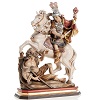
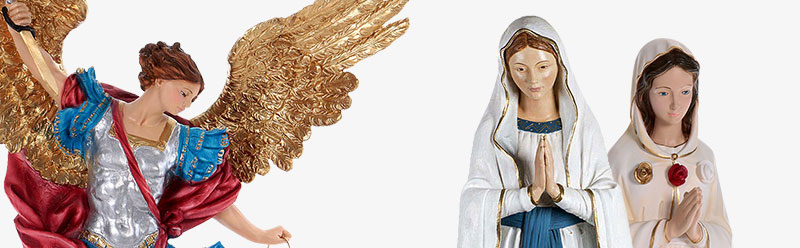
Statue in maple wood completely handmade and painted by Italian craftsmen.
But agricultural fairs were also an extraordinary opportunity to celebrate, socialise and share the wealth of the harvests and produce of the countryside. Village festivals and popular celebrations were characterised by the consumption of new wine, which made everyone a little more intoxicated and encouraged greater promiscuity. Moreover, very often wives were left at home, and during this period travelling salesmen travelled from farm to farm, offering their goods and, potentially, their company to the ladies left alone. It is no coincidence that Saint Martin is also considered the patron saint of soldiers and travellers, who spent long periods away from home, and some wives might have grown tired of waiting for their return.
For this reason, in some areas San Martino biscuits are shortcrust biscuits shaped like horns.
The feast of Saint Martin is deeply felt in Central Italy. In the picturesque town of San Valentino, in Abruzzo Citeriore, it is celebrated in a curious and unique way, focusing precisely on the figure of Saint Martin as the patron saint of cuckolds. On the night of 10 November, in fact, the day before the official feast of Saint Martin, the celebration of the cuckolds takes place, involving all the men of the town, young and old. They all gather to create a joyful procession through the streets of the town, singing goliardic verses, songs and festive jokes about ‘horns’. At the culmination of the procession, a phallus, covered with a cloth, is ceremoniously handed to the last man to have married that year, declaring his entry into the community of “cuckolds”. This unique tradition represents an opportunity for fun and merriment for the community.
Hand made and hand painted figurine by the Val Gardena artisans.
In Santarcangelo, a town in the Romagna hinterland, the feast of Saint Martin is also an opportunity to celebrate the grape harvest, good food and… cuckolds! Here, in Piazza Ganganelli, the famous Feast of the Horned Ones, also known as billy goats, takes place. According to tradition, these symbolise men betrayed by their wives. Under the town’s main arch, the billy goats are paraded, with their horns adorned with large tinkling bells, and every visitor can do the same, to discover their partner’s infidelity. Meanwhile, the square comes alive with stalls and stands offering the most delicious gastronomic specialities in Italy, first and foremost piadina romagnola. Decorated ox horns intertwined with wool are displayed for a week and removed after the running race called “cheursa di bec”, the cuckold’s race.
Again, in November the Celts celebrated their New Year, with pagan celebrations of an orgiastic nature that lasted for several days, giving free rein to and indeed encouraging marital infidelity.
Finally, there is the horns gesture, with the index and little fingers raised, which recalls the number 11, and the feast of Saint Martin falls precisely on 11/11. This too may have contributed to the spread of the legend of Saint Martin as the patron saint of cuckolds.
The Borso d’Este Bible, a masterpiece of Renaissance art, contains the riches and splendour of the Este court, reworked through...
26 October 2026
What’s the Future of Religion?
What’s the Future of Religion?
A Beginner’s Guide to Christianity
A Beginner’s Guide to Christianity
Mind-Blowing Statistics About Christianity You Need to Know
Mind-Blowing Statistics About Christianity You Need to Know
9613
Enter the Holyart world: $20 discount voucher valid on over 60,000 items
Come and discover Holyart, the largest e-commerce of religious articles in Europe and immediately receive a $20 voucher to use with your first purchase.
Check your mailbox: you will receive your discount within 5 minutes