The Borso d’Este Bible, a masterpiece of Renaissance art, contains the riches and splendour of the Este court, reworked through the refined art of the illuminators
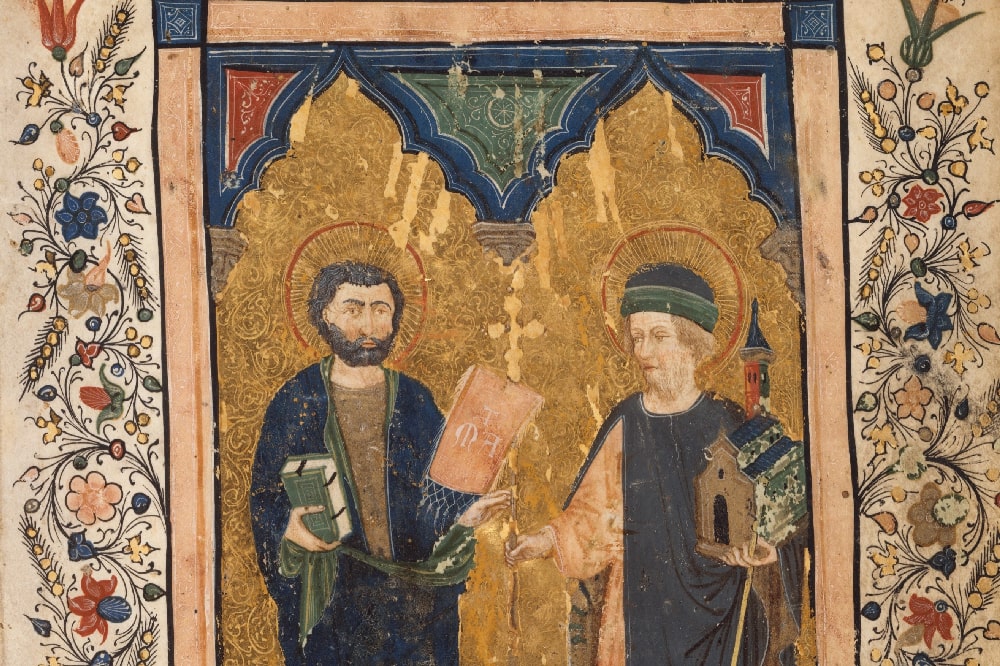
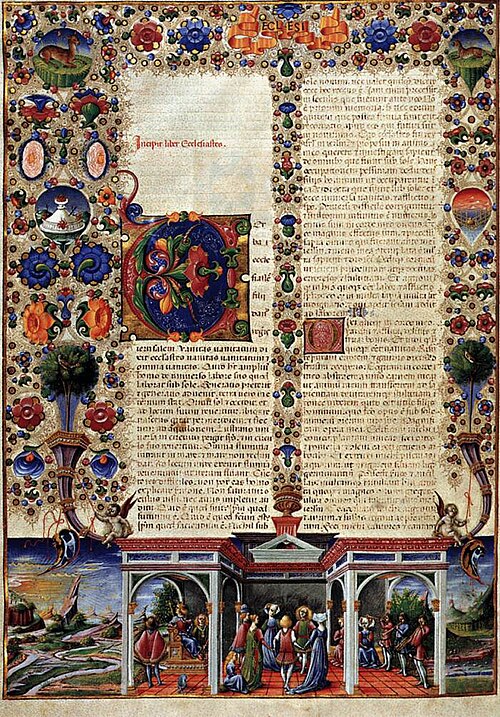
The Borso d’Este Bible is a remarkable illuminated manuscript created in the 15th century at the behest of Duke Borso d’Este of Ferrara, the illegitimate son of Niccolò III d’Este. Drawing on the power and wealth derived from his albeit illegitimate birth, Borso was Marquis of Ferrara and Duke of Ferrara, Modena and Reggio, as well as a far-sighted and generous patron in the panorama of the Italian Renaissance. In particular, his fame as a prestigious patron is closely linked to the Bible itself, created between 1455 and 1461 by a group of artists led by Taddeo Crivelliand Franco dei Russi, two painters of the period who were renowned precisely for their miniatures. The Borso d’Este Bible, or Beautiful Bible, contains the Latin text of the Vulgate, the translation of the Bible into Latin written by Saint Jerome. Each page is magnificently illustrated with miniatures and decorations, making it the richest illuminated manuscript to have survived to the present day. There are approximately 5,000 images in total, created by the finest illuminators of the period. The final result is an extraordinary work of art, rich in detail and colour, which represents, from a historical point of view, a precious document of the Italian Renaissance and of the patronage of the great lords of the period, above all the Dukes of Este. More generally. a work of this kind reveals the importance that was attached to culture and the arts during that period. From an artistic point of view, its miniatures and decorations are considered among the finest expressions of Renaissance illumination.
Jerusalem Bibles, St Paul Bibles, CEI-UElCI Bibles, Missals, Lectionaries, Liturgy of the Hours, Gospels, Liturgical Calendars, Religious Books for Children and Young People.
The value of the Borso d’Este Bible is primarily historical and artistic, but we cannot ignore its economic value either, which is considered priceless. Today preserved at the Estense Library in Modena, where it is considered one of the treasures of the collection, the Borso d’Este Bible has embarked on an adventurous journey through the centuries. Originally kept in Ferrara, in 1598 it was transferred to Modena, following the fortunes of the Este family. When Maria Beatrice Ricciarda d’Este married Archduke Ferdinand of Habsburg in 1763, the Bible passed from the Este family to the Bourbons.
When the Duchy fell in 1859, it was taken away by Francesco V of Habsburg-Este, who was in exile, together with the most precious treasures of the family.
Only after the First World War did the precious illuminated codex return to Italy. Its last owner, Charles I, left Austria in 1918 to go into exile in Switzerland, and his widow subsequently entrusted the Bible to a Parisian bookseller, Gilbert Romeuf, so that he could sell it. Giovanni Treccani degli Alfieri, publisher and patron in his own right, and founder of the Italian Encyclopaedia Institute, offered himself to the Italian Government for the purchase of the work, which took place in 1923 during an auction in Paris, for the astronomical sum of 5 million lire. Treccani donated it to the Italian state and, in particular, to the Estense Library in Modena, where it can still be consulted today. Treccani subsequently had a facsimile of the Borso d’Este Bible produced by the Milanese publisher and painter Emilio Bestetti in two volumes.
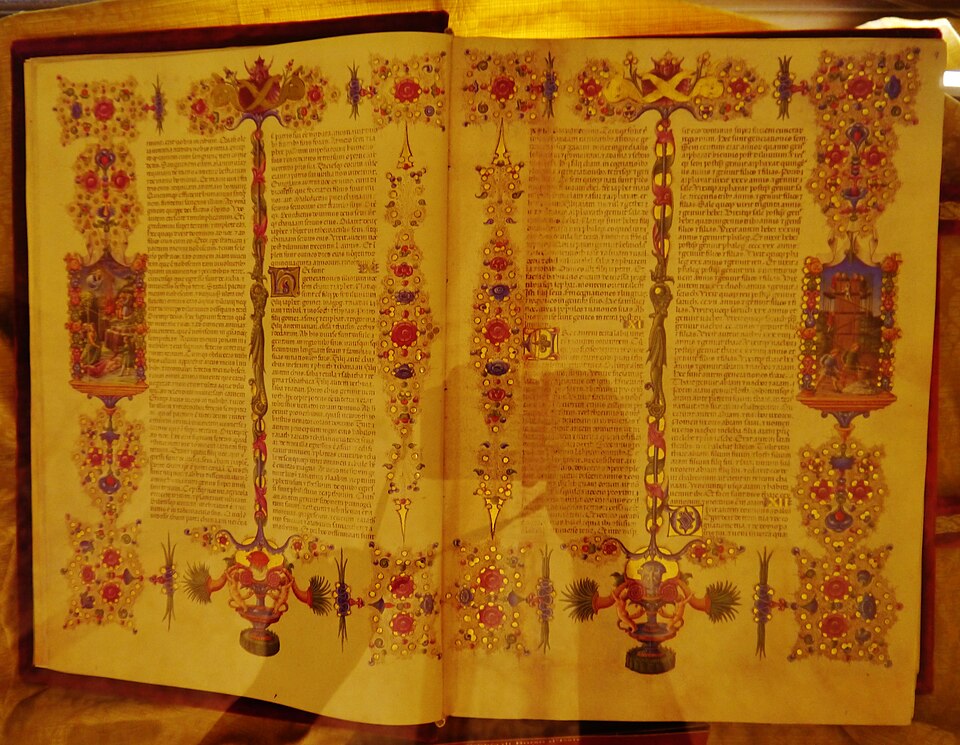
Even today, the Bible commissioned by Borso d’Este is considered a masterpiece without equal in Italian Renaissance illumination and in the history of art in general. Each of its 1,212 pages is decorated with images inspired by the Stories of the Old and New Testaments, reworked according to the customs and traditions of the refined Este court, influenced by the vivid Renaissance and late Gothic imagination.
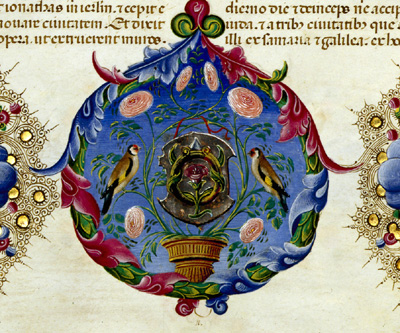
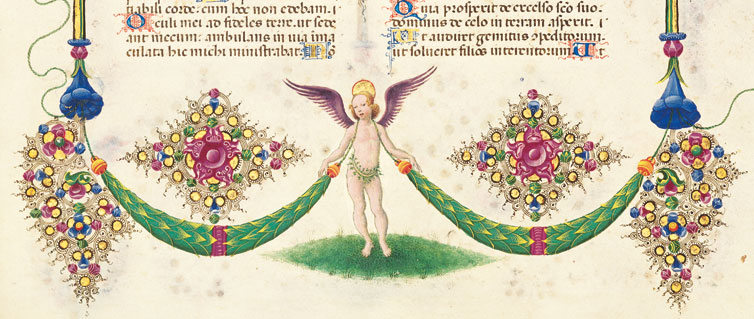
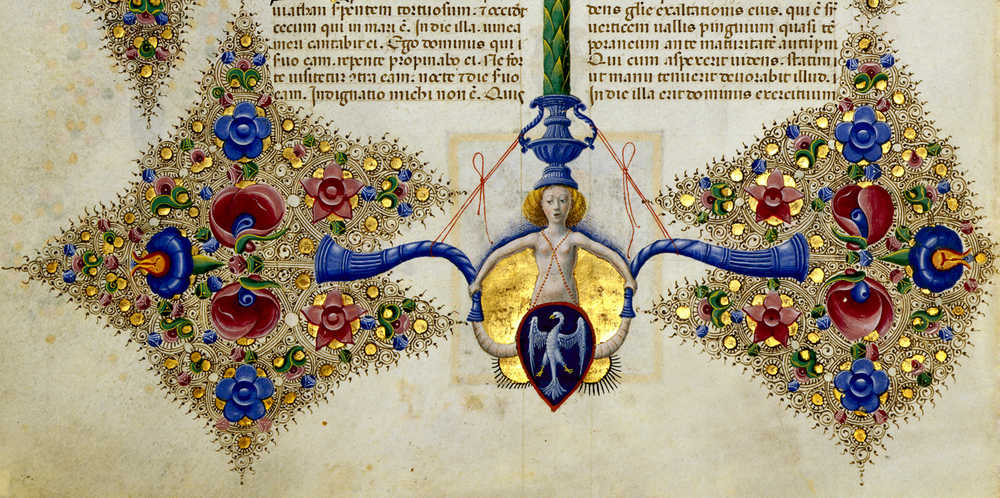
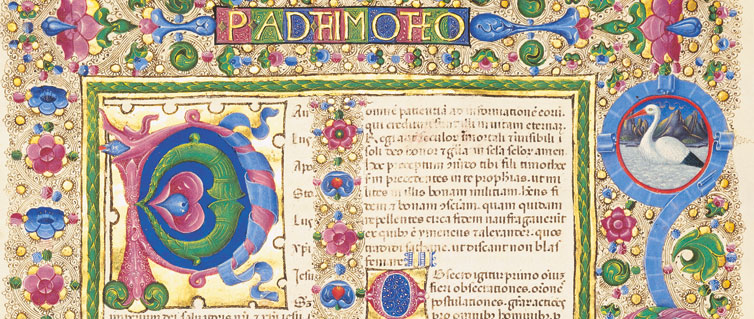
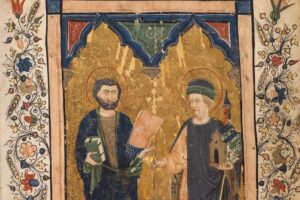
The opening pages of each book are the most sumptuous, adorned with drawings in brilliant colours, enriched with borders made from gold leaf. Floral motifs and filigree intertwine with noble coats of arms linked to the history of the Este family and daring geometries, angels, animals and figures that decorate the edges of the pages and the columns with skilful grace.
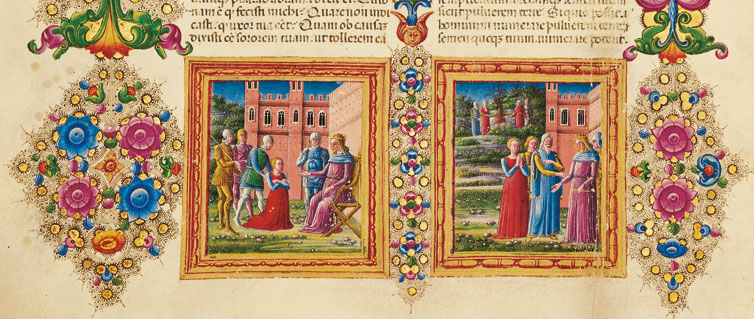
Details of some Bible pages:
The inner pages, more restrained, are embellished with gold that decorates the historiated vignettes and with elegant and surprising details. There are many references to the Ferrara court, such as King Solomon, depicted as a Renaissance prince, as Borso himself might have been, and references to court life recognisable only to those who truly experienced that period and its magnificence, among architecture, clothing and details rich in timeless beauty.
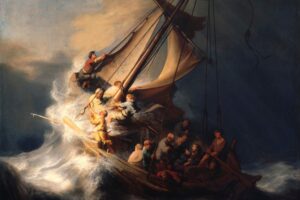
Rembrandt’s painting Storm on the Sea of Galilee tells a story of faith and hope. Especially when we feel lost...
12 October 2026
What’s the Future of Religion?
What’s the Future of Religion?
A Beginner’s Guide to Christianity
A Beginner’s Guide to Christianity
Mind-Blowing Statistics About Christianity You Need to Know
Mind-Blowing Statistics About Christianity You Need to Know
9565
Enter the Holyart world: $20 discount voucher valid on over 60,000 items
Come and discover Holyart, the largest e-commerce of religious articles in Europe and immediately receive a $20 voucher to use with your first purchase.
Check your mailbox: you will receive your discount within 5 minutes