


Ancient Russian icon of the Crucifixion, bronze Staurotheke, 18th-19th century, 22x18 in
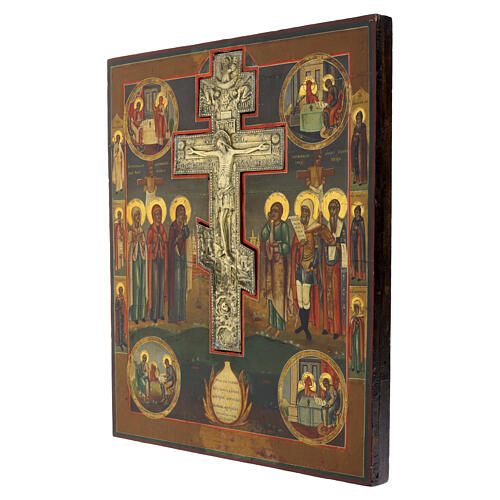
Ancient Russian icon of the Crucifixion, bronze Staurotheke, 18th-19th century, 22x18 in.
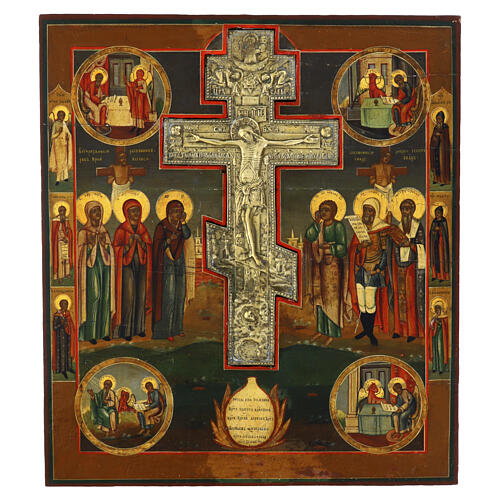
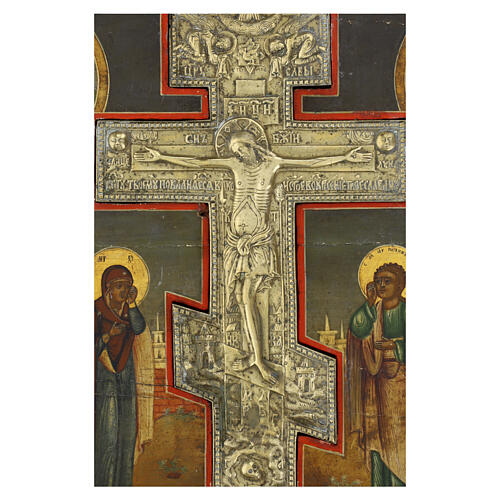
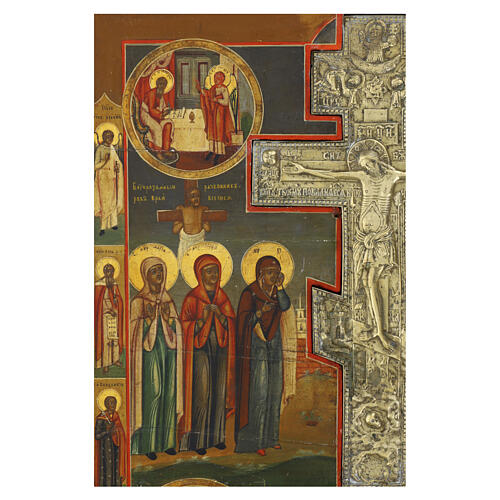
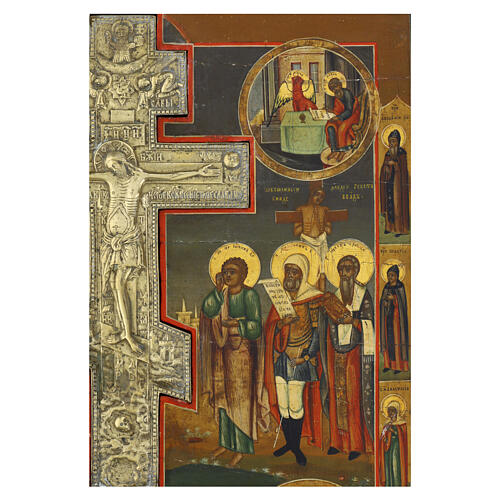
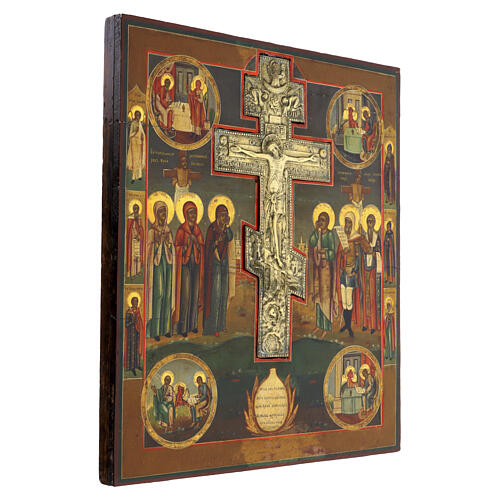
Ancient Russian icon depicting the Calvary according to Byzantine iconography. In the centre, the bronze Cross, typical of the Russian tradition, shows at the top the Ancient of Days, below the Saviour Christ with halo and two angels. Jesus' body, fixed with four nails and head inclined to the right, expresses royal serenity, far from the idea of agony.
At the foot of the Cross, there is a cleft with Adam's s...
Info and features
Ancient Russian icon of the Crucifixion, bronze Staurotheke, 18th-19th century, 22x18 in.
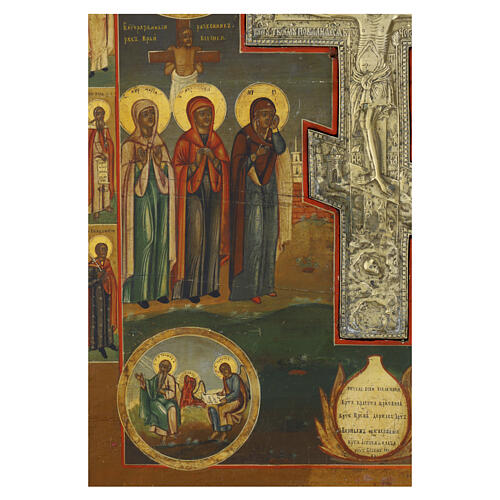
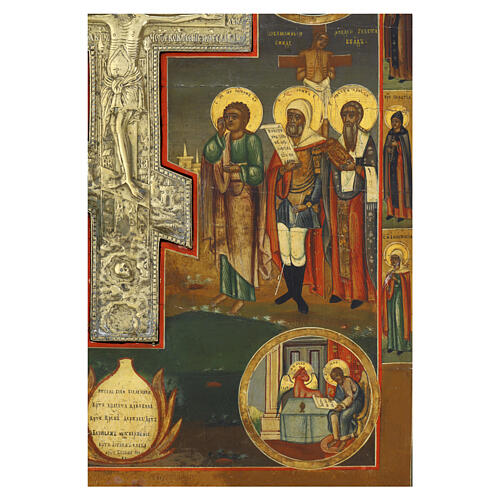
Ancient Russian icon depicting the Calvary according to Byzantine iconography. In the centre, the bronze Cross, typical of the Russian tradition, shows at the top the Ancient of Days, below the Saviour Christ with halo and two angels. Jesus' body, fixed with four nails and head inclined to the right, expresses royal serenity, far from the idea of agony.
At the foot of the Cross, there is a cleft with Adam's skull, symbol of universal redemption: Christ's blood bathes humanity, becoming a bridge between earth and the Kingdom of Heaven. The scene, reminiscent of the miraculous signs narrated in the Gospels, darkness for three hours and an earthquake that opened the tombs, is completed by the figures of Mary, Saint John, the Myrrhbearers, and the centurion Longinus, a testimony of the triumph of the Cross and a new life in Christ.
Origin: Northern Russia.
Technique: egg tempera.
Materials: wood-levkas, bronze.
Measures: 21.26x18.5 in.
Panel: 18th-19th century.
The icon is accompanied by an expert evaluation, certifying its originality and explaining the depicted scenes.