


Antique icon, Exaltation of the Holy Cross, 19th century, Russia, 14x12 in
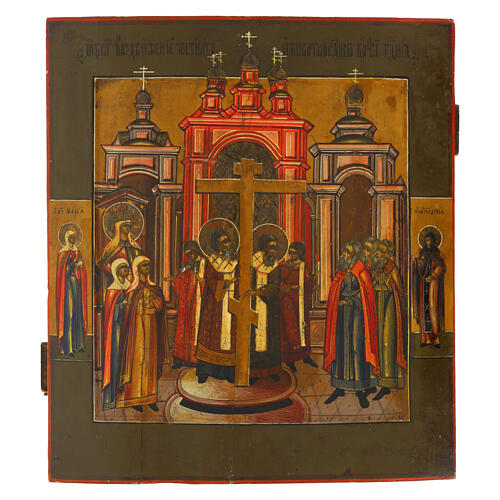
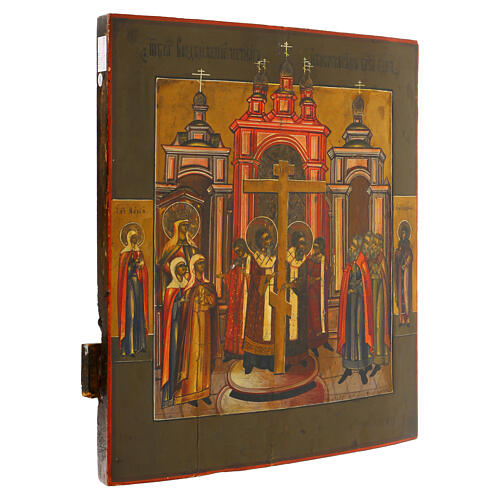
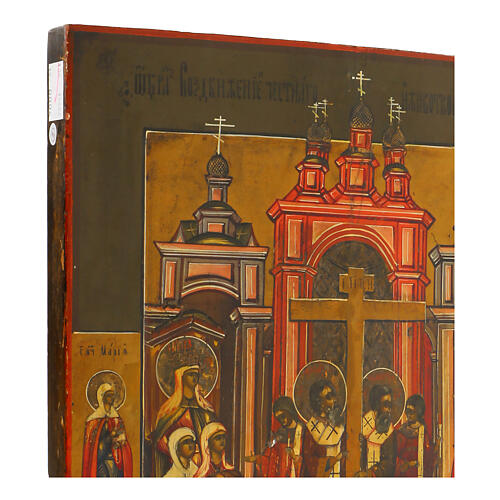
Antique icon, Exaltation of the Holy Cross, 19th century, Russia, 14x12 in. This icon depicts the second major feast in the liturgical year of the Eastern Church, the Exaltation of the Holy Cross, celebrated on September 14.
This feast commemorates significant events related to Christ's cross: the appearance of the cross to Emperor Constantine before the battle of the Milvian Bridge in 312, marking the victory of Christianity and the end of persecutions; the discovery of the historical cross by...
Info and features
Antique icon, Exaltation of the Holy Cross, 19th century, Russia, 14x12 in. This icon depicts the second major feast in the liturgical year of the Eastern Church, the Exaltation of the Holy Cross, celebrated on September 14.
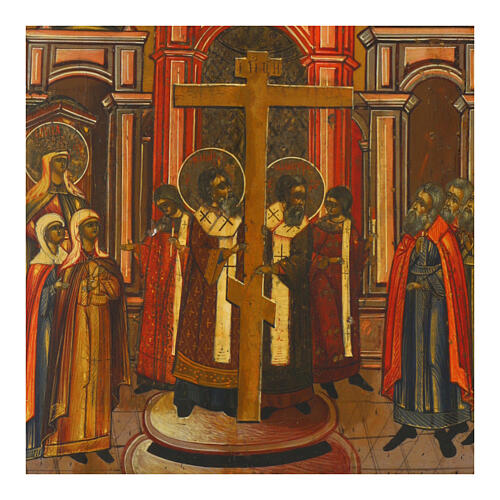
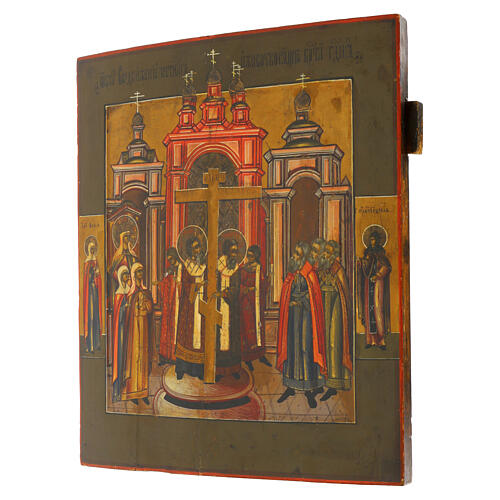
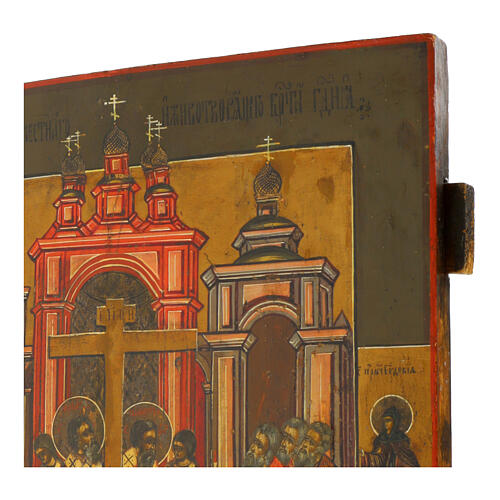
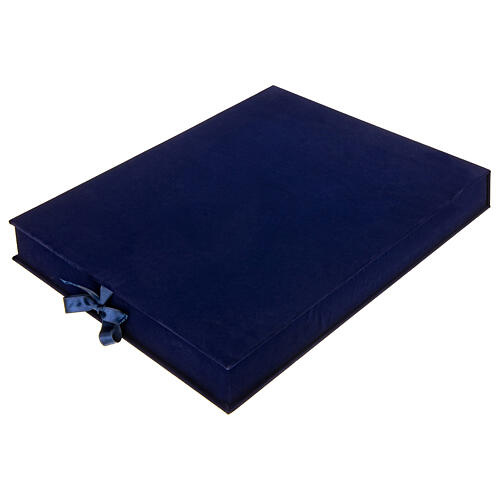
This feast commemorates significant events related to Christ's cross: the appearance of the cross to Emperor Constantine before the battle of the Milvian Bridge in 312, marking the victory of Christianity and the end of persecutions; the discovery of the historical cross by Helena, Constantine's mother, in Jerusalem, and its solemn display by Patriarch Macarius in 326. The celebration also recalls the construction of the Basilica of the Resurrection on Calvary, consecrated on September 13, 335, and the recovery of the stolen cross relics by the Persian King Chosroes in 614, accomplished in 628. In the centre, you see two priests, Macarius and Eusebius, holding the large cross, with Saint Helena on the right in supplication, surrounded by worshippers. This classic interpretation features the external view of the basilica typical of icon perspective, with figures depicted in traditional iconographic style. The liturgy and iconography of the feast portray the cross as a symbol of victory over evil and death, emphasising the eternal testimony of Resurrection's triumph on the cross where the Crucifixion took place. Delivered in an elegant blue velvet case, the icon comes with an appraisal by a specialised expert. Origin: Central Russia. Technique: egg tempera. Materials: wood, levkas. Actual dimensions: 13.9x12.4 in. Era: mid-19th century.