


Antique Russian icon, 19th century, Mother of God of Nicaea, gold ground, 5.0x4.1 in
Antique Russian icon, 19th century, Mother of God of Nicaea, gold ground, 5.0x4.1 in.
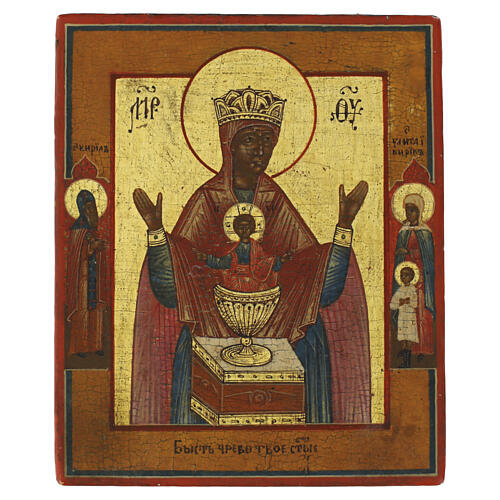
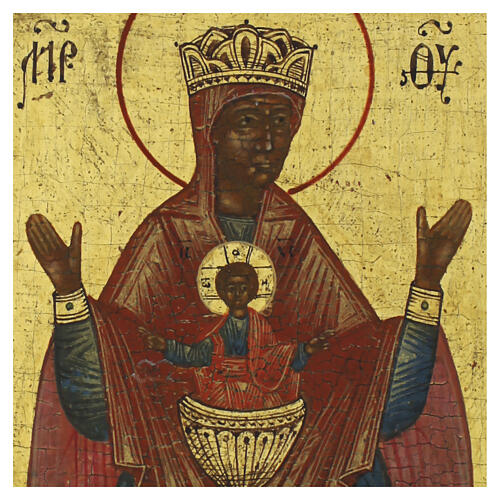
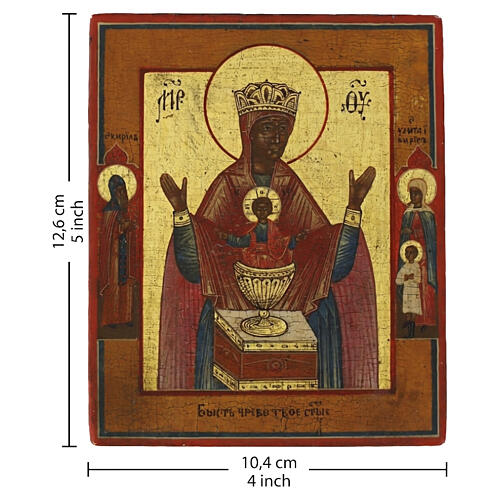
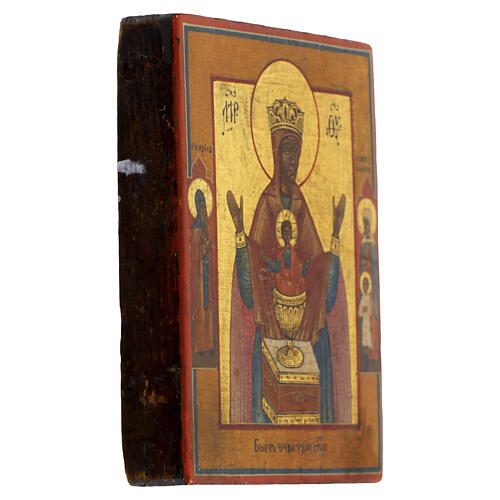
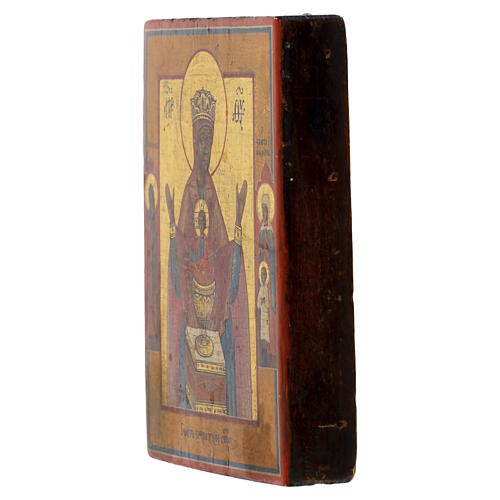
Antique Russian icon depicting the Mother of God of Nicaea, titled "Thy Womb has become an Altar", made in the 19th century and originating from the Vetka area within the Old Believers' tradition. The work measures 5.0x4.1 in.
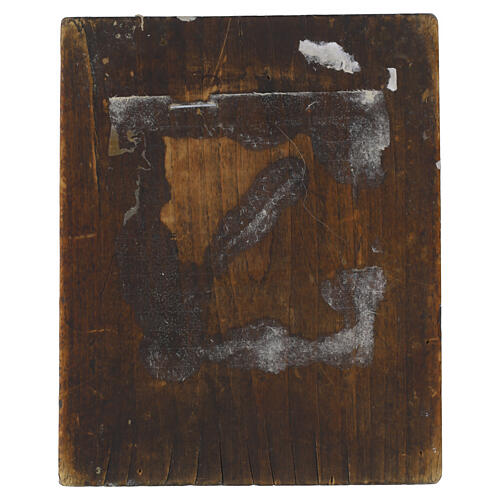
The icon is executed in egg tempera on wood with levkas and features a gold ground, emphasising the sacred character of the representation and creating a strong contrast with the painted f...
Info and features
Antique Russian icon, 19th century, Mother of God of Nicaea, gold ground, 5.0x4.1 in.
Antique Russian icon depicting the Mother of God of Nicaea, titled "Thy Womb has become an Altar", made in the 19th century and originating from the Vetka area within the Old Believers' tradition. The work measures 5.0x4.1 in.
The icon is executed in egg tempera on wood with levkas and features a gold ground, emphasising the sacred character of the representation and creating a strong contrast with the painted figures.
The title "Thy Womb has become an Altar" evokes the theological significance of the Virgin as the one who received Christ, linking the mystery of the Incarnation with the Eucharistic theme. The composition belongs to the Orthodox iconographic tradition and reflects the symbolic language typical of Russian sacred painting.
Its provenance from Vetka, an important centre associated with the Old Believers, places the work within a religious and artistic context characterised by the preservation of traditional iconographic models and a careful continuity of ancient pictorial canons.
Provenance: Vetka, Old Believers' tradition
Period: 19th century
Technique: egg tempera
Materials: wood and levkas
Finish: gold ground
Dimensions: 5.0x4.1 in.
Vetka is currently situated in Belarus, which became an independent state in 1991 following the dissolution of the Soviet Union. At the time the icon was painted, however, the town belonged to Russia, which is why Russia is listed as the work’s place of origin.