


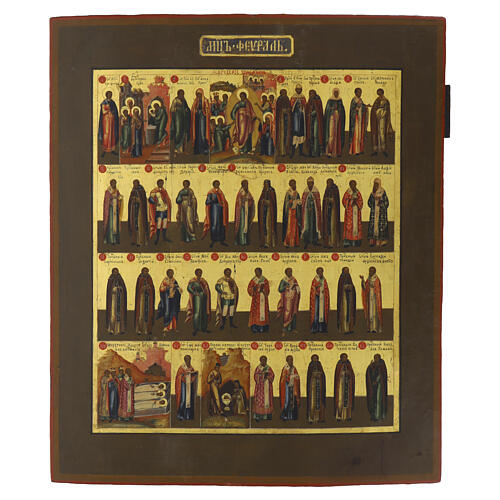
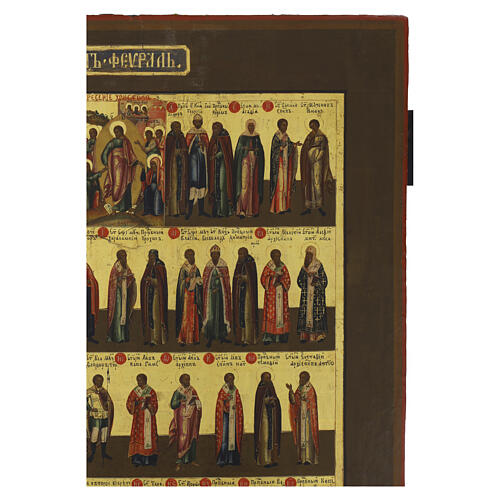
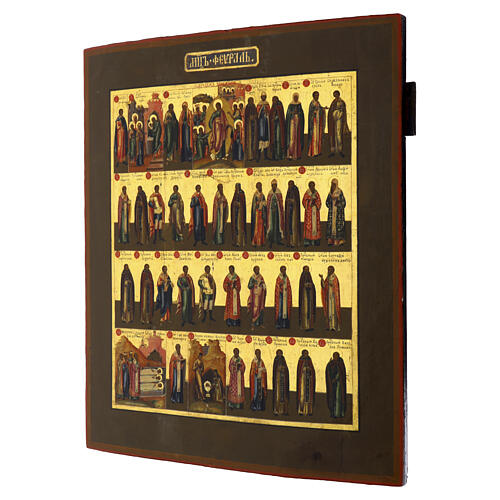
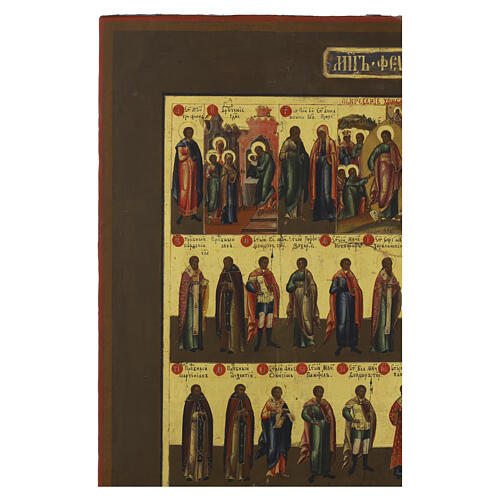

Antique Russian icon, February menologium, 17x15 in, 19th century
Antique Russian icon, February menologium, 17x15 in, 19th century.
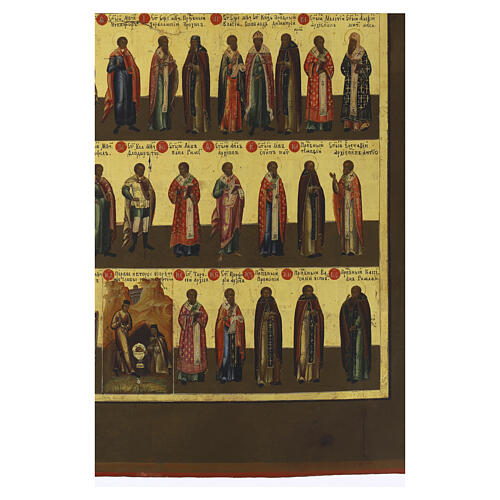
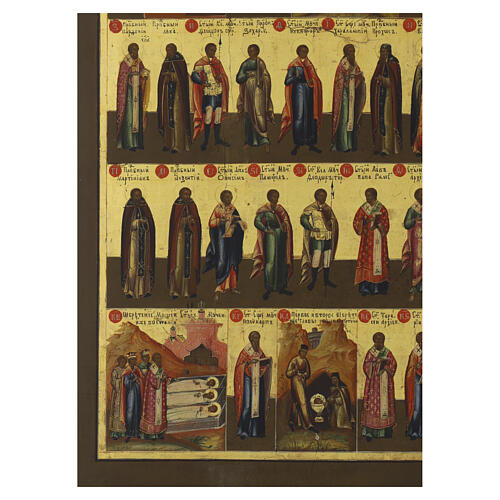
Splendid antique menological icon marking the saints and key liturgical scenes of February, made of egg tempera and gold leaf on a levkas-prepared wooden panel.
The Menologium represents the ecclesiastical calendar section dedicated to daily commemoration of saints. Since the 9th-10th century, these icons have been visually illustrating the liturgical cycle to the faithful, spreading knowledge of hagiographies and fostering saint v...
Info and features
Antique Russian icon, February menologium, 17x15 in, 19th century.
Splendid antique menological icon marking the saints and key liturgical scenes of February, made of egg tempera and gold leaf on a levkas-prepared wooden panel.
The Menologium represents the ecclesiastical calendar section dedicated to daily commemoration of saints. Since the 9th-10th century, these icons have been visually illustrating the liturgical cycle to the faithful, spreading knowledge of hagiographies and fostering saint veneration in various life circumstances.
The depicted work showcases the month of February, highlighting key saints and festivities: the Presentation of Jesus at the Temple in the upper register and the Discovery of the head of St. John the Baptist in the lower register.
The saints' individual depictions, following the liturgical calendar, progress day by day, offering a precious testimony of popular devotion and 19th-century Russian iconographic tradition.
The rich gold background and intricacy, typical of Palekh and Vladimir region schools, infuse the icon with luminosity and profound spiritual depth.
Delivered in an elegant blue velvet case and accompanied by an expert's certification.
Origin: Palekh or Vladimir Region – Russia.
Technique: egg tempera on gold leaf.
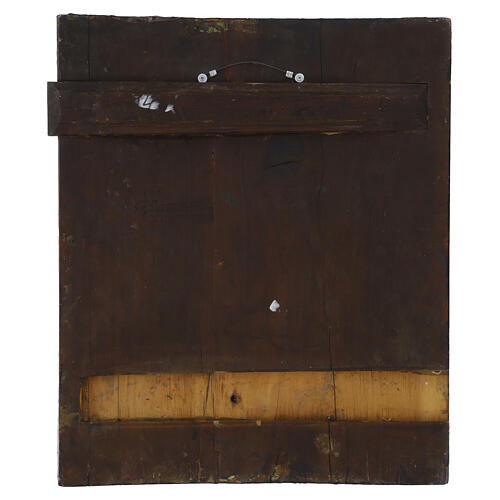
Materials: wood, levkas.
Dimensions: 17.3x15 in.
Period: approximately 1800-1850.