


Antique Russian icon of Our Lady of Vladimir, late 18th century, honourific embroidery with iris beads, 12.2x10.2 in
Antique Russian icon of Our Lady of Vladimir, late 18th century, honourific embroidery with iris beads, 12.2x10.2 in.
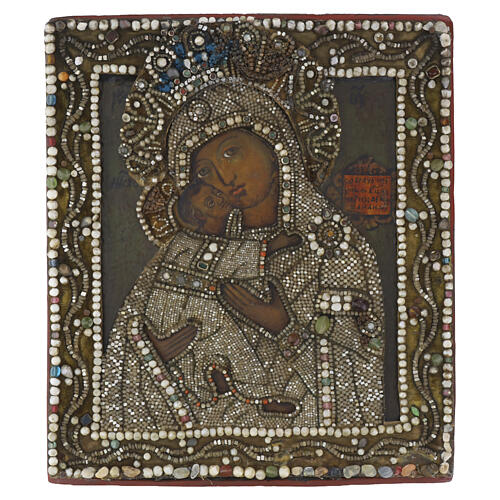
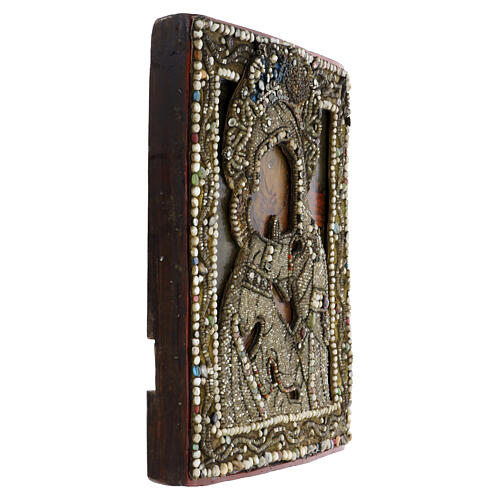
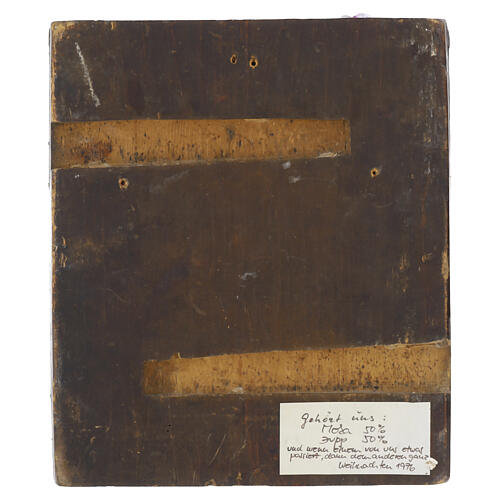
Antique Russian icon depicting Our Lady of Vladimir, from Central Russia, datable to the late 18th century, with a 19th-century basma (riza). The panel measures 12.2x10.2 in.
The Mother of God of Vladimir belongs to the Eleousa iconographic type (Our Lady of Tenderness), in which the Child Jesus presses his cheek to that of the Virgin in a gesture of deep intimacy. The image expres...
Info and features
Antique Russian icon of Our Lady of Vladimir, late 18th century, honourific embroidery with iris beads, 12.2x10.2 in.
Antique Russian icon depicting Our Lady of Vladimir, from Central Russia, datable to the late 18th century, with a 19th-century basma (riza). The panel measures 12.2x10.2 in.
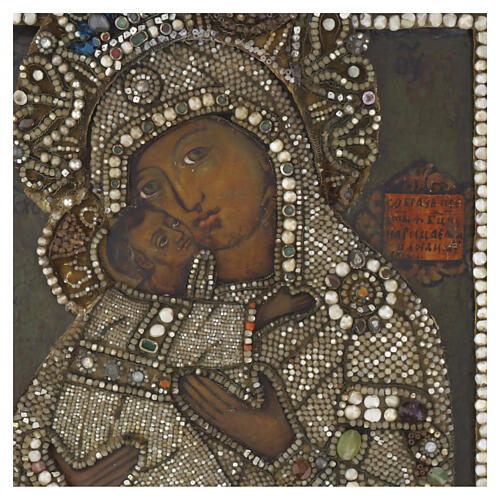
The Mother of God of Vladimir belongs to the Eleousa iconographic type (Our Lady of Tenderness), in which the Child Jesus presses his cheek to that of the Virgin in a gesture of deep intimacy. The image expresses the bond between Mother and Son and, in the Orthodox tradition, also evokes the union of the divine and the human.
According to tradition, the original icon was brought from Constantinople to Kiev and later transferred to Vladimir in 1155 by Prince Andrei Bogolyubsky; it is from this city that the icon takes its name. Over the centuries it has been associated with pivotal moments of Russian religious history and became one of the country’s most venerated Marian images.
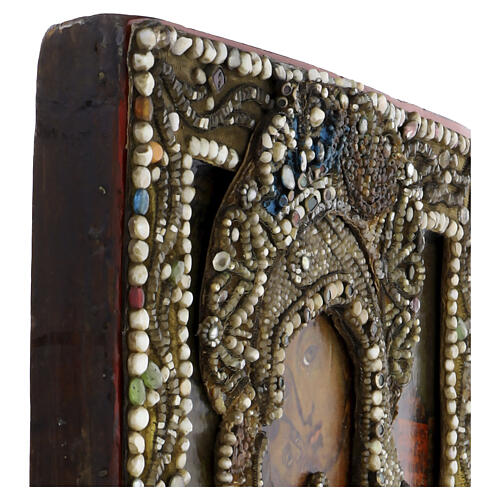
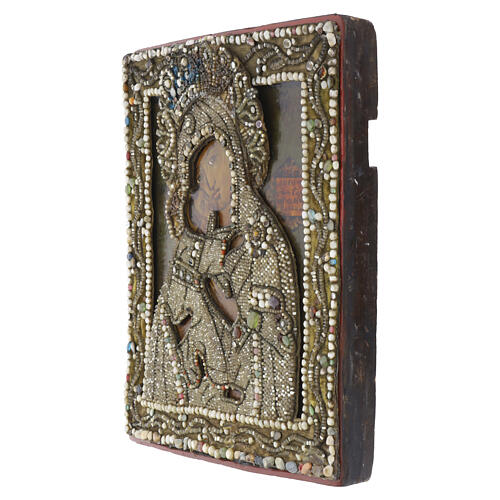
This work is executed in egg tempera on wood prepared with levkas and is enriched by a basma and honourific embroidery with iris beads, decorative elements that frame and enhance the sacred subject. The presence of the 19th-century basma adds an additional layer to the object’s material history.
The composition, with the faces close together and the halos almost joined, emphasises the theme of tenderness and maternal protection, one of the most recognisable aspects of Eastern Marian iconography.
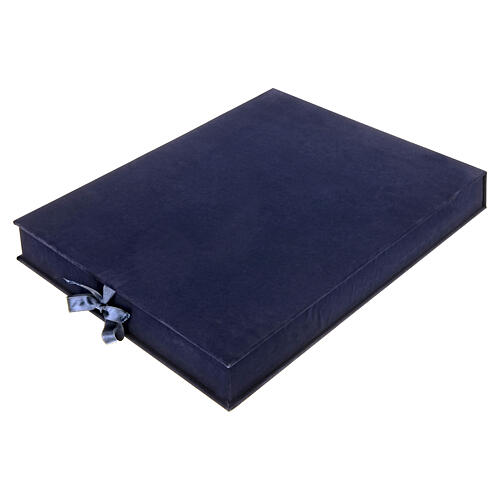
The icon is supplied with an expert appraisal and presented in a velvet case.
Provenance: Central Russia
Period: late 18th century; basma 19th century
Technique: egg tempera
Materials: wood, levkas, basma
Decoration: honourific embroidery with iris beads
Dimensions: 12.2x10.2 in.