


Antique Russian icon of the early 19th century, Mother of God "Assuage my Sorrows", honorary embroidery with river pearls, 12.4x10.2 in
Antique Russian icon of the early 19th century, Mother of God "Assuage my Sorrows", honorary embroidery with river pearls, 12.4x10.2 in.
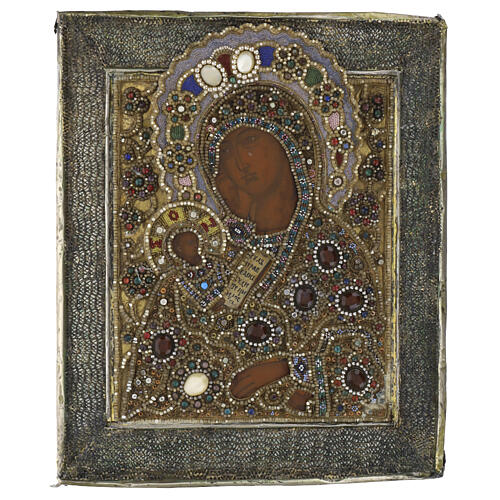
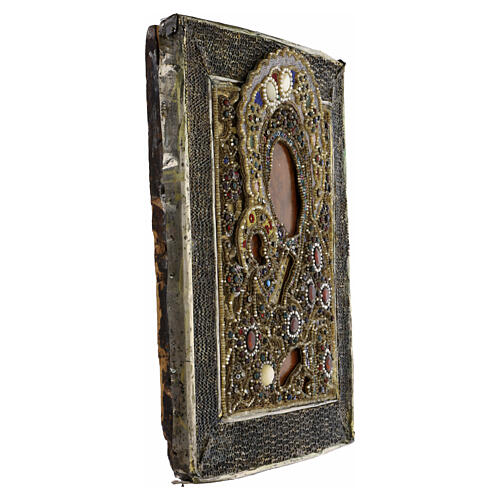
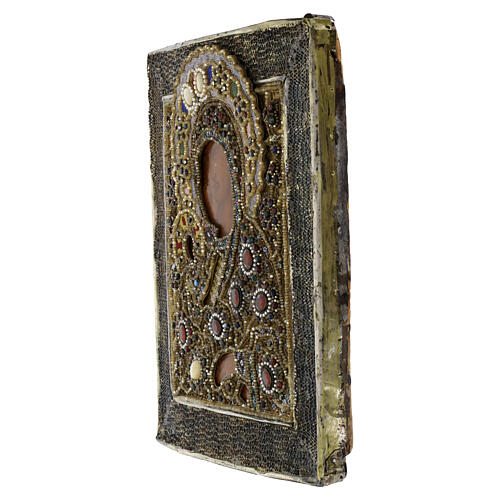
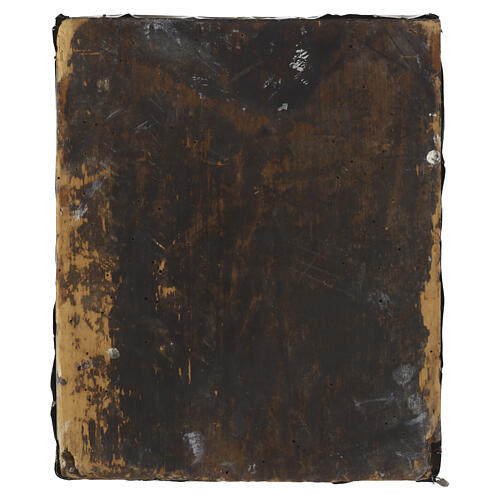
Antique Russian icon depicting the Mother of God "Assuage my Sorrows", from Yaroslavl, Russia, datable to the early 19th century. The work measures 12.4x10.2 in and is executed in egg tempera on wood with levkas, enriched with an honorary embroidery of river pearls.
This is a typically Russian iconography connected to the tradition that an image of this type was...
Info and features
Antique Russian icon of the early 19th century, Mother of God "Assuage my Sorrows", honorary embroidery with river pearls, 12.4x10.2 in.
Antique Russian icon depicting the Mother of God "Assuage my Sorrows", from Yaroslavl, Russia, datable to the early 19th century. The work measures 12.4x10.2 in and is executed in egg tempera on wood with levkas, enriched with an honorary embroidery of river pearls.
This is a typically Russian iconography connected to the tradition that an image of this type was brought to Moscow by the Cossacks in 1640, during the reign of Tsar Aleksey Mikhailovich, and placed in the Church of St. Nicholas in the Pupys quarter. The veneration of the icon spread notably after miracles attributed to it, especially during the plague of 1771.
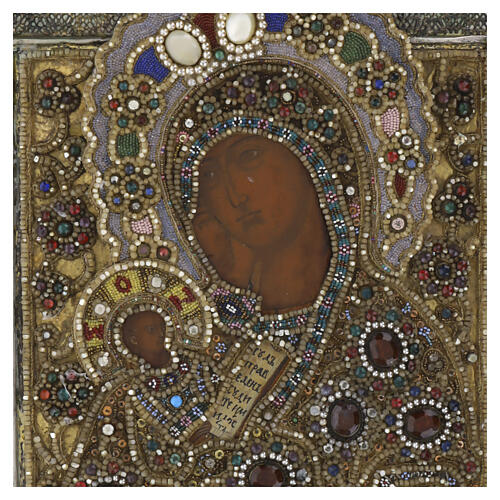
The image expresses the theme of suffering and consolation: Mary is shown in a pensive attitude with her right hand to her temple, a gesture evoking the sorrow felt before the Passion and death of Christ. The Infant Jesus rests on the Virgin's mantle, while the cartouche refers to justice, mercy and magnanimity.
The title "Assuage my Sorrows" derives from a stanza of the Akathistos hymn and underlines the Mother of God's role as intercessor and comforter for those who endure suffering and trial.
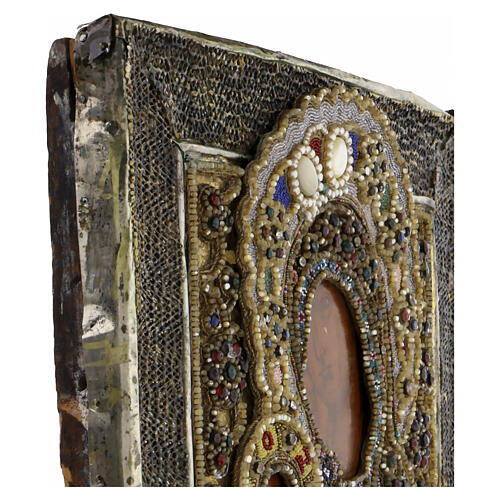
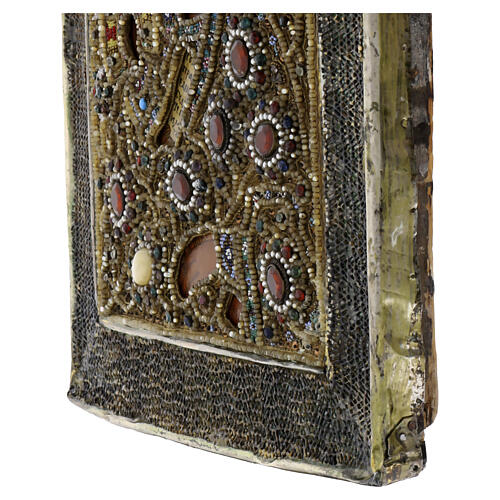
The icon is embellished with an honorary embroidery of river pearls applied to the panel as a devotional practice intended to honour and enhance the sacred image. The embroidery adds material depth to the composition and emphasises its devotional character.
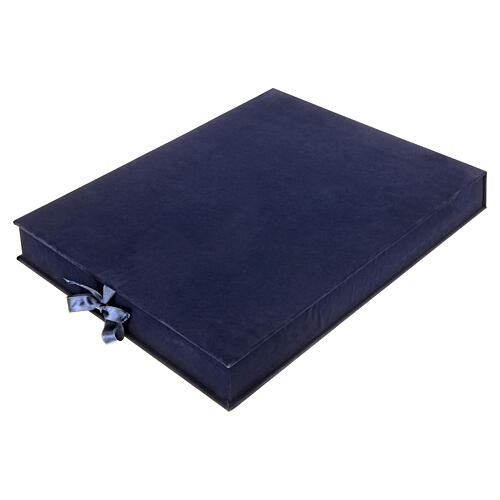
The work is accompanied by an expert appraisal and presented in a velvet case.
Provenance: Yaroslavl, Russia
Period: early 19th century
Technique: egg tempera
Materials: wood and levkas
Decoration: honorary embroidery with river pearls
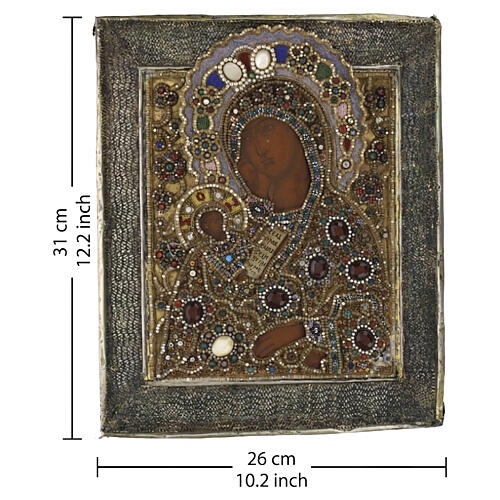
Dimensions: 12.4x10.2 in
Contents: expert appraisal and velvet case.