


Antique Russian quadripartite ion, 19th century, 19.7x15.4 in
Antique Russian quadripartite ion, 19th century, 19.7x15.4 in.
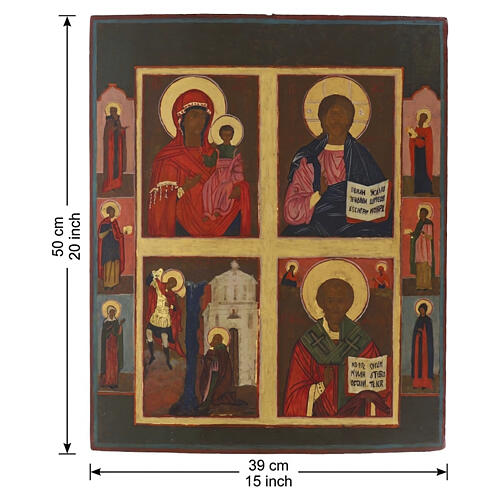
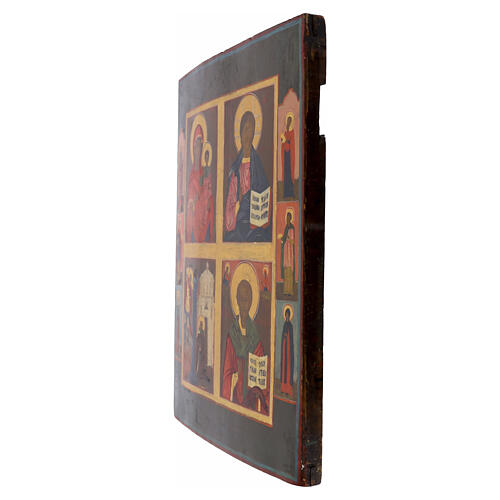
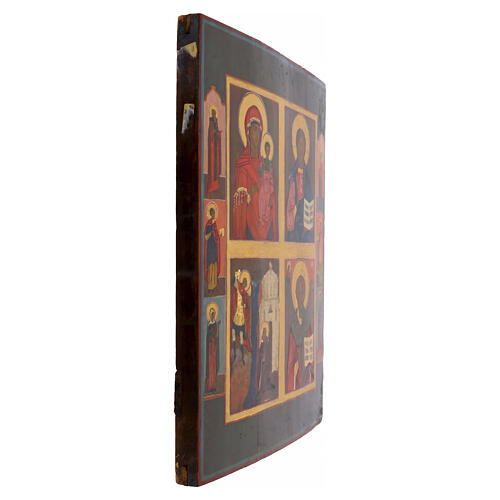
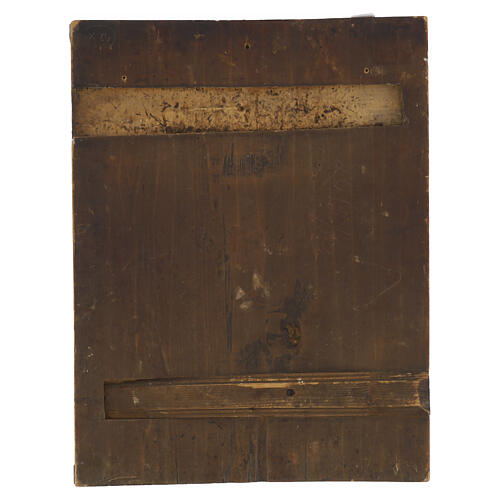
Antique Russian quadripartite icon from Moscow, Russia, datable to the 19th century. Painted in egg tempera on wood with levkas, the icon measures 19.7x15.4 in.
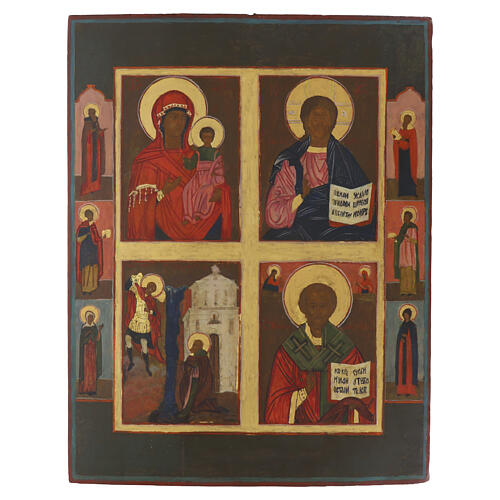
The distinctive quadripartite composition unites four different subjects from the Orthodox iconographic tradition on a single panel: the Mother of God of Smolensk (Smolenskaja), Christ Pantokrator, Archangel Michael with the Miracle of Chonae, and Saint Nicholas of Myra. This d...
Info and features
Antique Russian quadripartite ion, 19th century, 19.7x15.4 in.
Antique Russian quadripartite icon from Moscow, Russia, datable to the 19th century. Painted in egg tempera on wood with levkas, the icon measures 19.7x15.4 in.
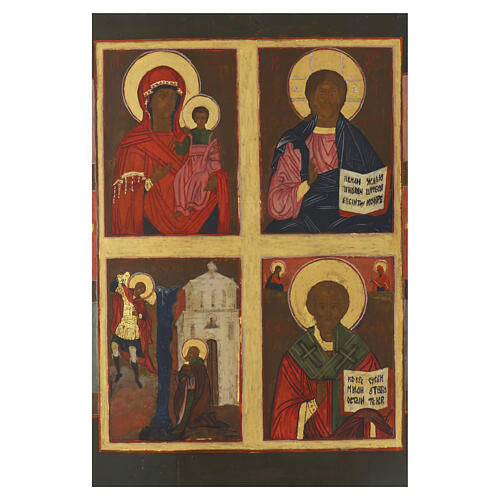
The distinctive quadripartite composition unites four different subjects from the Orthodox iconographic tradition on a single panel: the Mother of God of Smolensk (Smolenskaja), Christ Pantokrator, Archangel Michael with the Miracle of Chonae, and Saint Nicholas of Myra. This division allows Marian, Christological, angelic and hagiographic themes to coexist within the same work.
The Mother of God of Smolensk belongs to the Odighitria (Hodegetria) type: the Virgin supports the Christ Child with her left hand and with her right indicates the Son, presenting him as the way to salvation. Devotion to the Smolensk image is deeply rooted in Russian religious history; its name derives from the city where the original icon arrived in the 12th century.
Christ Pantokrator is depicted according to one of the central models of Eastern sacred art: Christ faces the viewer in a solemn attitude, blessing with his right hand and holding the Gospel in his left. The nimbus traditionally bears the Greek letters referring to “He Who Is,” underlining Christ’s divine nature.
One panel is devoted to Archangel Michael and the Miracle of Chonae: according to tradition, the Archangel intervened to save a shrine dedicated to him when the waters of a river were diverted to destroy it. Michael cleft the rock, diverting the waters and preserving the sacred place and its guardian Archippus.
The composition is completed by Saint Nicholas of Myra, one of the most venerated saints in the Eastern Christian tradition. He is shown in episcopal vestments, typically blessing with one hand and holding the Gospel in the other. Bishop of Myra, Saint Nicholas became over the centuries a figure associated with the defense of the faith, protection and healing.
The presence of these four subjects makes this icon a synthesis of diverse aspects of Orthodox spirituality, combining devotion to the Mother of God and to Christ with veneration of archangels and saints.
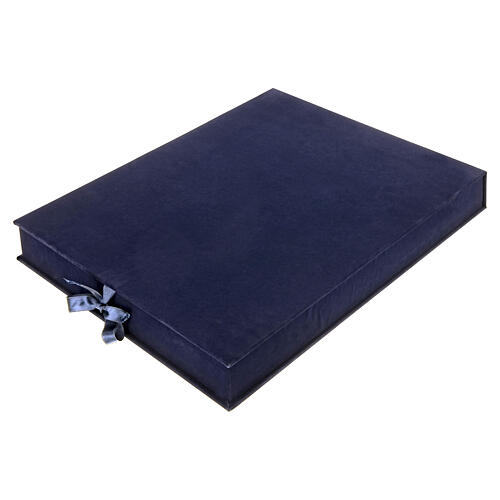
The icon is accompanied by an expert report and presented in a velvet case, which complete its documentation and presentation.
Provenance: Moscow, Russia
Era: 19th century
Technique: egg tempera
Materials: wood and levkas
Measurements: 19.7x15.4 in
Subjects: Mother of God of Smolensk, Christ Pantokrator, Archangel Michael and Miracle of Chonae, Saint Nicholas of Myra
Contents: expert report and velvet case.