


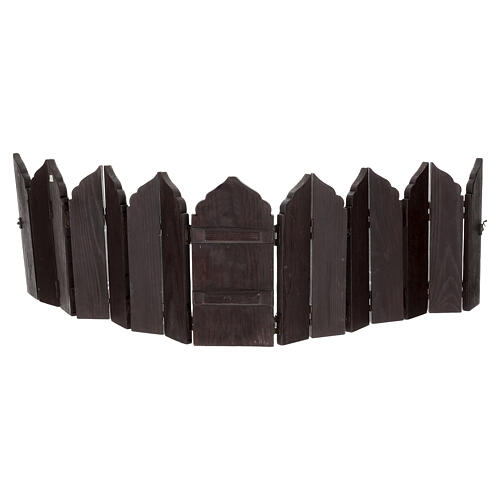
Foldable Russian domestic iconostasis, 51.2x13.4 in open / 13.0x6.3 in closed, 19th century
Foldable Russian domestic iconostasis, 51.2x13.4 in open / 13.0x6.3 in closed, 19th century.
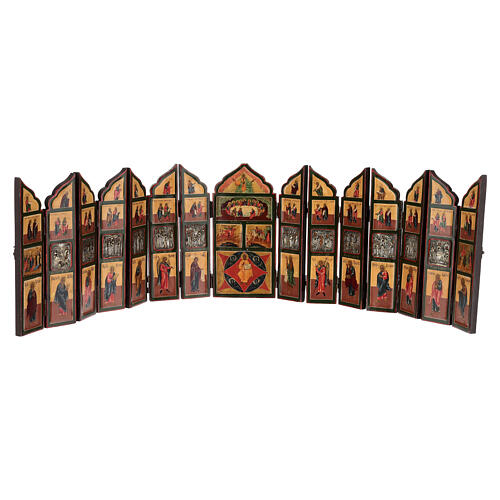
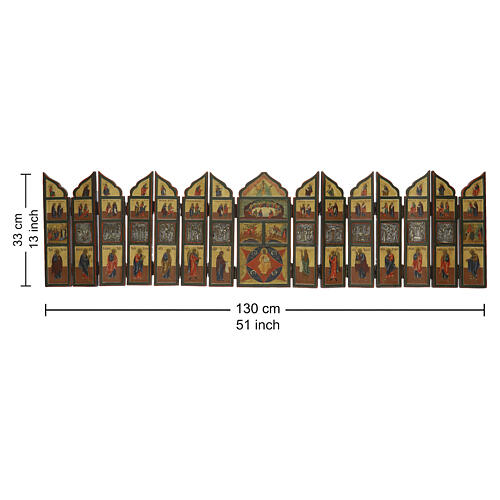
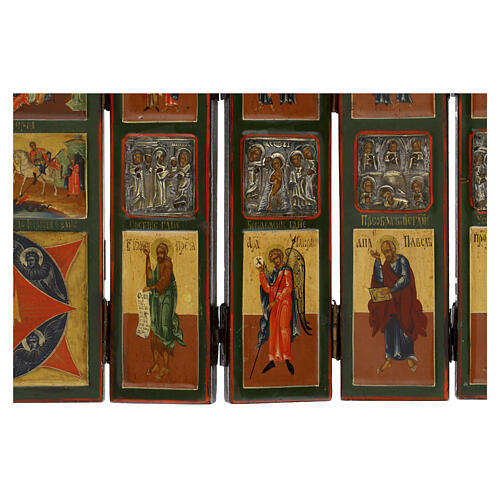
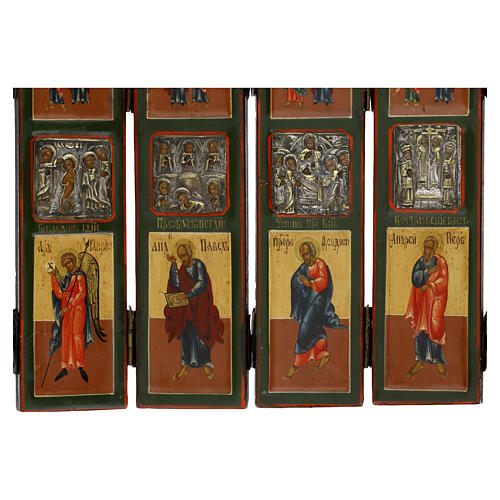
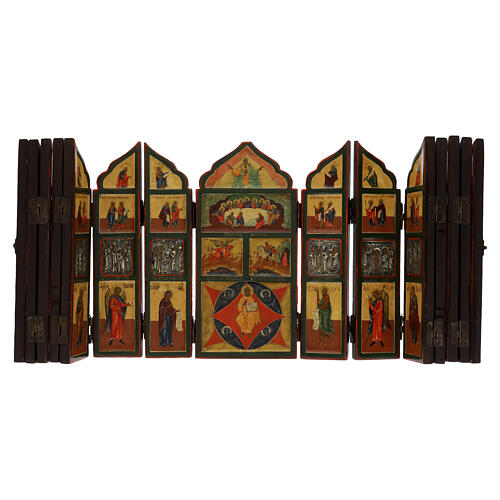
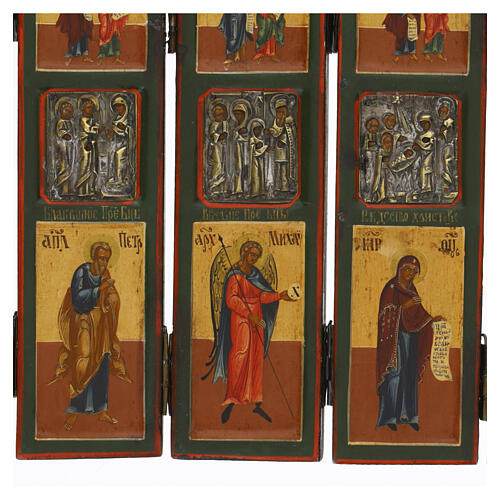
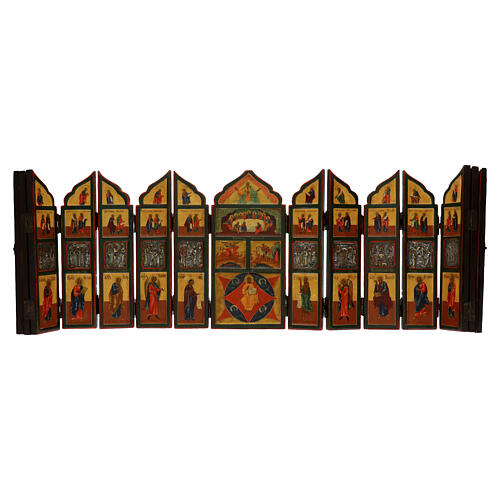
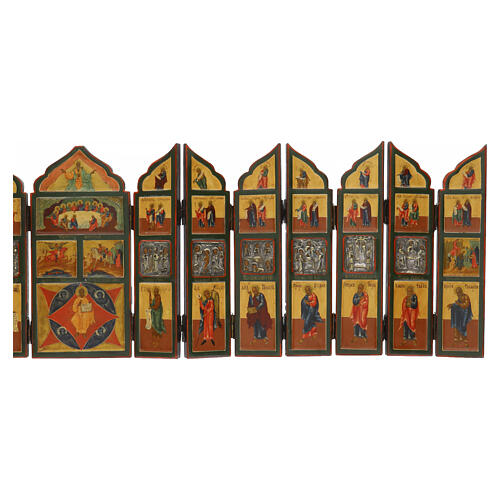
Foldable Russian domestic iconostasis from the 19th century, attributed to the School of the Old Believers and datable to 1860-1880. Executed in egg tempera on wood with levkas, it measures 51.2x13.4 in when open and 13.0x6.3 in when closed.
The iconostasis, in the Orthodox tradition, symbolically links the earthly and the heavenly realms. The arrangement of images follows a precise iconographic order, un...
Info and features
Foldable Russian domestic iconostasis, 51.2x13.4 in open / 13.0x6.3 in closed, 19th century.
Foldable Russian domestic iconostasis from the 19th century, attributed to the School of the Old Believers and datable to 1860-1880. Executed in egg tempera on wood with levkas, it measures 51.2x13.4 in when open and 13.0x6.3 in when closed.
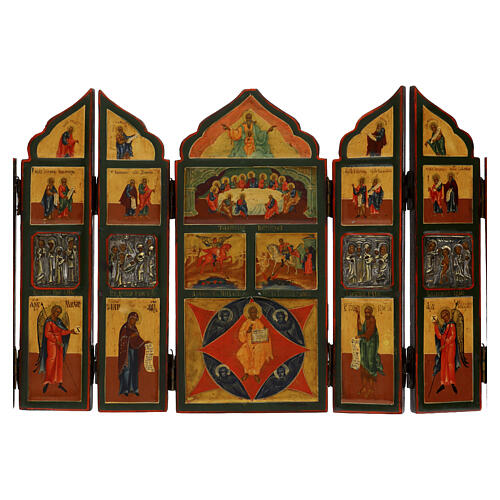
The iconostasis, in the Orthodox tradition, symbolically links the earthly and the heavenly realms. The arrangement of images follows a precise iconographic order, unfolding across multiple registers the history of salvation by uniting Gospel scenes, prophets, saints and central figures of the Christian faith.
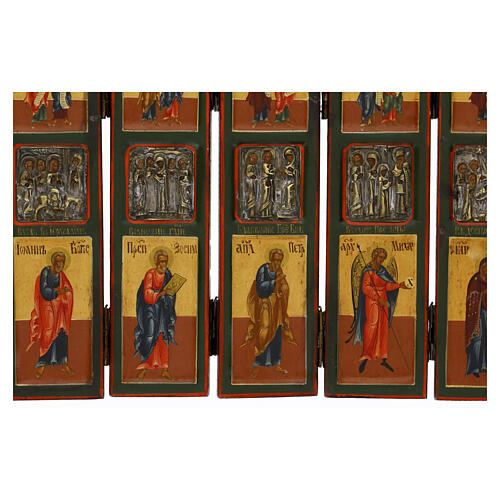
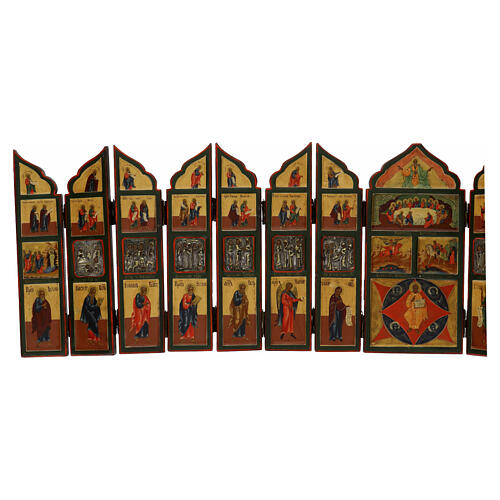
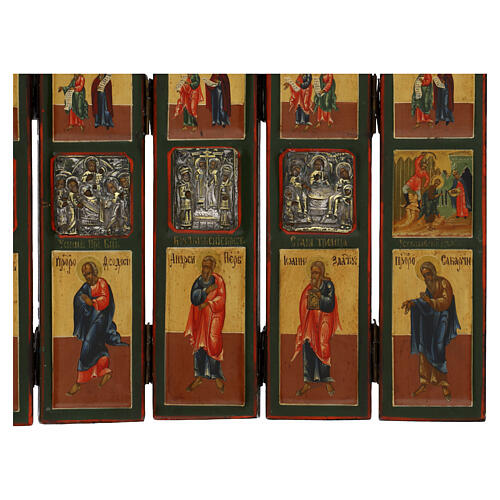
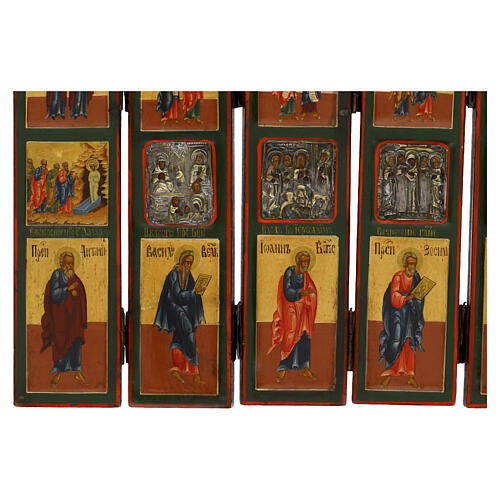
In the lower register stands the Royal Doors, the focal element of the iconostasis and traditionally associated with entrance into the Kingdom of Heaven. The doors feature the Annunciation and the four Evangelists; above them appears the Last Supper, connected to the sacrament of the Eucharist. Flanking the doors are icons of Christ the Saviour and the Virgin with Child, together with other figures from the Orthodox iconographic tradition.
The second tier is occupied by the Deesis, the intercessory composition centered on Christ. The third tier, known as the Festal row, depicts the principal events recounted in the Gospels, from the Nativity of the Virgin to the Assumption. Above these are the Prophets, linking to the Old Testament figures who foretold the coming of the Messiah, and the Ancestors (Forefathers), recalling the origins of the biblical narrative. At the very top is the depiction of God the Father, the Ancient of Days, shown in a blessing pose.
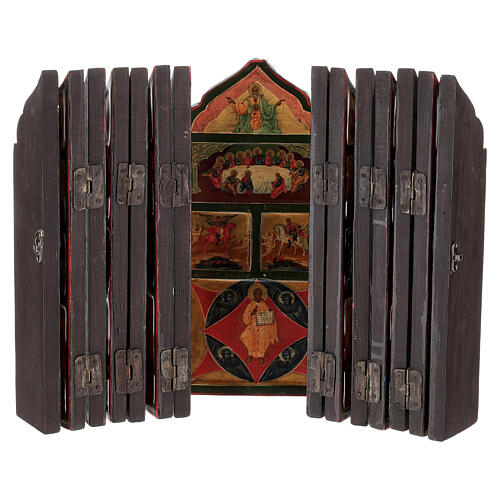
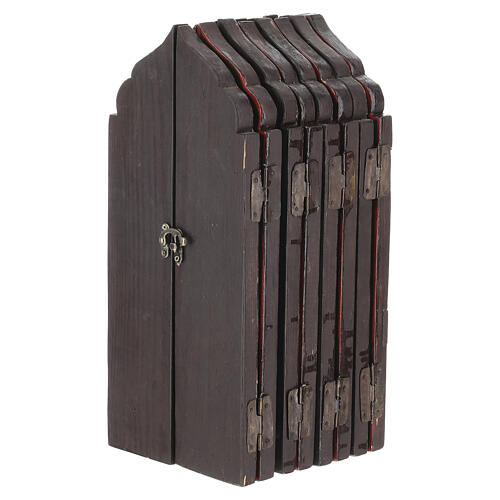
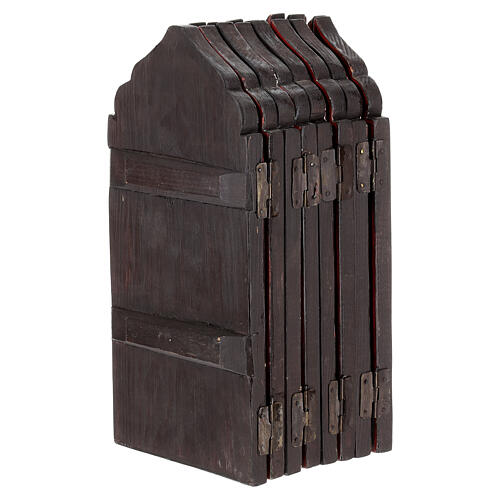
The foldable structure identifies this piece as an iconostasis intended for domestic devotion, designed to condense in a compact format the complex symbolic and figurative program of larger church iconostases.
The work is accompanied by a velvet presentation box and an expert appraisal, documentation that completes this historical artifact of Russian origin.
Origin: Russia, School of the Old Believers.
Period: 1860-1880, 19th century.
Technique: egg tempera on wood.
Materials: wood and levkas.
Dimensions open: 51.2x13.4 in.
Dimensions closed: 13.0x6.3 in.
Accompanying items: velvet box and expert appraisal.