


Russian icon, Ascension to Heaven of Prophet Elijah, 18th century, 12x10 in
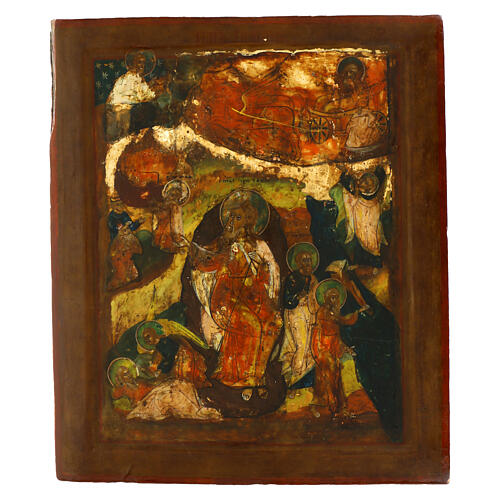
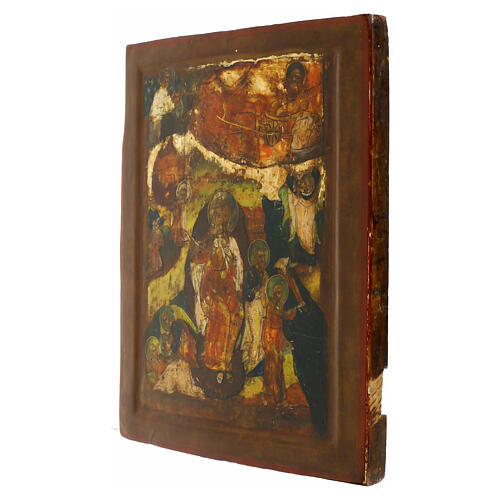
Russian icon, Ascension to Heaven of Prophet Elijah, 18th century, 12x10 in.
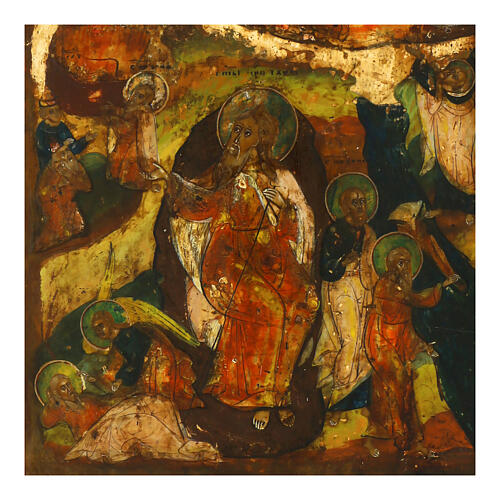
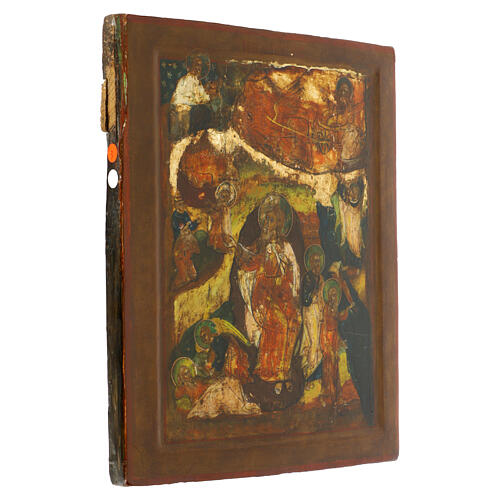
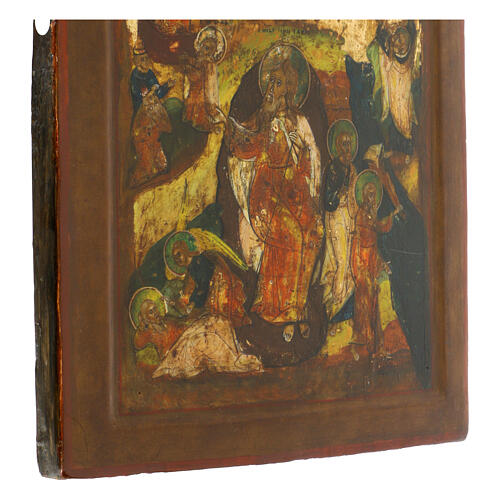
Ancient Russian icon depicting the ascension to heaven of Prophet Elijah from Galaad, Transjordan in the 860-850 B.C. during the reign of Acab and Queen Jezebel.
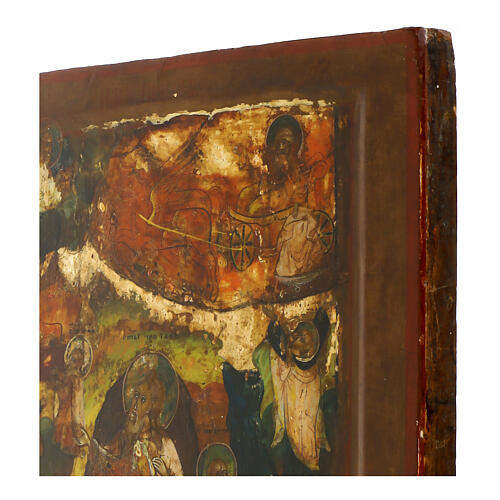
His ascent to heaven in a fiery chariot, under the astonished gaze of the disciple Elisha, is a recurring theme in several icons.
After predicting a famine, Elijah takes refuge in a desert cave, where he is fed by a raven, an often depicted scene.
Subsequently, on ...
Info and features
Russian icon, Ascension to Heaven of Prophet Elijah, 18th century, 12x10 in.
Ancient Russian icon depicting the ascension to heaven of Prophet Elijah from Galaad, Transjordan in the 860-850 B.C. during the reign of Acab and Queen Jezebel.
His ascent to heaven in a fiery chariot, under the astonished gaze of the disciple Elisha, is a recurring theme in several icons.
After predicting a famine, Elijah takes refuge in a desert cave, where he is fed by a raven, an often depicted scene.
Subsequently, on Mount Carmel, Elijah challenges the priests of Baal, asking them to invoke divine fire for sacrifice, but only Elijah's prayers obtain fire, and the four hundred priests are executed.
Fleeing into the desert and calling for death, Elijah is visited by an angel who brings him food, prefiguring the Eucharist as per the Fathers. Strengthened by that bread, he walks for forty days to Mount Horeb, where he experiences the mystical God revealing itself in the "still small voice" of a gentle wind.
Elijah appears alongside Moses at the Transfiguration of Christ on Mount Tabor, regarded as one of the great mystics of Israel.
The Carmelites, known as the "sons of Elijah", recognise him as the order founder.
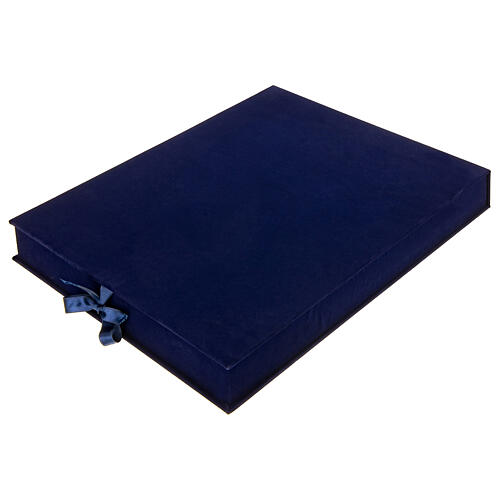
The icon is delivered in an elegant blue velvet case accompanied by an expert appraisal.
Origin: Central Russia.
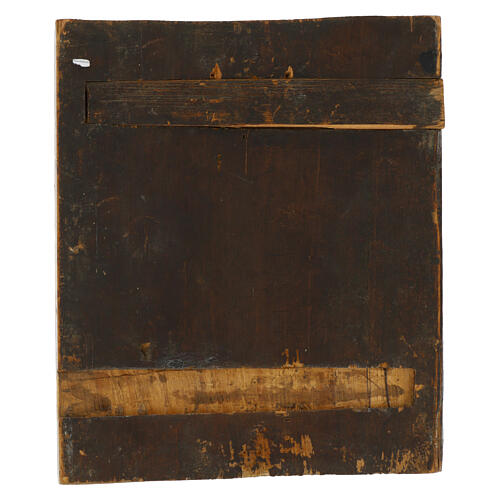
Technique: egg tempera.
Materials: wood, levkas.
Actual measurements: 12x10.2 in.
Era: 18th century.